SHI book links X̱aad Kíl revitalization in Hydaburg to tribal sovereignty
Sealaska Heritage Institute has published a book examining X̱aad Kíl revitalization in Hydaburg and linking preservation of the Haida language to tribal sovereignty. The author warns the community has run out of time for any approach short of full immersion.
The book's full title is Dámaan St'áang Tl'ang Kínggang: Connecting our Past, Present, and Future to Revitalize X̱aad Kíl in Hydaburg, Alaska. The title phrase translates to "we are carefully watching our steps" and is the first line of a Haida saying: "The world is like a knife blade. When you are walking, watch your step. If you don't watch your steps, you will fall off the edge of the earth." Ka'iljuus Lisa Lang, who is of Haida and Tsimshian descent, authored the book. It is part of Sealaska Heritage Institute's Box of Knowledge series, which publishes research on Tlingit, Haida, and Tsimshian cultures. The book is available for purchase online or at the Sealaska Heritage Institute store.
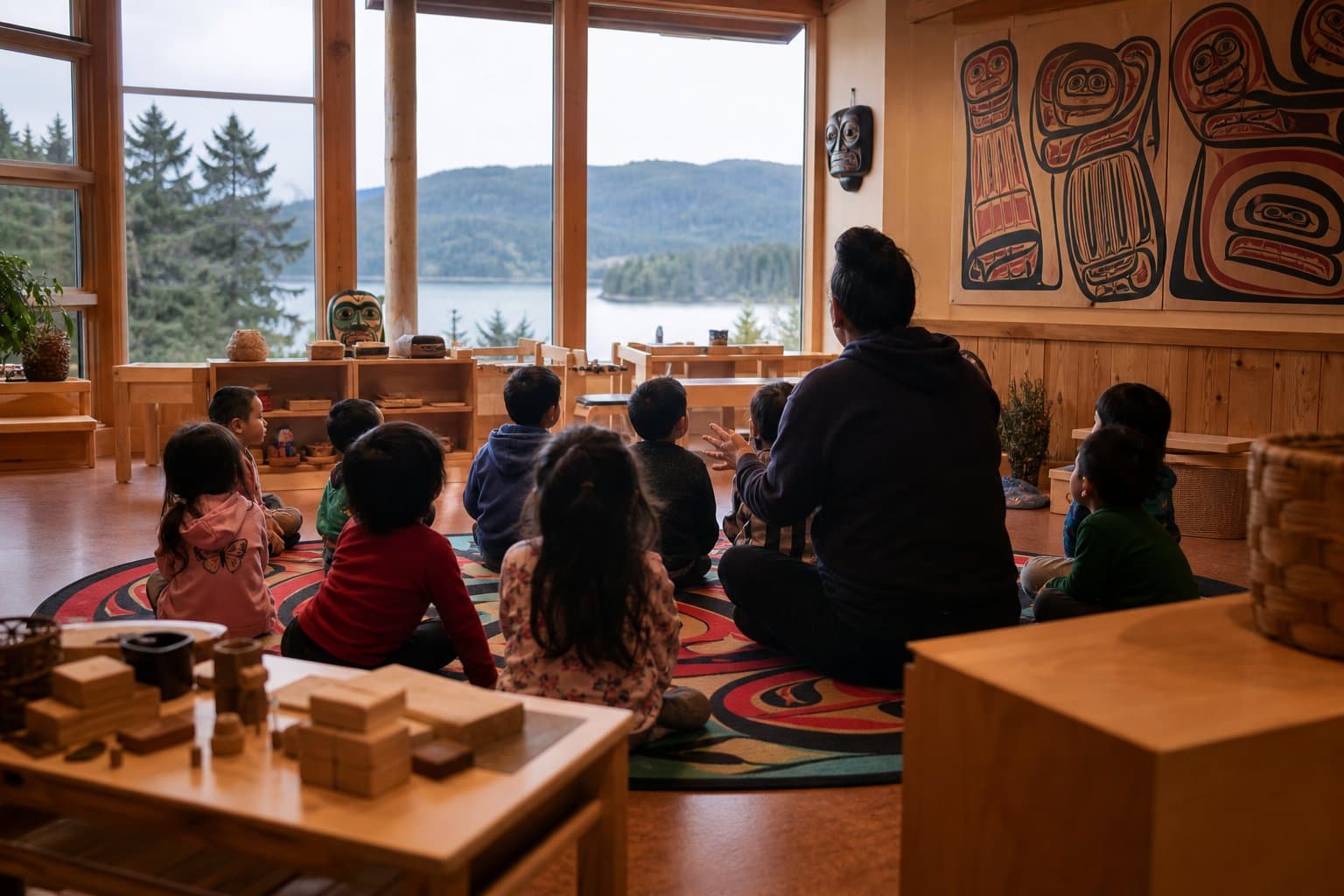
The book lands inside a revitalization effort that has been building for years. The X̱ántsii Náay Haida Immersion Preschool, which serves children ages three to five, opened in Hydaburg in fall 2018. Sealaska backed fluency-building grants in 2020 that aimed to grow the number of proficient or fluent X̱aad Kíl-speaking adults from one to five by May 2022. Tlingit and Haida now operates a budding X̱aad Kíl immersion program on Prince of Wales Island as a next step in the broader effort.
X̱aad Kíl is a language isolate. Lang describes it as highly endangered. The path that brought it there runs directly through federal boarding school policy. By 1925, the U.S. government had removed more than 60,000 Native children from their homes and punished them for speaking their languages.
"We have no more choices – we have no more time. We cannot turn around. It is immerse or die. It is now or never. To lose our footing creates the illusion that we no longer care, that we no longer have our spirit and we no longer exist in this world. This painful and unacceptable reality is only one step away," Lang writes.
Her conclusion ties the preschool directly to tribal sovereignty. "Indigenous languages must be prioritized and valued. Our highly endangered language isolate requires we act swiftly and courageously to save our language from going to sleep forever. The ultimate goal is to recognize we attain the strongest act of Tribal sovereignty by preserving our worldview, which is our language. The development of successful immersion practice and the revitalization of X̱aad Kíl is the development of true sovereignty," Lang concludes.
Not all Haida language advocates center the crisis framing. Some language leaders caution against focusing only on loss, urging attention to existing language strength and the growth already underway in communities like Hydaburg and on Prince of Wales Island.
AI-assisted, reviewed by editors. Spot an error?
Comments
Sign in to leave a comment.
No comments yet. Be the first to share your thoughts.