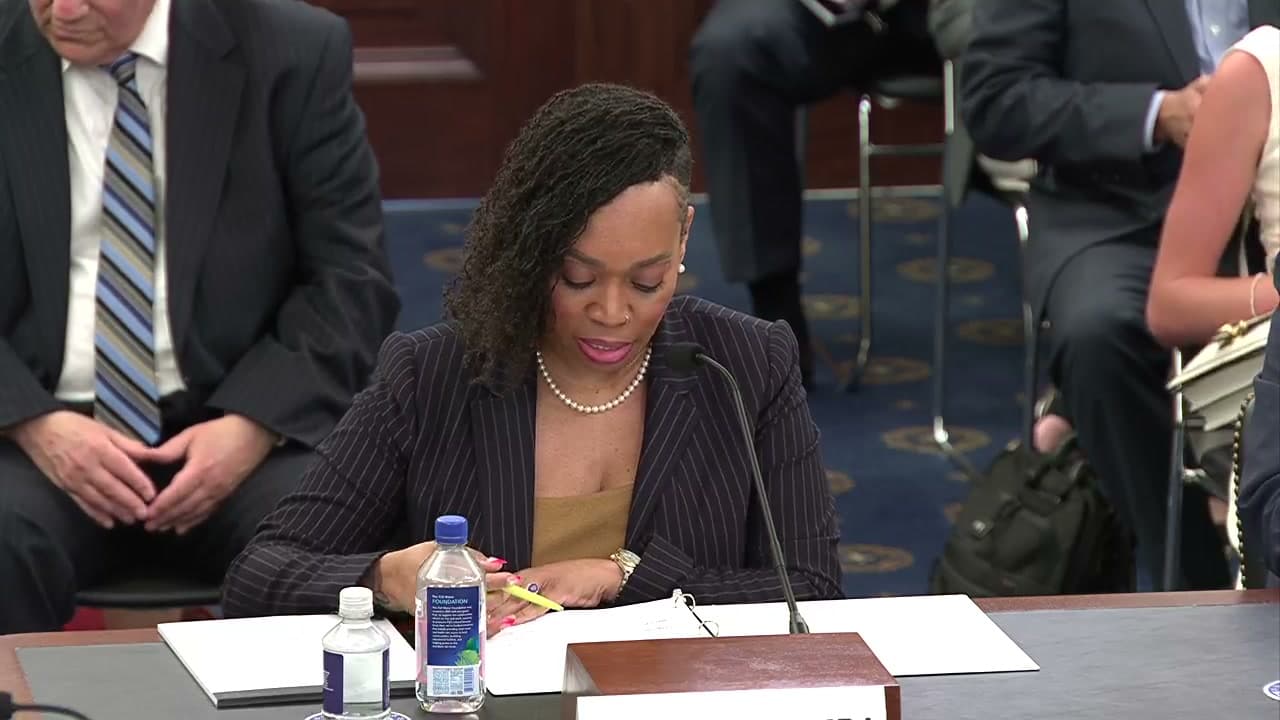
Frame from "Senate Veterans' Affairs (Sullivan): Hearings to examine advancing the mission, focusing on evaluating the future of VA research." · Source
Senate panel examines VA research funding, hiring delays, and prostate cancer program
The Senate Committee on Veterans' Affairs held a wide-ranging hearing Wednesday on the future of VA's research enterprise, with senators pressing agency officials on hiring delays, proposed budget cuts, NIH funding instability, and the impact of administrative policies on clinical trials for conditions including cancer and PTSD. Prostate cancer precision oncology emerged as a major line of questioning in the hearing's second panel.
Gina Carrithers, president and CEO of the Prostate Cancer Foundation, testified that veterans at VA precision oncology centers of excellence are 57% more likely to receive precision genetic testing than those treated elsewhere in the system, and three times more likely to receive such testing than before the program began. "Each of our veterans dedicated his life for the safety and freedom of our country," Carrithers said. "They should be the first, not the last, to benefit from our medical breakthroughs and modern precision cancer care."
Committee Chairman Jerry Moran of Kansas highlighted the POPCaP Authorization Act of 2026, legislation he introduced to permanently authorize and expand the VA precision oncology program for prostate cancer. The committee did not vote on the bill Wednesday.
How the $5 Million Was Spent
Sen. John Boozman pressed VA oncology director Dr. Michael Kelly on whether FY2024 funds appropriated for the program were used as Congress intended. Kelly told the committee that the funds were used to expand the program through the Cancer Clinical and Research Network to more than 100 sites, rather than concentrating resources at the original 21 centers. "The CCRN mission and the selection of sites identifies only one cancer that they have to do, and that's prostate cancer," Kelly said, defending the approach as consistent with congressional direction.
VA's first panel witnesses also described a broader research strategy built around a Veterans First approach, including expansion of the Cancer Clinical and Research Network and actively managed portfolios to accelerate work on priorities such as traumatic brain injury and precision oncology.
Screening Rollback and Staffing Concerns
Carrithers warned that a 2012 decision to end routine PSA screening has contributed to a rise in metastatic prostate cancer diagnoses. "Today we're roughly diagnosing 22 to 25% of our men in this country with advanced metastatic disease," she said.
Sen. Richard Blumenthal raised concerns about the broader research enterprise. "I'm concerned about the effects of staffing cuts, shortages in funds for research, various actions taken by this administration that may inhibit or impede the kind of research that is done by the VA in the past," Blumenthal said. Carrithers agreed that across-the-board cuts would have a detrimental impact on prostate cancer precision oncology research.
AI-assisted, reviewed by editors. Spot an error?
Comments
Sign in to leave a comment.
No comments yet. Be the first to share your thoughts.