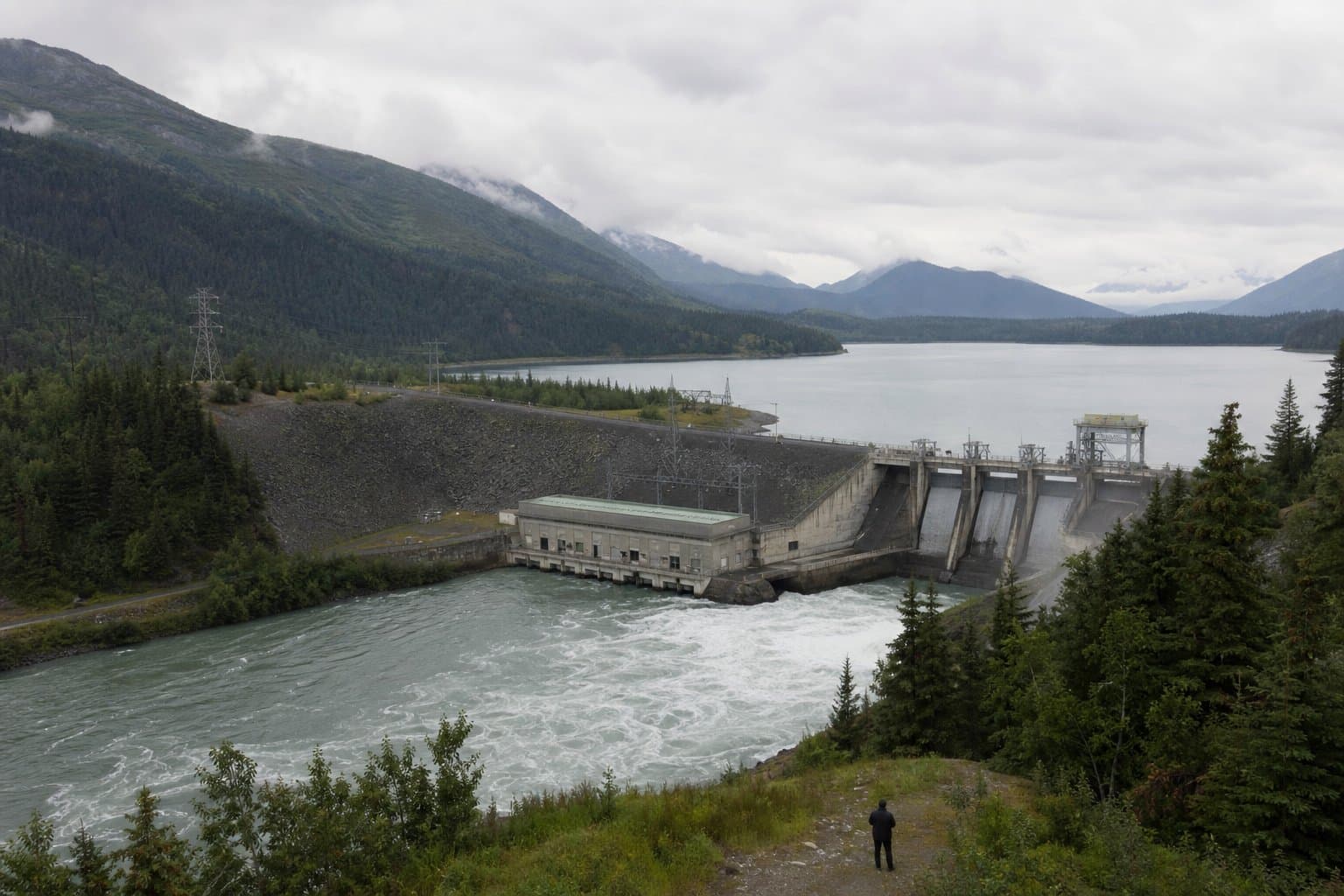
Senate bill targets federal conditions on Alaska's hydropower relicensing
Twelve Alaska hydropower projects are among those facing federal license expiration by 2035, and a bill introduced Monday in the U.S. Senate would change the rules those projects must meet to renew.
U.S. Sen. Lisa Murkowski introduced the Hydropower Licensing Affordability Act alongside Sens. Steve Daines of Montana and Jim Risch of Idaho. The bill targets provisions of the Federal Power Act that allow federal agencies to attach mandatory conditions to hydropower licenses. Under the bill, those conditions would be limited to ones tied to the "direct adverse effects" of a project.
"Throughout my time in the Senate, I have heard the same message from Alaska's utilities and local leaders: the hydropower relicensing process is broken," Murkowski said. "Those burdens make it much harder to maintain and expand one of Alaska's most reliable sources of renewable, baseload power."
Alongside the bill, Murkowski, Daines, and Risch sent a letter to FERC, the Department of the Interior, the Department of Agriculture, and the Department of Commerce urging immediate regulatory reform. The letter asks the agencies to limit mandatory conditions to those addressing direct project effects, restrict the defined project area to its immediate vicinity, reasonably define the term "fishway," require conditions to be backed by the best available science, and ensure that energy supply, cost, and reliability effects receive equal consideration alongside environmental factors. Sens. Mike Crapo, Pete Ricketts, Alan Armstrong, Dan Sullivan, and Tim Sheehy also signed the letter.
Crystal Enkvist, executive director of the Alaska Power Association, said the current process pushes costs onto customers that have nothing to do with how a project actually operates. "Too often projects, and ultimately ratepayers, are asked to bear higher costs due to issues unrelated to project operations or impacts," she said. Matthew Allen of the National Hydropower Association noted that 16,000 MW of hydropower capacity is up for license renewal over the next decade and called the bill a top priority. Rep. Cliff Bentz is leading a companion effort in the U.S. House.
Concerns from environmental groups
Environmental and fisheries advocates push back on the core premise. American Rivers and the Hydropower Reform Coalition argue that narrowing mandatory conditions could undermine fish passage protections and tribal resource rights. Cumulative watershed impacts and upstream habitat connectivity, effects that don't trace neatly to a single project, would no longer be addressable through the licensing process, according to those groups. Salmon-dependent communities in Alaska have a direct stake in how that line gets drawn, according to river and fish habitat advocacy materials.
AI-assisted, reviewed by editors. Spot an error?
Comments
Sign in to leave a comment.
No comments yet. Be the first to share your thoughts.