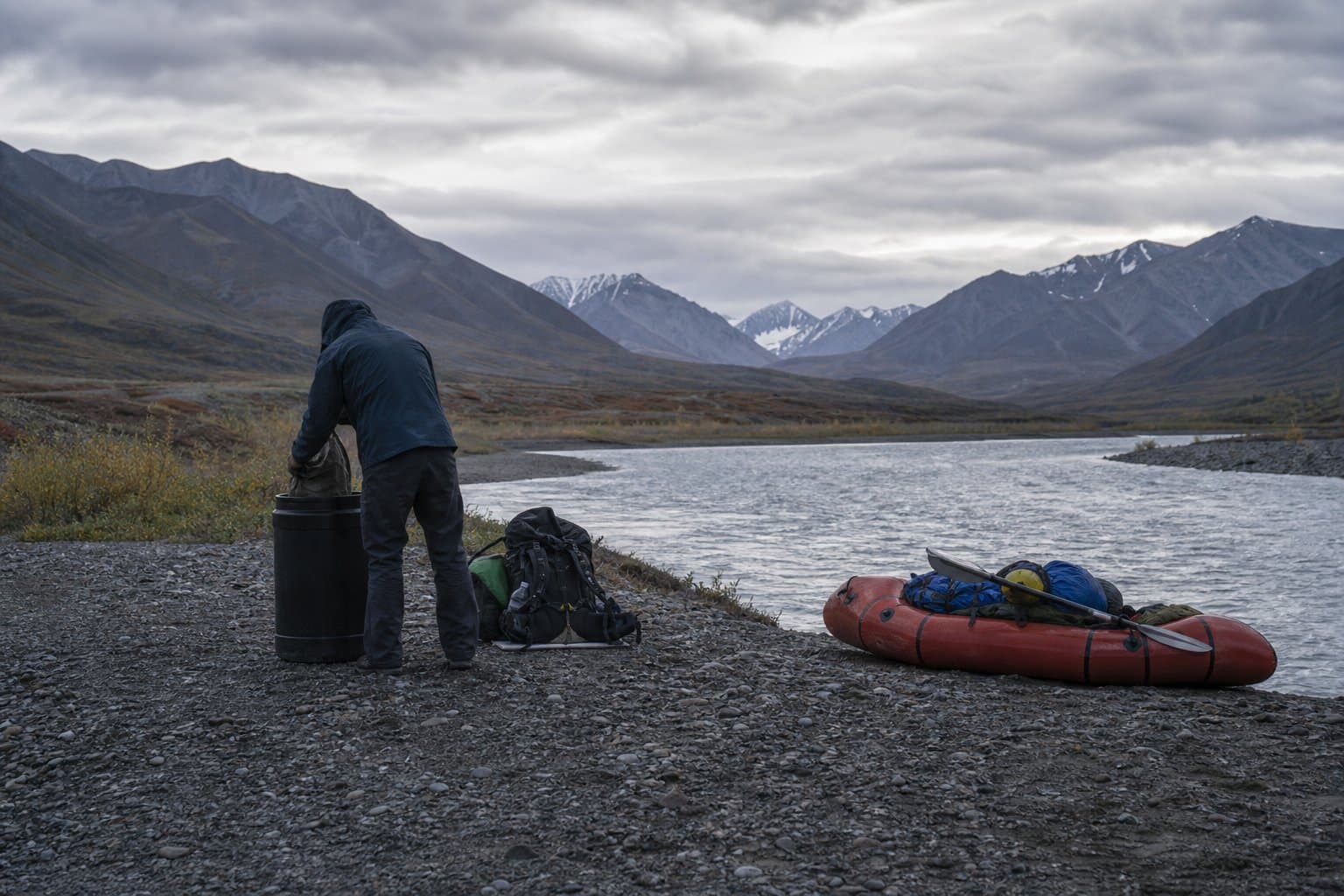
AI-generated (DALL-E 3) · Source
Park Service urges bear safety after two Tinayguk encounters
Backcountry travelers on the Tinayguk River in Gates of the Arctic National Park and Preserve should secure food at all times and use bear-resistant food containers, the National Park Service said after two adverse bear encounters during the 2025 summer season.
Upstream of the North Fork of the Koyukuk, a bear approached a single backpacker at a campsite and got into the person's food, and did not respond to loud noises from the backpacker. Upstream of Wolf Creek, a brown bear charged a solo packrafter after a very close encounter on the river. "The bear stopped charging and left the area after the person yelled and swatted their paddle at the bear," the advisory said.
The Park Service distinguishes between a bear acting defensively, when it is protecting food or cubs or has been surprised at close range, and one behaving non-defensively, aware of you and simply looking or moving along a route. The response differs.
If a bear charges, the Park Service says, do not run and do not drop your pack. For a non-defensive charge, stand your ground and make yourself look big; for a defensive charge, stand your ground but stay non-threatening. Most charges of either kind do not end in contact. Either way, now is the time to use bear spray if you have it, though it works only at close range, 15 to 20 feet, should not be used downwind, and can discharge accidentally, so check it before a trip.
If a bear makes contact, the response depends on the type: a non-defensive attack is likely predatory, and the Park Service says to fight back, while in a defensive attack by a brown bear it says to play dead. Never play dead with a black bear.
Bear-resistant food containers are required in some backcountry areas and recommended throughout the park, and visitors are asked to attend a backcountry orientation at a visitor center.
Firearms are allowed in the park backcountry for personal protection, but the Park Service calls them a last resort, and cautions that no deterrent is 100% effective. A 20-year study it cites found capsicum spray more effective at preventing human injury, and less lethal to bears, than firearms in most instances.
AI-assisted, reviewed by editors. Spot an error?
Stay informed. Support what matters.
Free, permanent access to local news you can verify. Subscribe to support Maggie AlaskaNews and go ad-free.
Related Coverage
Trail runner injured by brown bear near Anchorage's Prospect Heights trailhead
Alaska News · 1w ago · 76% match
Brown bear injures hiker on Bear Valley trail above south Anchorage
Alaska News · 1mo ago · 76% match
Woman injured by brown bear sow near Bells Flats in Kodiak
Alaska News · 3d ago · 75% match
ADF&G warns moose attacks peak as calving season continues through June
Alaska News · 2mo ago · 75% match
A new logjam on the Beaver Creek float wants your boat. Here's how to dodge it.
Alaska News · 1mo ago · 75% match
Comments
Sign in to leave a comment.
No comments yet. Be the first to share your thoughts.