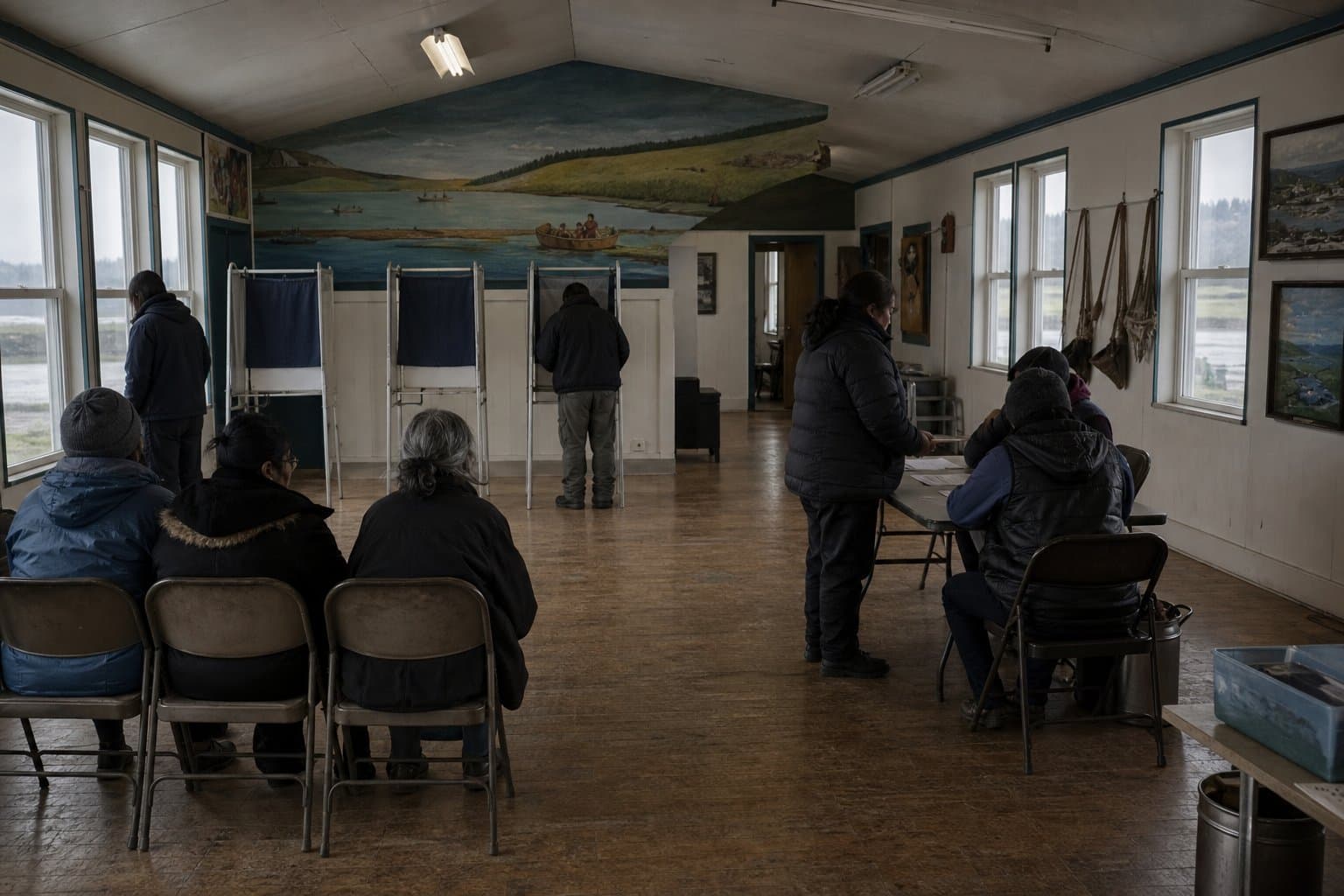
Native organizations demand Division of Elections account for rural precinct vacancies before Tuesday primary
Three Alaska Native organizations said Monday that the Alaska Division of Elections must publicly account for unfilled rural election-worker positions before polls open Tuesday, and pay workers who have waited months for per diem after required training.
The Alaska Federation of Natives, Cook Inlet Tribal Council and First Alaskans Institute, partners in Get Out the Native Vote, issued the joint statement from Anchorage a day before the Aug. 18 primary. The eight demands call for an accounting of vacancies by region and precinct, a plan to fill each one before Tuesday, contingency plans for precincts left understaffed, payment of overdue per diem, and direct word to workers about it. The groups also want confirmed language and voter assistance, a public explanation of how shortages will be handled without compromising integrity, accessibility or security, and assurance that advertised early-vote sites keep published hours, with immediate notice to voters of closures or delays. Many rural communities are reachable only by air or water, the groups say, and local residents usually have the language skills and relationships needed to staff a polling place.
The statement rests on one dated claim. The Division's Region IV office in Nome, which serves House Districts 37 through 40 in Northern, Western and Southwest Alaska and the Aleutian Chain, was not open at the advertised 10 a.m. start for early voting on Saturday, Aug. 15. The groups say the Division's own 2026 primary information listed Saturday hours of 10 a.m. to 4 p.m. Those hours could not be confirmed on the Division's public website, which lists no early vote locations or hours. The record does not show why the office was closed, or whether it opened later that day.
"Rural Alaskans should never have to question whether their polling place will be properly staffed or whether the people who step forward to serve their communities will be treated fairly," AFN President Ben Mallott said. Dana Diehl, Cook Inlet Tribal Council's vice president of strategy and development, said, "This is not simply a matter of election administration — it is a matter of self-determination and community health."
Division correspondence released this year describes difficulty recruiting poll workers in Deering, with AFN's Kendra Kloster coordinating rural recruitment. Director Carol Beecher told PBS NewsHour in October 2024 the agency is "highly invested in ensuring that all precincts have workers and that sites open on time." AFN backed Senate Bill 64, which passed the Alaska House 23-16 and cleared Senate concurrence 16-4, citing rural absentee rejection rates near 14 percent in the 2022 special primary. The bill would create a state-employed rural community liaison.
Nothing in the record shows the Division has answered the demands, given a vacancy count, or said whether any precinct will actually be unstaffed. Polls open at 7 a.m. Tuesday and close at 8 p.m.
AI-assisted, reviewed by editors. Spot an error?
Stay informed. Support what matters.
Free, permanent access to local news you can verify. Subscribe to support Walter AlaskaNews and go ad-free.
Related Coverage
Interior Native Vote pushes turnout for the Aug. 18 primary
Alaska News · 1w ago · 80% match
Alaska voter registration deadline is today for August 18 primary
Alaska News · 4w ago · 77% match
TCC and Interior Native Vote host candidate mixers in Fairbanks before August primary
Alaska News · 1mo ago · 77% match
Interior Native Vote brings candidates to Fairbanks tribal hall July 20
Alaska News · 1mo ago · 76% match
1,900 Alaskans flagged as 'inactive non-citizen' can still vote Tuesday
Alaska News · 1d ago · 76% match
Comments
Sign in to leave a comment.
No comments yet. Be the first to share your thoughts.