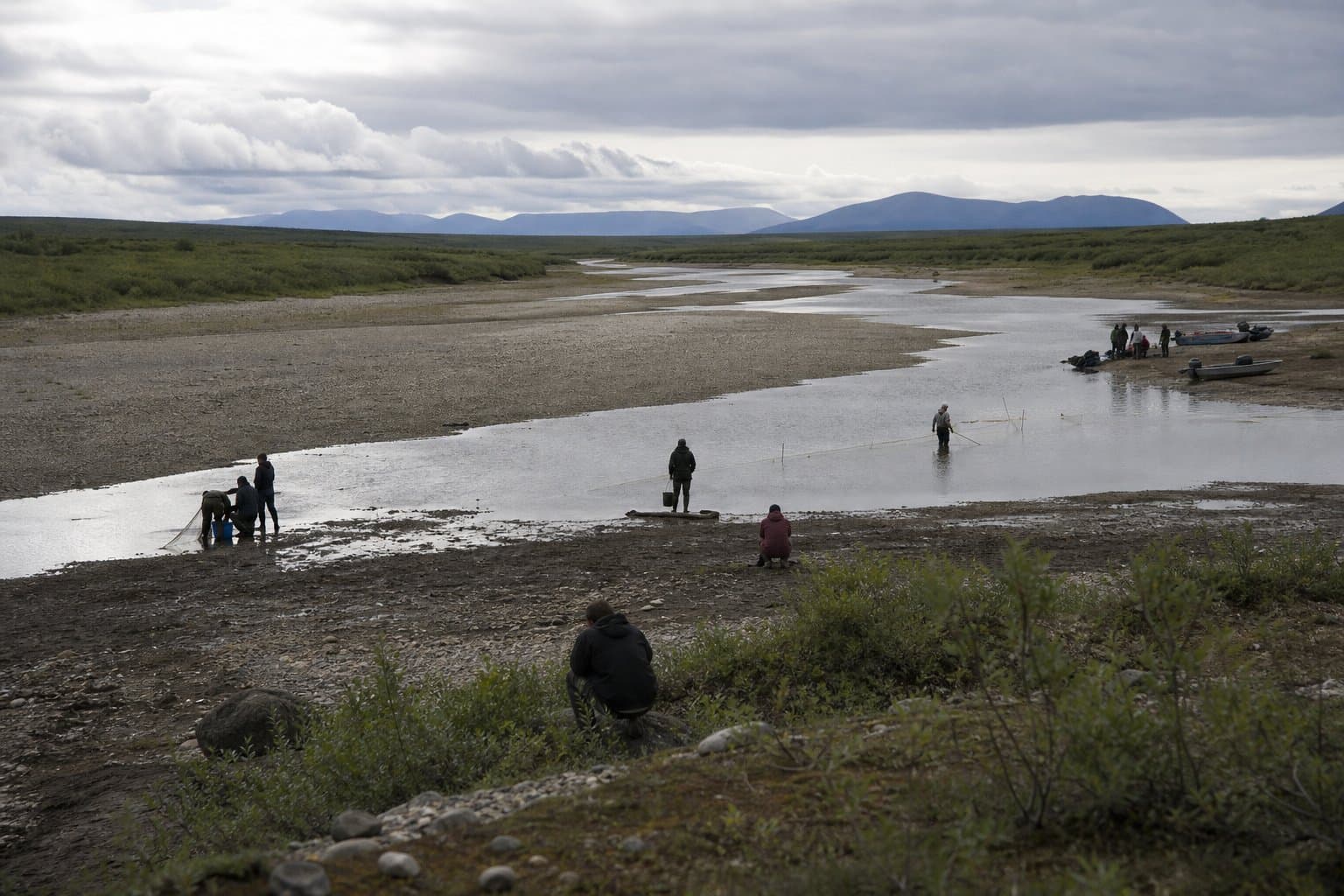
Lower Kobuk River Valley enters moderate drought as dryness expands across Alaska
The Lower Kobuk River Valley is now in moderate drought. The U.S. Drought Monitor's July 9, 2026 map assigned the remote northwest Alaska corridor a D1 classification. "Short-term moderate drought developed in the Lower Kobuk River Valley following continued drier-than-normal weather across large portions of the state this week," the Drought Monitor's Pacific region narrative said. The monitor, jointly produced by the National Drought Mitigation Center, USDA, and NOAA, focuses on broad-scale conditions, and local conditions within the valley may vary from what the map shows.
D0 Abnormally Dry conditions expanded simultaneously in parts of south-central Alaska. The national summary attributed that to "low early summer rainfall amounts and only spotty recent rains."
Subsistence hunters, fishers, and rural residents who depend on local water systems and the river's ecosystem may be among those most directly affected. NOAA's National Integrated Drought Information System has noted that in mainland Alaska, "dry weather can increase wildfire risk, particularly when it coincides with warm and windy conditions." Drought is not unprecedented in Alaska. A long-lived drought from October 2016 to December 2018 in Southeast Alaska affected hydroelectric power generation, drinking water availability, stream and fish habitat, and fish hatcheries, according to a University of Alaska Fairbanks International Arctic Research Center report.
The NOAA Climate Prediction Center's seasonal outlook does not anticipate persistent drought in Alaska through July, August, and September. The next weekly Drought Monitor map will indicate whether the pattern has shifted.
AI-assisted, reviewed by editors. Spot an error?
Comments
Sign in to leave a comment.
No comments yet. Be the first to share your thoughts.