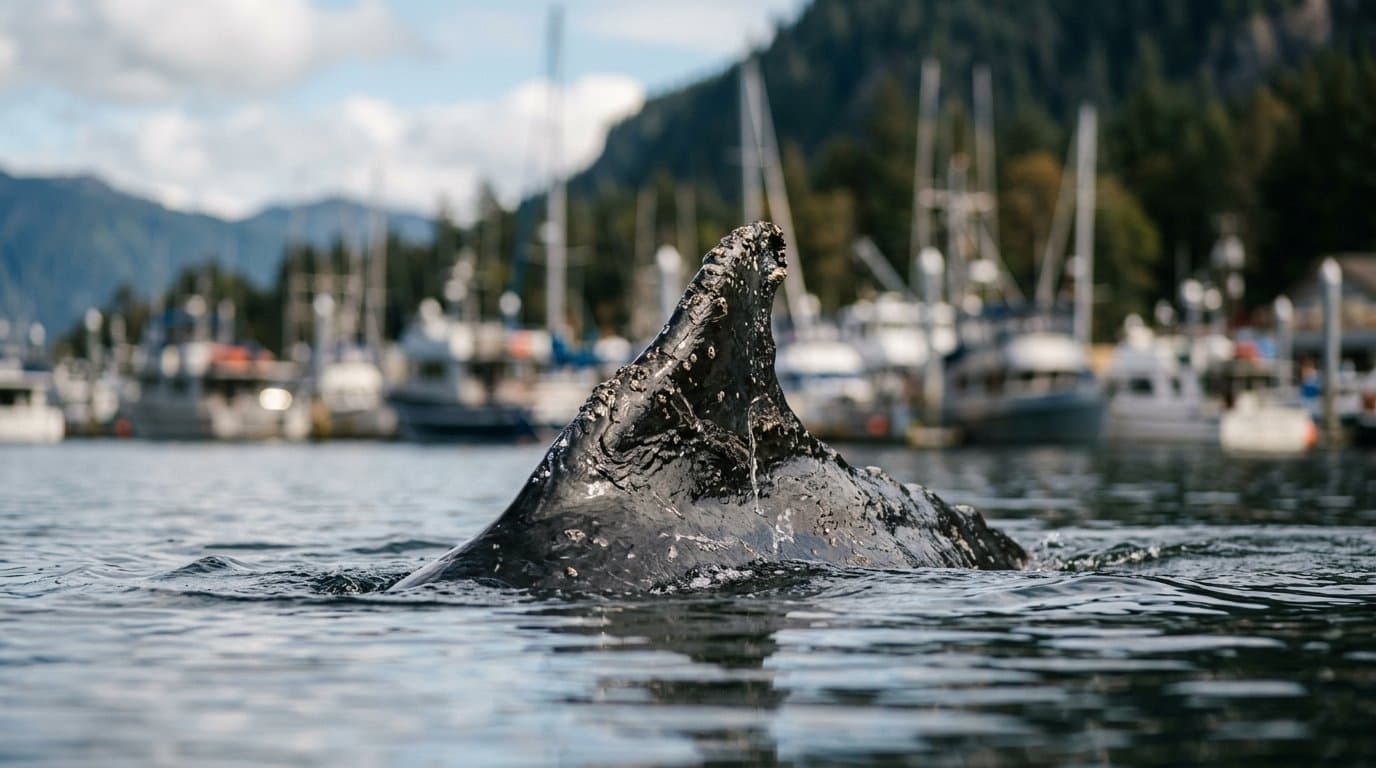
AI image
Juneau weighs its first cap on whale watch operators, with testimony Oct. 15
Juneau's whale watch fleet could face its first cap on operators under draft options the Visitor Industry Task Force takes up Thursday, Sept. 10.
An Aug. 31 memo by Visitor Industry Director Alexandra Pierce lists four options. The first is a city license or permitting structure, drafted with municipal attorneys, that would establish who is legally operating and raise enforcement questions. The second is a limited-entry program capping operators, with potential to taper the cap down over time. The third is an operating agreement with the Southeast Alaska Whale Watch Association on no-go zones and spacing, possibly ending whale-sighting guarantees, which the memo says pressure operators to run aggressively. The fourth would extend the Statter Harbor no-wake zone 500 feet.
NOAA estimates roughly 75 whale watch boats, run by 24 companies with capacity for 2,325 passengers, operate in Juneau. They split among Allen Marine's private facility, Fisherman's Bend and Statter Harbor, a public-private mix that Pierce wrote complicates the dock lever other American whale watch ports use. Goldbelt has bought whale watch boats and plans maritime tours from the proposed Goldbelt Aani development.
The city does not regulate whale interactions directly but influences the industry through dock management, permitting and tourism policy. Enforceable protection comes from the NOAA-administered Marine Mammal Protection Act, which sets a 100-yard approach distance for humpback whales in Alaska. The Coast Guard handles vessel safety but does not enforce that distance. Federal agencies have limited on-the-water enforcement capacity, and voluntary programs, Tourism Best Management Practices and Whale SENSE, do not solve boat numbers, wakes or crowding, the memo says. Assistant Municipal Attorney Nicole Lynch's notes place waters beyond the low-tide line under state authority, leaving the city its tidelands and harbors.
The city's 2024 Juneau Community Tourism Survey found 61% of respondents concerned about the industry. Among those, 79% cited impacts to whales and wildlife, and 64% cited the number of boats.
The memo lists Coghlan Cut as a concern any operating agreement should address, without saying what happened there. SEAWWA told the task force May 12 that Statter Harbor is already full and that capping commercial harbor permits is the most practical limit on fleet growth.
Staff asked for firm recommendations for the task force's final report; implementing any would still require NOAA, Docks & Harbors and the operators. A second public testimony session is set for Oct. 15.
AI-assisted, reviewed by editors.
Stay informed. Support what matters.
Free, permanent access to local news you can verify. Subscribe to support Walter AlaskaNews and go ad-free.
Related Coverage
A Juneau task force wants congestion data to support limiting cruise calls
Alaska News · 2w ago
Juneau tourism task force takes final public testimony Oct. 15
Alaska News · 2w ago
Juneau task force takes up cruise cap criteria Thursday, with dock pressure looming
Alaska News · 1mo ago
Juneau weighs what kind of cruise town it wants to be
Alaska News · 2mo ago
Juneau's task force weighs crowding fixes amid a bigger question on how much tourism is enough
Alaska News · 2w ago
Comments
Sign in to leave a comment.
No comments yet. Be the first to share your thoughts.