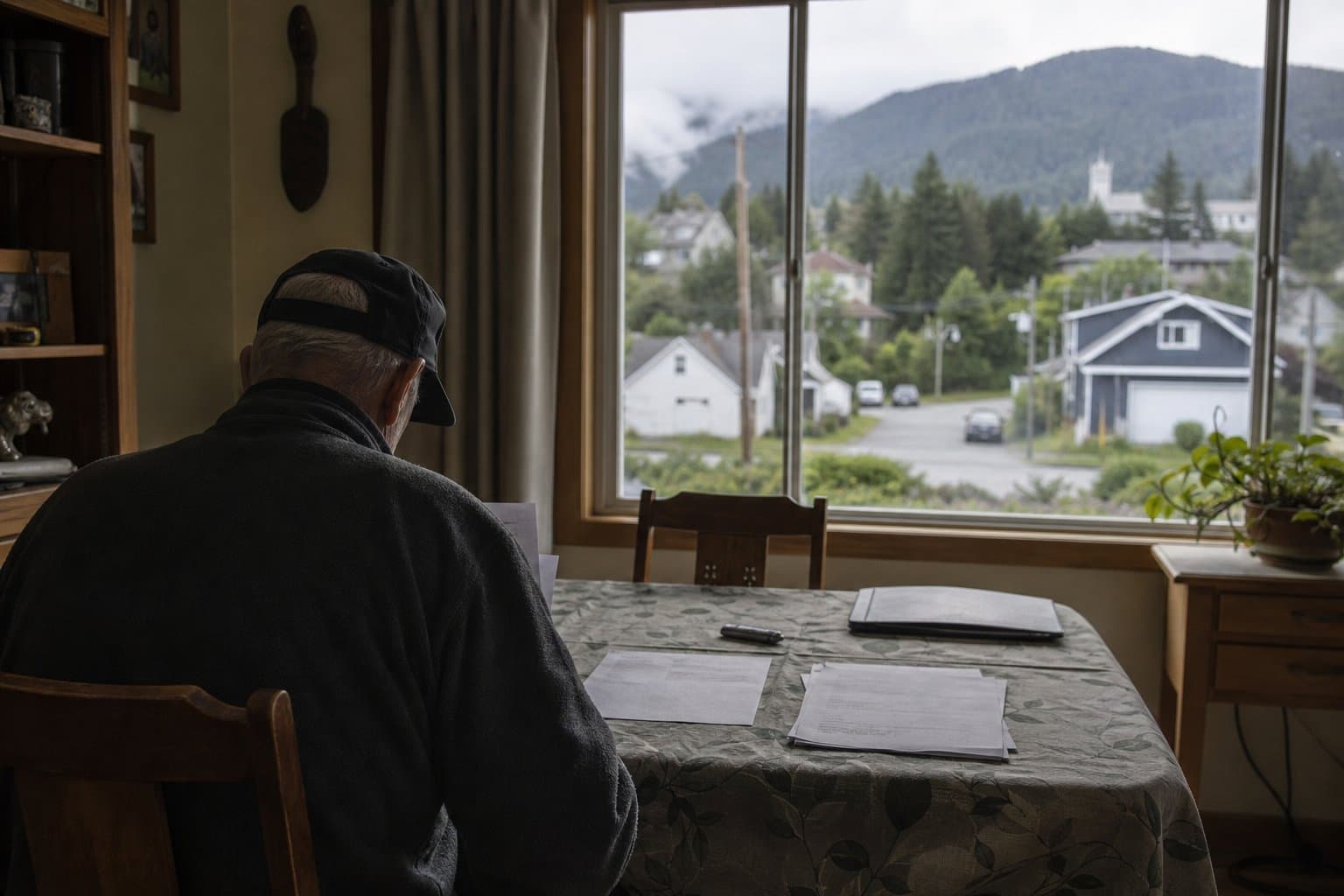
Juneau ordinance would expand senior property tax relief, cap large exemptions
The Juneau Assembly Finance Committee reviewed a proposed ordinance Wednesday that would change how the city determines eligibility for the senior property tax hardship exemption and, for the first time, cap the largest awards.
Ordinance 2026-34, introduced June 8, would replace the current income threshold for the senior hardship exemption with 250% of the federal poverty guideline, the same threshold the City and Borough of Juneau already uses for its sales tax rebate program. The shift is significant: for a one-person household, eligibility would move from $115,562 under the current 120% HUD median income standard to $48,875 under the new threshold. A July 3 memo from Finance Director Angie Flick to the committee noted the change would create consistency across the borough's hardship programs.
Under the ordinance, the hardship exemption covers only the portion of a qualifying applicant's property tax liability that exceeds 2% of gross household income, calculated after the state-required $150,000 base exemption is applied. An exception would allow applicants whose income exceeds the threshold to still qualify if a documented one-time extraordinary expense effectively brings their income below the limit for that year.
In tax year 2025, 315 parcels received the hardship exemption, with awards ranging from $38.20 to $15,013.18, and the borough forgave about $794,000 in property tax revenue. The ordinance would cap the exemption at the tax liability on a median single-family home, roughly $5,079 based on a $496,000 median value at the current mill rate. Only 24 of the 315 parcels exceeded $5,000 in 2025, so the cap would reduce total forgone revenue by about $45,000, trimming it to around $749,000.
Flick's memo also noted that the state-mandated $150,000 base exemption for seniors and disabled veterans is not optional and is not reimbursed by the state, making the hardship layer the only piece of the program the borough can adjust locally. The proposal grew from a Foregone Revenue Subcommittee memo dated April 20, 2026.
The Assembly Finance Committee, which conducts its meetings as worksessions of all nine Assembly members, cannot amend the ordinance at the committee stage. Members can direct staff to draft amendments or refer the ordinance back from its scheduled July 27 public hearing and action date before the Assembly.
AI-assisted, reviewed by editors. Spot an error?
Comments
Sign in to leave a comment.
No comments yet. Be the first to share your thoughts.