AI image
Juneau airport to lease Texas fire truck while new ARFF rigs await delivery
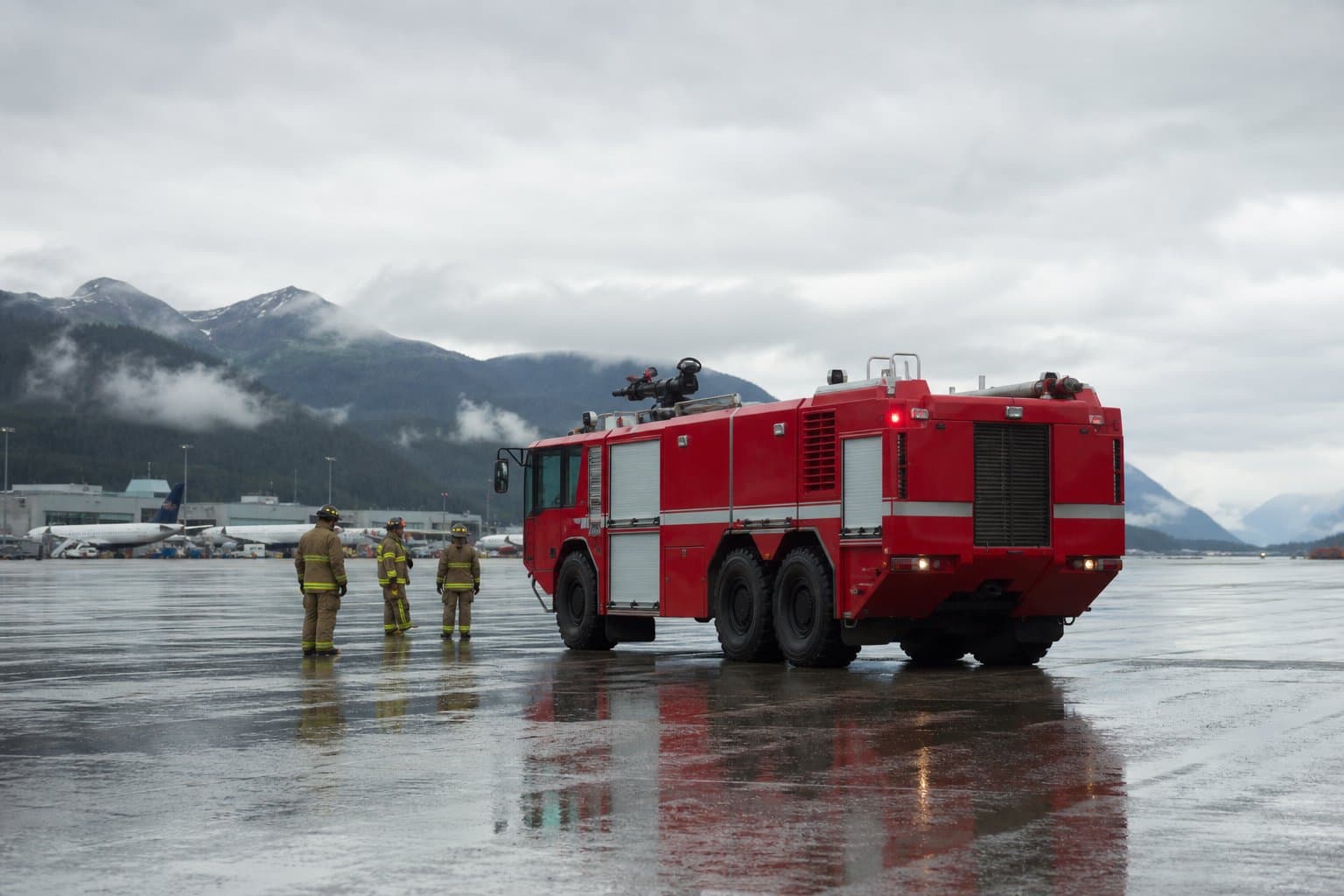
Juneau International Airport faces a window of several months with reduced frontline firefighting capacity, and the Assembly Finance Committee will consider spending up to $162,000 to lease a replacement truck from Texas when it meets Wednesday at 5:30 p.m.
Capital City Fire/Rescue Chief Brandon Bagwell identified a three-to-four-month period when the airport will be down to just one truck, A-1, and the leased Palmer rig, which is currently out of service. Bagwell said he does not have a high degree of confidence that the Palmer rig can be returned to continuous frontline service given its age and the severity of issues being addressed. Officials have described the situation as a potential compliance concern. The airport handles roughly 130,000 aircraft operations a year and serves as the primary air link for Southeast Alaska communities.
Two new trucks are on order. A Rosenbauer was expected by mid-May and an Oshkosh Striker 6x6 by mid-July, but crew training delays push their in-service dates to mid-June to early July and mid-August at the earliest, according to information before the committee. That training gap is what opens the coverage window.
The Airport Board approved the six-month lease in March, funding it upfront from the airport fund balance, and separately voted to ask the Assembly to reimburse the $162,000 from sales tax funds flowing back to the airport. The board discussed the reimbursement mechanism with the City Manager's Office, though the exact arrangement remained unclear at the time of the vote. The ordinance appropriates up to $162,000 for the lease.
Assemblymember Neil Steininger raised concerns at a February joint meeting about how the airport arrived at a position of relying on aging trucks, asking whether a formal replacement policy had not been followed or whether a financial decision in the past had contributed to the situation. Airport Board member Angela Rodell, who also served as CEO of the Alaska Permanent Fund Corporation, sits on the board that approved the lease request.
One gap will remain even after both new trucks arrive. The second truck, funded from the city's fleet reserve, does not carry the cargo aircraft incident mitigation equipment that the retired 2004 Oshkosh had. That operational gap does not affect the airport's FAA index rating, but it represents a capability the airport previously held.
The ARFF fleet transition is part of a broader replacement project. According to the airport, "New ARFF trucks are built for faster acceleration on a lighter weight body. They burn less fuel per gallon and meet contemporary EPA air emissions standards."
If the committee advances the ordinance Wednesday, it goes to the full Assembly for a vote.
Source: Assembly Finance Committee.
AI-assisted. How we use AI
Stay informed. Support what matters.
Free, permanent access to local news you can verify. Subscribe to support Walter AlaskaNews and go ad-free.
Related Coverage
Airport firefighting trucks fail, leaving Juneau one flat tire from losing all flights
Alaska News · 7mo ago
Juneau bought two fire trucks. Passengers will pay for them until 2035.
Alaska News · 1mo ago
Anchorage Assembly set to approve $1.4M fire engine with 900-day wait
Alaska News · 2mo ago
A new tower roof could eat half of Juneau airport's reserve, as pilots push for more
Alaska News · 3mo ago
Juneau airport board to vote on $4.6 million for snow-removal equipment
Alaska News · 2d ago
Comments
Sign in to leave a comment.
No comments yet. Be the first to share your thoughts.