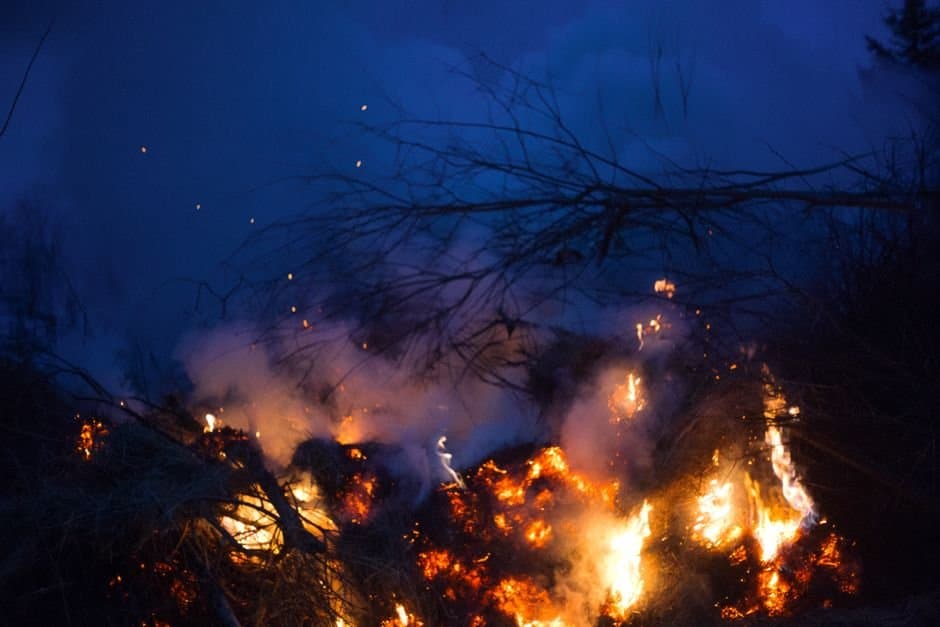
Photo by Plato Terentev on Pexels · Photo source
Human ignitions cause 95 percent of Alaska's early fires
Of the 124 wildland fires recorded across Alaska so far this season, 118 were human-caused, a rate of 95 percent, according to the Alaska Division of Forestry & Fire Protection. The pattern continues a trend Alaska Wildland Fire Information previously covered this season, when the state suspended burn permits statewide in May and opened multiple wildfire investigations across four regions as human-caused ignitions surged.
The Alaska Division of Forestry & Fire Protection reported 28 new fires between June 1 and June 7. Most were small, quickly contained blazes sparked by escaped debris piles, abandoned campfires, and vehicle fires spreading into wildlands. One fire near Kasilof started when a burning campervan ignited nearby grass. Another in Delta Junction was caused by the spontaneous combustion of deteriorating gunpowder a property owner had left outside. The Corr Fire near Kalifornsky burned when someone illegally torched tall grass during a formal burn-permit suspension. State law requires a Small-Scale Burn Permit to burn a lawn of less than 1 acre with grass no taller than 4 inches.
Mastadon Fire required extended attack
The Mastadon Fire near Talkeetna was the only blaze during the week to require an extended attack on the road system. Discovered June 3, it burned 18.5 acres and took multiple days to suppress. No structures were threatened and no evacuations were necessary. The response included two helicopters making bucket drops, multiple retardant drops coordinated by air attack, and ground crews from the Pioneer Peak Interagency Hotshot Crew and Mat-Su Type 2 Crew. Firefighters declared the fire fully contained June 5 and called it out June 7.
Climate change extends fire season
Historically, human-caused fires in Alaska ignite near communities and are suppressed quickly, while lightning-caused fires, which tend to occur later in the summer, burn the majority of acreage. Academic and agency analyses indicate that the expansion of human-caused wildfire ignitions has effectively lengthened the U.S. wildfire season, including in northern regions, by enabling fires during periods and in places where lightning is less common.
Climate change is increasing wildfire risk in Alaska by contributing to warmer temperatures, longer growing seasons, and drier fuels, which support larger, more frequent, and more severe fires. Early-season Alaska wildfire activity is often dominated by human-caused ignitions such as debris-burning escapes and discarded campfires, while lightning-caused fires become more common later in the summer.
Source: Alaska Division of Forestry & Fire Protection, Alaska Division of Forestry & Fire Protection: DFFP weekly wildland fire roundup for June 1 – 7 – Alaska Wildland Fire Information.
Made by our human newsroom with AI. How humans and AI work here · Grow with our newsroom
Stay informed. Support what matters.
Free, permanent access to local news you can verify. Subscribe to support Alaska News and go ad-free.
Related Coverage
Alaska suspends burn permits statewide as heat drives fire risk
Alaska News · 4mo ago
Alaska fire agencies open nine wildfire investigations in four days
Alaska News · 4mo ago
Alaska fire agencies open 10 wildfire investigations as Red Flag Warnings signal critical conditions
Alaska News · 4mo ago
Alaska raises wildfire alert as dry grass fuels 63 early-season fires
Alaska News · 5mo ago
Alaska suspends burn permits in Mat-Su, Kenai, Tok, Delta
Alaska News · 4mo ago
Comments
Sign in to leave a comment.
No comments yet. Be the first to share your thoughts.