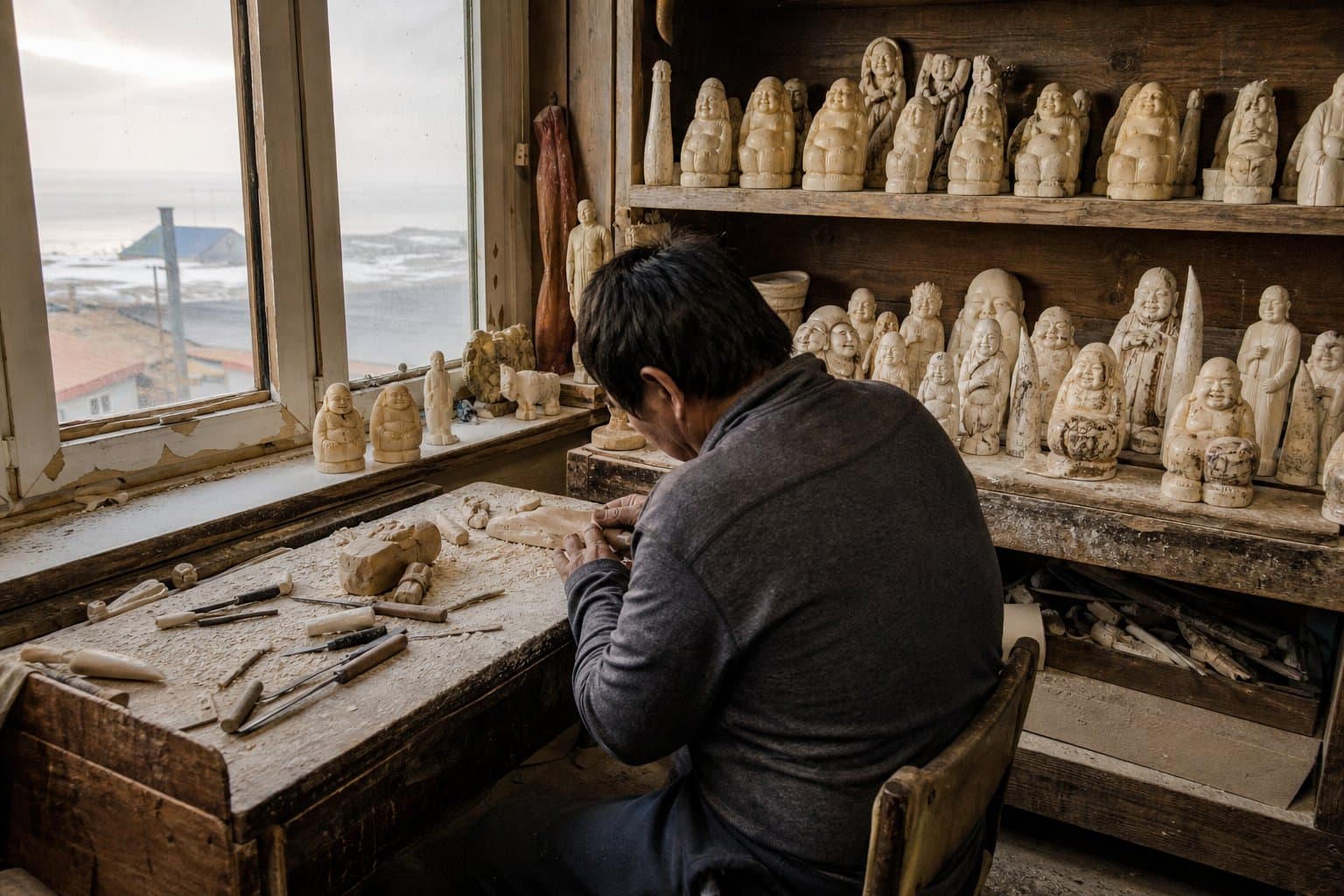
How Bering Strait carvers made the Billiken their own
Around 1910, Iñupiaq master carver Happy Jack Angokwazhuk, the most celebrated and innovative ivory carver of his era, is often connected to the early adaptation of the Billiken into ivory, possibly after seeing one at the 1909 Alaska-Yukon-Pacific Exposition in Seattle. By the 1940s, many Alaska Native carvers were producing Billikens from ivory, stone, and sperm whale tooth, selling them to soldiers, tourists, and other visitors as good-luck charms. These carvings were often accompanied by cards that read, "Rub his tummy or tickle his toes, you'll have good luck so the story goes."
Although the Billiken did not originate in Alaska, Bering Strait artists transformed it through local materials, craftsmanship, and style. Details such as facial expression, shape, polish, and engraving give every piece its own character. Today, ivory Billikens remain collectible objects and reminders of the creativity, resourcefulness, and adaptability of Bering Strait carvers.
As anthropologist Dorothy Jean Ray observed, "Happy Jack was the first professional Alaskan Eskimo artist. He earned substantial income from his art, unlike the many part-time carvers who worked only when the mood struck or when they needed cash."
AI-assisted, reviewed by editors. Spot an error?
Comments
Sign in to leave a comment.
No comments yet. Be the first to share your thoughts.