Generated image
How a borrowed good-luck charm became Bering Strait ivory art
The Billiken didn't come from Alaska. The pudgy, grinning good-luck figure was dreamed up Outside in 1908.
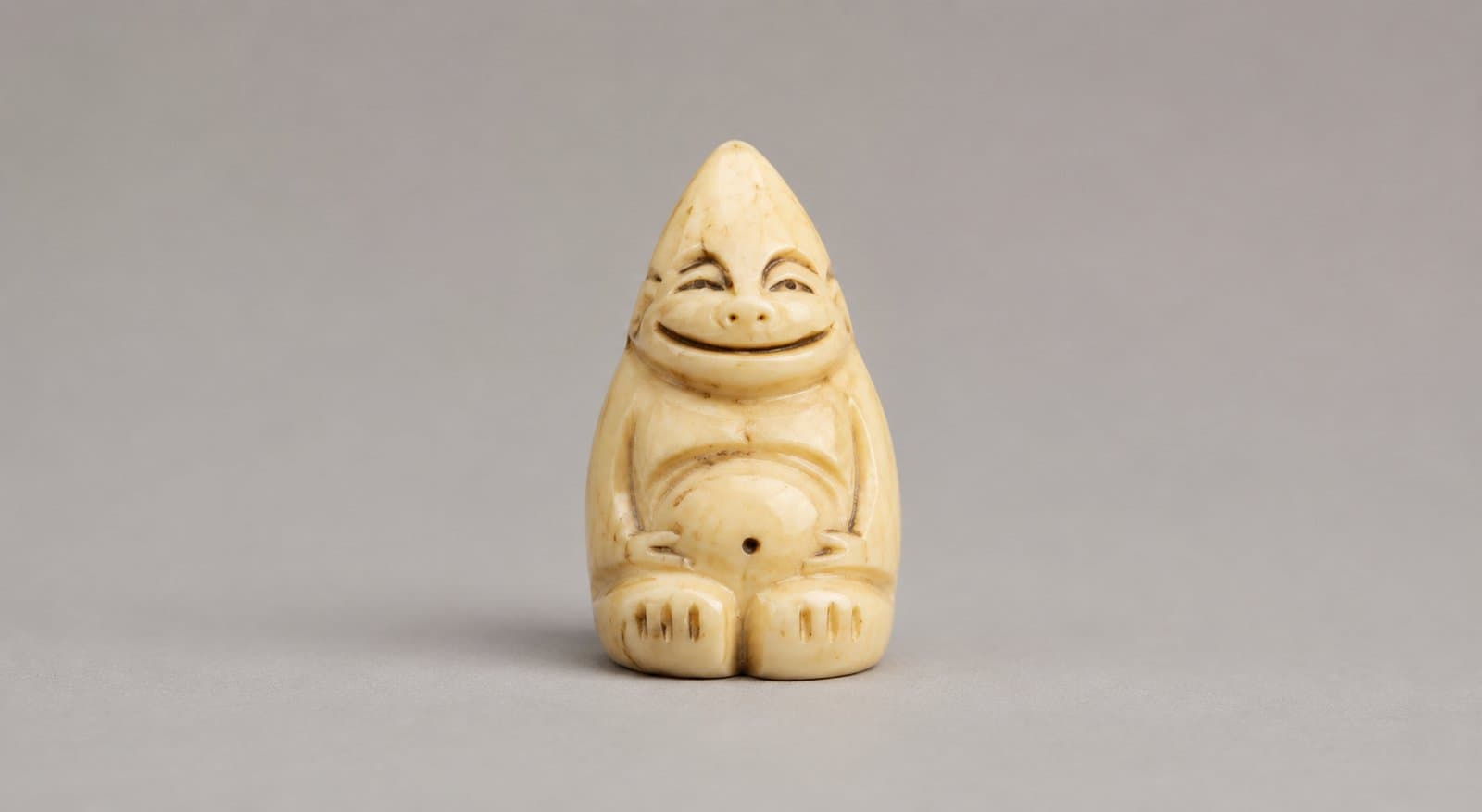
But around 1910, the celebrated Iñupiaq master carver Happy Jack Angokwazhuk is said to have picked one up — possibly at the 1909 Alaska-Yukon-Pacific Exposition in Seattle — and carved it in walrus ivory. The borrowed charm found a new home.
By the 1940s, carvers across the Bering Strait were turning out Billikens in ivory, stone, and sperm whale tooth, selling them to soldiers and tourists. Many came with a card: "Rub his tummy or tickle his toes, you'll have good luck so the story goes."
What makes the ivory Billiken Alaskan isn't its origin but its hand — the expression, the polish, the engraving that make each one its own.
Happy Jack left the deepest. As anthropologist Dorothy Jean Ray put it, he was "the first professional Alaskan Eskimo artist," earning real income from his work while others carved only when the mood, or the need for cash, struck.
Source: Historical Spotlight: The Billiken.
Made by our human newsroom with AI. How humans and AI work here · Grow with our newsroom
Stay informed. Support what matters.
Free, permanent access to local news you can verify. Subscribe to support Bill AlaskaNews and go ad-free.
Related Coverage
House passes Alaska Native walrus-ivory protection bill
Alaska News · 4mo ago
Alaska Native ivory carvers can now sell their work in all 50 states
Alaska News · 3mo ago
A Tsimshian carver, accused of inventing clan stories, is affirmed by another clan
Alaska News · 2mo ago
St. Paul Island artists retell Kipling's 'White Seal' from Unangan perspective
Alaska News · 3mo ago
A Juneau artist beads a warrior, a relative, and a record
Alaska News · 3mo ago
Comments
Sign in to leave a comment.
No comments yet. Be the first to share your thoughts.