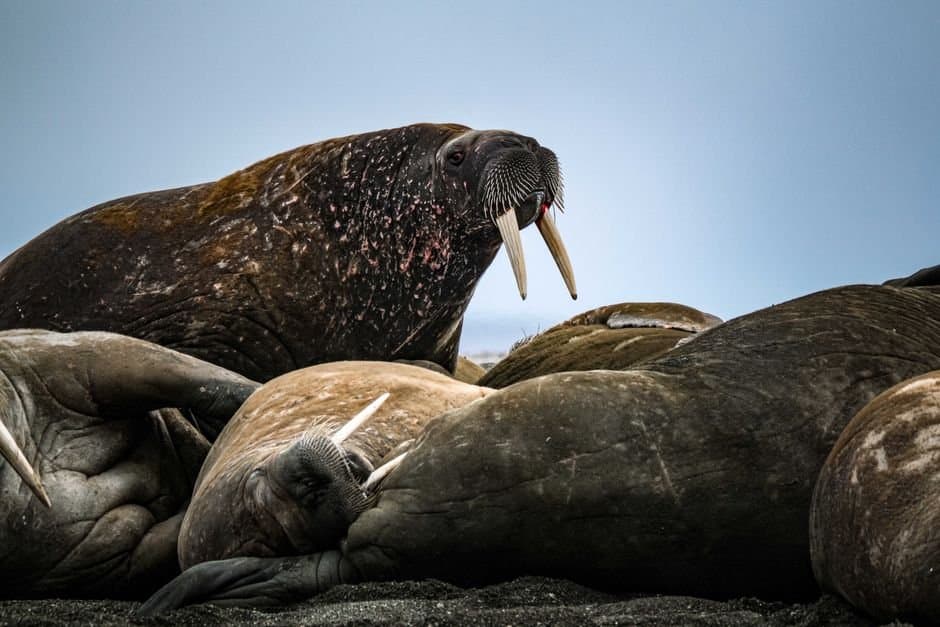
Photo by Francesco Ungaro on Pexels · Photo source
House passes Alaska Native walrus-ivory protection bill
The U.S. House passed the Alaska's Right to Ivory Sales and Tradition Act on June 5, sending federal protection for Alaska Native walrus-ivory art to President Donald Trump's desk after an eight-year push by the Alaska delegation and Native organizations.
The legislation prevents states from banning the import, sale, or possession of authentic Alaska Native handicrafts made from marine-mammal ivory, bone, or baleen. State ivory bans aimed at stopping African elephant trafficking had inadvertently criminalized Alaska Native art already protected under the Marine Mammal Protection Act, cutting off markets for rural artists whose families depend on ivory-art sales.
Senator Dan Sullivan first introduced the bill in October 2024 and reintroduced it in January 2025 at the start of the current Congress. The Senate passed it unanimously before the House vote.
Representative Nick Begich, who led the House effort, said the legislation protects the rights of Alaska Native artists to continue sharing their craftsmanship, traditions, and heritage with the rest of the country while also supporting rural economies across Alaska.
Senator Lisa Murkowski said ensuring Alaska Native artists can create and sell their traditional handicrafts is about more than income. It's about supporting families who have used their work to preserve heritage and culture through generations, Murkowski said. Safeguarding wildlife and honoring Indigenous art can coexist, she said.
Nagruk Harcharek, president of Voice of the Arctic Iñupiat, called the House vote an important milestone for North Slope Iñupiat cultural self-determination. For thousands of years, Iñupiat people have transformed walrus ivory into tools, arts, and crafts, Harcharek said.
Melanie Bahnke, president of Kawerak, a Bering Strait regional organization, said Alaska Natives have sustainably harvested Pacific walrus for thousands of years. Congress passed the bill to ensure that Native artwork and tools are not deemed illegal in various parts of the United States, Bahnke said.
The bill now awaits the president's signature.
Source: U.S. House of Representatives.
Made by our human newsroom with AI. How humans and AI work here · Grow with our newsroom
Stay informed. Support what matters.
Free, permanent access to local news you can verify. Subscribe to support Alaska News and go ad-free.
Related Coverage
Alaska Native ivory carvers can now sell their work in all 50 states
Alaska News · 3mo ago
House panel advances bill to let Alaska Native artists sell work with feathers
Alaska News · 2mo ago
House passes Begich bill to open treaty talks with Japan over Alaska Native handicrafts made with bird parts
Alaska News · 1mo ago
Registered Alaska Native artists can keep selling fur on Etsy
Alaska News · 3mo ago
Begich bill to expand commerce in Alaska sea otter handicrafts gets first congressional hearing
Alaska News · 4mo ago
Comments
Sign in to leave a comment.
No comments yet. Be the first to share your thoughts.