Former Alaska Lt. Gov.: Division staff, not his office, vetted candidates
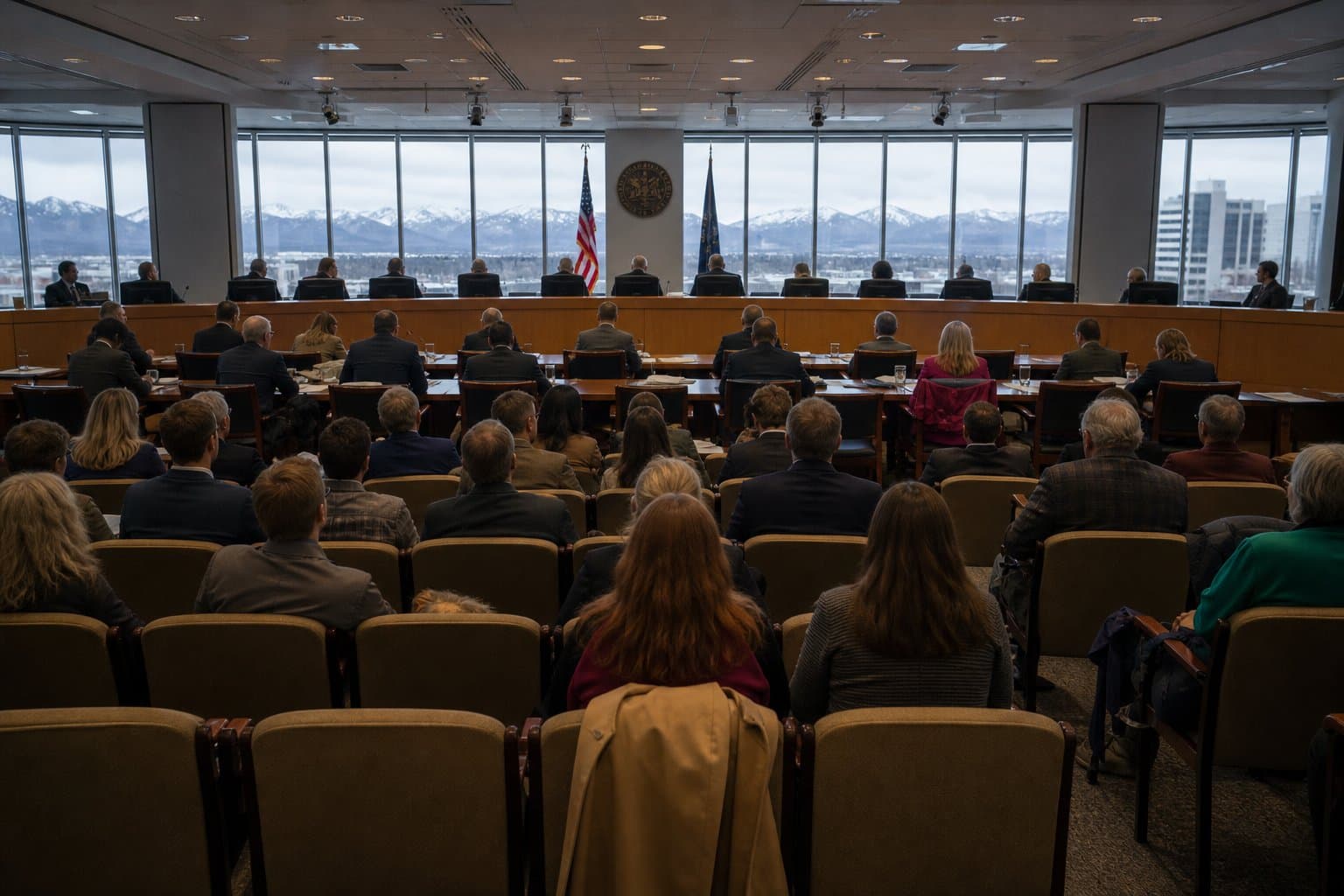
Former Alaska Lieutenant Governor Loren Leman said in written testimony to the Alaska House Judiciary Committee on Monday that Division of Elections staff, not the lieutenant governor, were responsible for vetting candidate filings during his 2002 to 2006 tenure, and that he never encountered a situation where two candidates shared nearly identical names and party affiliations.
Leman submitted his response in writing to state Rep. Andrew Gray, who convened the Anchorage hearing to examine the Division's legal authority to screen candidates from the ballot. Gray's invitation letter stated the hearing was "not about Mr. Sullivan specifically" but was intended to give the public a clear understanding of candidate qualifications and Division procedures before the upcoming election cycle. The hearing was prompted by public questions about the Division's recent determination to remove Daniel J. Sullivan from the ballot.
In his written response, Leman described his role as "high-level" oversight, noting that Division staff reviewed candidate filings to ensure constitutional, statutory, and regulatory requirements were met. He also described an unusual 2004 tied Democratic primary race for a House seat in southwest Alaska, decided by a coin toss administered by then-Director Whitney Highland Brewster, as an example of the kinds of election-administration issues that arose during his tenure.
A legal memo prepared for the hearing by Legislative Counsel Andrew Dunmire concluded that 6 AAC 25.212, the regulation the Division cited to justify the exclusion on voter-confusion grounds, does not give the Division authority to disqualify a candidate. Dunmire wrote that "this is Andrew Dunmire from Legislative Legal Services. I agree with the assessment that 6 AAC 25-212 is a regulation that provides instructions to the Division of Elections, and this section does not qualify or disqualify a candidate, nor does it give the division authority to disqualify or qualify a candidate." The memo suggested that if ballot confusion is a genuine concern, narrowly tailored ballot design solutions are available, but that administrative regulations cannot override constitutional qualifications for federal office. The U.S. Constitution sets only three qualifications for a senator: age, citizenship, and inhabitancy at the time of election.
Gray invited the chairs of the Alaska Republican, Democratic, and Libertarian parties to share their perspectives on the role their parties play in educating the public on candidates and how that role relates to the Division of Elections. He also asked them to compare the current case to prior contested candidacies, including Dustin Darden in 2018, Jennie Armstrong in 2022, David Eastman in 2022, and Eric Hafner in 2024. In each of those cases, the Division maintained that its role was narrow, focused on objective constitutional qualifications rather than a candidate's intent or associations. In the Eastman litigation, the Division argued in a court filing that "An administrative complaint to the Division is not the proper forum for a freewheeling investigation into a candidate's political associations."
Sources
Based on: View Transcript
AI-assisted, reviewed by editors. Spot an error?
Comments
Sign in to leave a comment.
No comments yet. Be the first to share your thoughts.