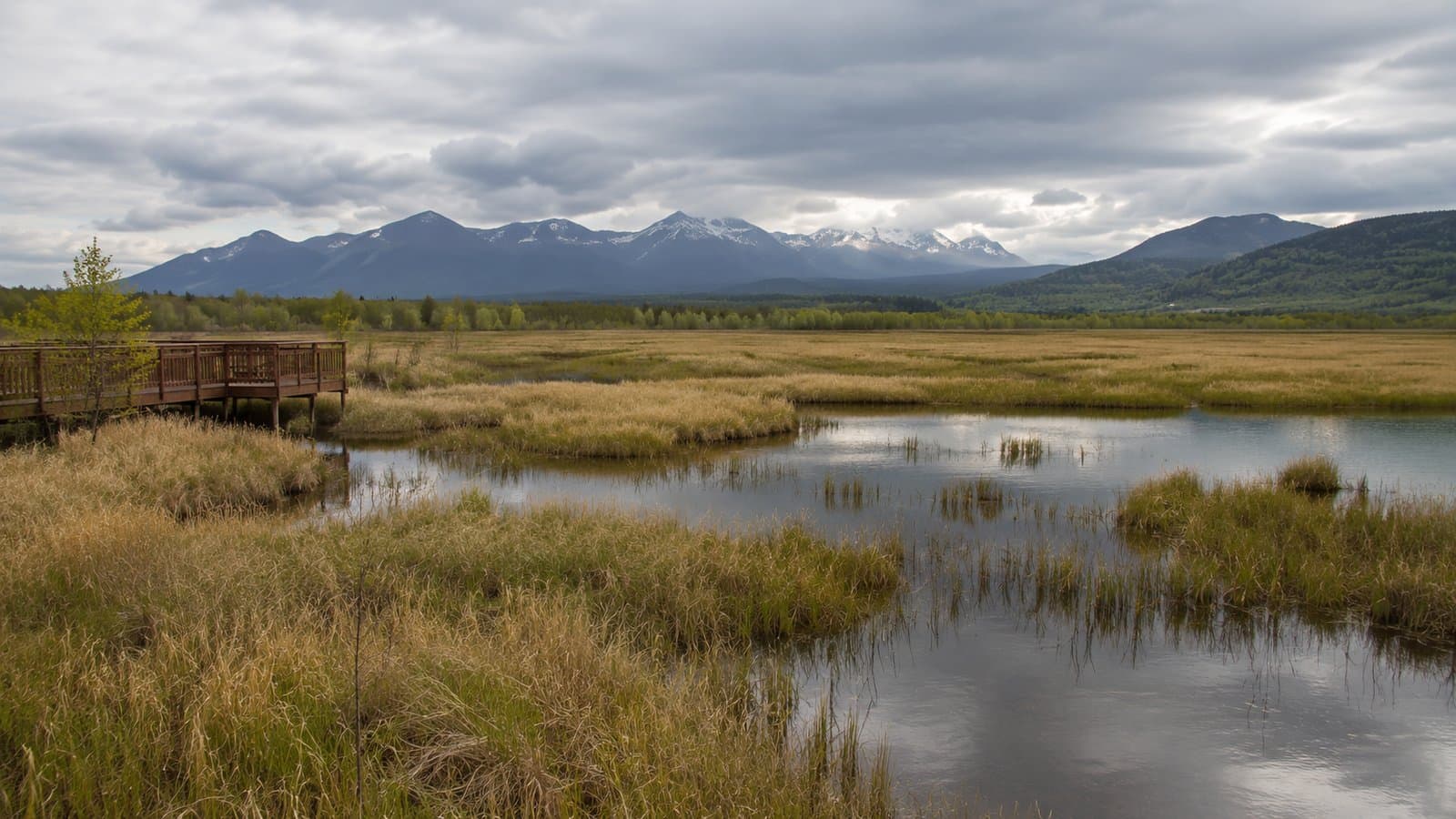
Photo by Cale Green
As federal wetland protections recede, Anchorage rewrites its own rules
The federal government has stopped protecting many of Alaska's wetlands. Now Anchorage has to decide whether it will.
The shift traces largely to a 2023 U.S. Supreme Court decision, Sackett v. EPA, which sharply narrowed the Clean Water Act. The Court ruled that federal protection reaches only wetlands with a continuous surface connection to a permanent body of water, leaving out the isolated and seasonal wetlands that had been covered for decades. By the EPA's own estimate, the ruling stripped federal protection from more than half the nation's wetlands and pushed the decision about whether to protect the rest onto states and local governments.
That lands hard in Alaska, which holds more wetlands than any other state — roughly 43 percent of its land, and the majority of all the wetlands in the country. Anchorage is built in and around them. Add two more pressures — the city's wetlands maps date to 2014, and it has lost its authority to issue certain U.S. Army Corps of Engineers permits — and its decade-old management plan no longer matches the ground or the law.
The Planning and Zoning Commission voted Monday to recommend the Assembly approve the first phase of an update. Its central change would let city staff revise the official wetlands map without a separate Assembly vote each time, as long as the changes rest on delineations by qualified professionals — streamlining a process that has bogged down, while moving routine map decisions out of the Assembly's hands. No one testified. The recommendation now goes to the full Assembly.
This article is based on a public meeting of Municipality of Anchorage — Anchorage Assembly: Planning and Zoning Commission - July 13, 2026 - 2026-07-13 18:30:00 ().
Made by our human newsroom with AI. How humans and AI work here · Grow with our newsroom Transcript byLucas Brown
Stay informed. Support what matters.
Free, permanent access to local news you can verify. Subscribe to support Walter AlaskaNews and go ad-free.
Related Coverage
Anchorage wetlands plan gets first update in over a decade as federal rules shift
Alaska News · 3mo ago
Anchorage's wetlands plan describes a permit the city cannot issue
Alaska News · 1mo ago
Anchorage moves to clarify its wetlands permitting, though some say it doesn't go far enough
Alaska News · 1mo ago
Anchorage may let its planning director redraw wetland maps as wetlands shift and dry up
Alaska News · 1mo ago
Anchorage wetlands commission faces Oct. 14 sunset unless Assembly reauthorizes it
Alaska News · 1mo ago
Comments
Sign in to leave a comment.
No comments yet. Be the first to share your thoughts.