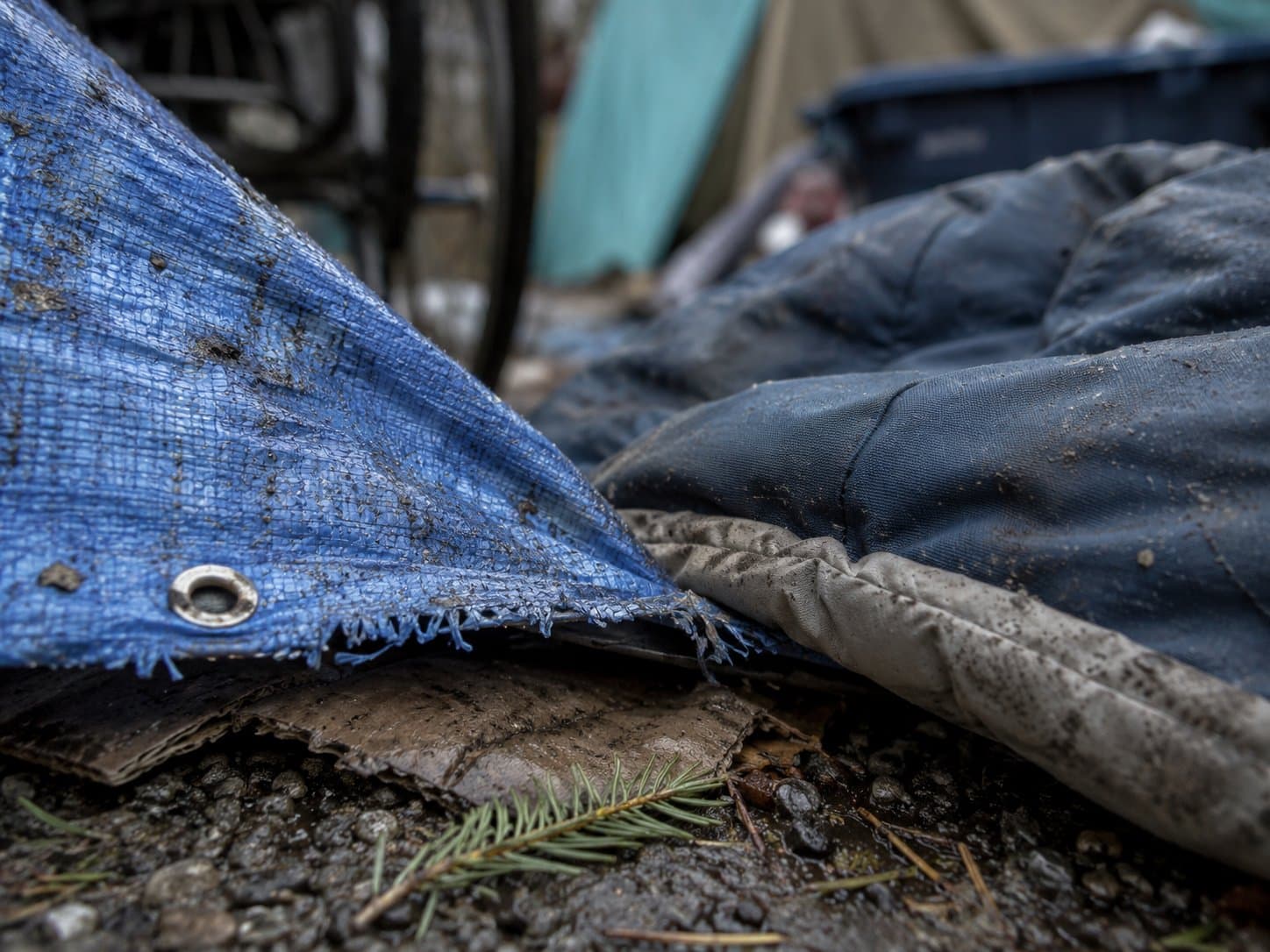
Photo by Cale Green
Anchorage sees 28% drop in unsheltered homelessness as shelters reach capacity
Anchorage spent the winter testing a new bet on its shelter system, and the results landed somewhere between encouraging and unfinished.
For the first time, the city kept three shelters open year-round — East 56th Avenue, Linda's Place, and the Alex, a converted site where residents sleep in individual rooms rather than dorm-style bunks. When temperatures fell, the city added 150 surge beds on top of the 300 it was already running. By the night of the annual Point-in-Time Count in late January, every municipal bed was full.
Outside, volunteers found 291 people sleeping unsheltered, down sharply from the year before. That's the number the administration has led with, and on its face it suggests something is working. But the count took place during one of the coldest stretches Anchorage has seen in years, when sleeping outside is closer to a survival risk than a choice, and the city expanded its survey area to include Girdwood for the first time. Both factors complicate any clean year-over-year comparison.
The harder number, and the one driving the current debate at City Hall, is this: of the 160 unsheltered people volunteers actually talked to, more than half said they weren't in shelter because there was nowhere to go.
That's the gap Mayor Suzanne LaFrance's office is now asking the Assembly to close. Thea Agnew-Benben, the mayor's lead on homelessness, told the Housing and Homelessness Committee on Wednesday that providers turned people away dozens of times on a single weekend in early May. She was careful to note the figure overstates the problem — some of those were the same person trying multiple shelters — but even the corrected number points the same direction. The administration's proposal: roughly $2.45 million a year to add more year-round beds at East 56th, surge capacity at Linda's Place in the early winter, a handful of additional rooms at the Alex, and overnight-only shelter when it gets dangerously cold.
Whether that ask matches the real need is the question Assembly Member Erin Baldwin Day pressed at the meeting. Once shelters are running at capacity, the data stops being able to tell you how many people are being turned away invisibly. You can only count the people who keep asking.
The rest of the picture is mixed in ways that won't surprise anyone who's been paying attention. About 2,700 people cycled through emergency shelter in the first three months of the year. Most stays were short for individuals and longer for families. Of the people who left shelter, the city could track where 12% went into permanent housing — a small share, though the city says most people housed two years ago are still housed today. A much larger group, more than four in ten, simply disappeared from the system's records.
What that disappearance means is the part the numbers can't answer. Some of those people found stable housing the city never logged. Some are back outside. Some are in another city entirely. Outreach teams, including the HOPE workers who place people directly into shelter from the street, are the part of the system closest to that answer, and their voices were largely absent from Wednesday's briefing.
For now, the city has built more than it had a year ago, and it's still not enough on the coldest nights. The Assembly will decide in the coming weeks whether to fund the rest.
This article is based on a public meeting of Municipality of Anchorage — ANC Muni Assembly, Housing and Homelessness Committee.
Made by our human newsroom with AI. How humans and AI work here · Grow with our newsroom Transcript byLucas Brown
Watch key moments from the source meeting. Click to expand.
Stay informed. Support what matters.
Free, permanent access to local news you can verify. Subscribe to support Cale Green and go ad-free.
Related Coverage
A state windfall would restore shelter capacity Anchorage cut this year
Alaska News · 4w ago
Anchorage weighs $2.8M state payment, most of it for winter shelter
Alaska News · 3w ago
Anchorage Assembly to consider $2.2 million more for surge beds at two homeless shelters
Alaska News · 4d ago
Anchorage's camping ordinance produces plenty of compliance — but few people taking services, and homelessness still visible
Alaska News · 1mo ago
Anchorage homeless residents tell Assembly: shelters worse than jail
Alaska News · 3mo ago
Comments
Sign in to leave a comment.
No comments yet. Be the first to share your thoughts.