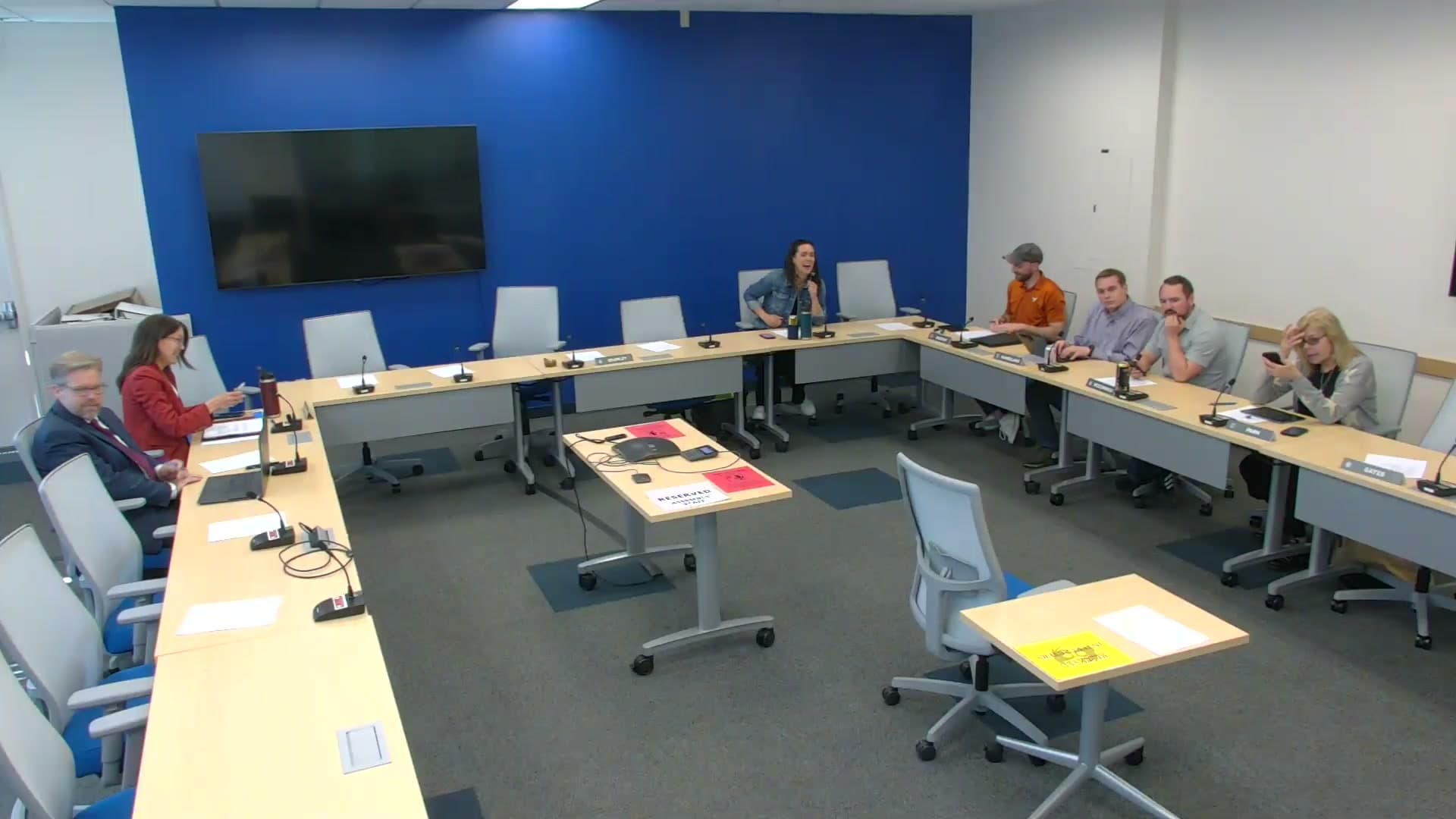
Frame from "Anchorage Assembly: Worksession re Confirmation Hearing of William Falsey, Municipal Manager" · Source
Anchorage plans to eliminate CAO post, move finance to report directly to mayor
Anchorage plans to eliminate the chief administrative officer position, save the salary it carries, and move the finance department to report directly to Mayor Suzanne LaFrance, municipal manager William Falsey told the Anchorage Assembly on Wednesday.
Under the proposed structure, the chief financial officer would report directly to the mayor, while Falsey absorbs HR, IT, and purchasing into the municipal manager role. Most functions currently housed at the Tudor Elmore facility would merge into the community and economic development director's portfolio to keep workloads balanced.
Falsey described the CAO post as a restored role, one that had existed in earlier iterations of the municipality, that the LaFrance administration recreated to address acute problems in internal service functions. "A lot of the major lifting that we intended to do in the internal services functions has largely been accomplished," he said. "We have rewritten the purchasing code."
Falsey added that the administration is developing an org chart showing how it plans to function for the next six months, though no formal document was available at the hearing.
Assembly Chair Anna Brawley asked how the CAO workload would be absorbed if the position goes unfilled. Falsey said having a deputy this time around makes the difference. "I'll have a deputy. I did not have a deputy in the austerity times of 2016, 2017 to 2020. So in some ways, I think the workload just becomes much more manageable as a result of having somebody else that can put their shoulder to the laboring oar." He identified Mark Stafford as already serving as deputy municipal manager, holding enterprises and utilities other than the port, plus public transportation.
Assembly member Jared Goecker asked whether moving finance to report directly to the mayor signals a priority shift inside the administration. Falsey framed it as a return to familiar ground. "In some ways, this is a return to a model that is most familiar to me. In the previous go-round, I think it was exactly the same setup," he said, noting that the specific departments under each role differed slightly.
The administration prefers not to pursue a formal reorganization now, Falsey said, because doing so would require adopting an entirely new budget, and the Office of Management and Budget asked not to take that step in 2026. "Our preference is not to do a formal reorganization now. In part because to really accomplish that, we would really have to adopt another budget, and we're about to go through the budget cycle anyway. So I think what we are likely to do is cobble together a web of acting assignments, and if there needs to be some Assembly review and approval of that, we're totally comfortable bringing that to the Assembly." The administration expects to finalize the structure through the 2027 budget cycle.
AI-assisted, reviewed by editors. Spot an error?
Watch key moments from the source meeting. Click to expand.
Comments
Sign in to leave a comment.
No comments yet. Be the first to share your thoughts.