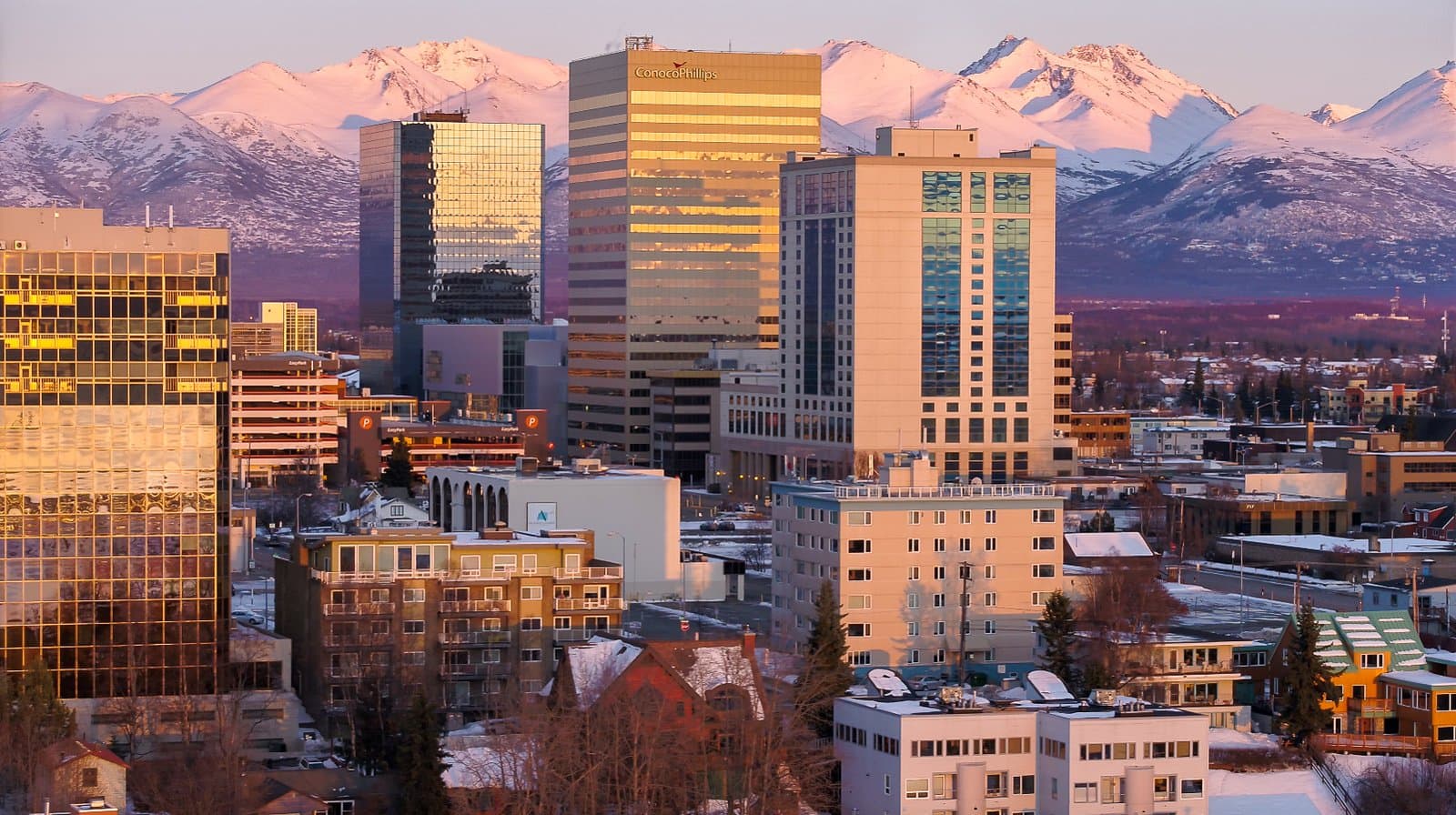
Photo by Cale Green
Anchorage faces $31M deficit across internal service funds
The Municipality of Anchorage has accumulated roughly $31 million in deficits across funds that support general government operations, the Assembly Budget and Finance Committee learned Thursday.
The workers' compensation and general liability fund carries a deficit of approximately $16.6 million, while the information technology internal service fund shows a $14.7 million shortfall. About 89 percent of the workers' compensation deficit (roughly $14.7 million) is attributable to general government departments rather than enterprise or utility operations. On the IT side, general government owes about $9.3 million, or 64 percent of that fund's deficit.
How the deficits accumulated
The deficits accumulated because the municipality paid claims and operating expenses without collecting sufficient revenue from user departments to cover those costs. For workers' compensation, the municipality has been paying out claims for employees injured on the job without charging departments high enough internal rates to fully fund those payouts. The internal IT service fund incurred expenses that it has not recovered in real time.
A municipal finance official told the committee he is hopeful the administration will present a plan to retire most of the general government's liability when the final 2024 Annual Comprehensive Financial Report is released, anticipated in June. The administration has already instructed the enterprises and utilities to work on figuring out their share of the deficits.
Other deficit funds
The Building Safety Service Area fund has historically run annual deficits ranging from $500,000 to $2.5 million. The BSSA deficit peaked at $14.5 million but is now projected to be about $11 million, partially due to Assembly action in 2024 and 2025 to add a tax levy back into the fund to collect roughly $1.5 million to $1.9 million annually. The fund outperformed expectations in 2024, posting a positive $2.5 million instead of the anticipated $2.5 million deficit.
The committee will receive a more detailed presentation on the internal service fund deficits and the administration's plan to address them in June, following the release of the 2024 ACFR.
This article is based on a public meeting of Municipality of Anchorage — ANC Muni Assembly, Budget and Finance Committee-of-the-Whole ().
Made by our human newsroom with AI. How humans and AI work here · Grow with our newsroom Transcript byLucas Brown
Watch key moments from the source meeting. Click to expand.
Stay informed. Support what matters.
Free, permanent access to local news you can verify. Subscribe to support Cale Green and go ad-free.
Related Coverage
Anchorage city funds carry $45 million in deficits — biggest two still growing
Alaska News · 3mo ago
Anchorage faces $1.3 billion stormwater infrastructure deficit
Alaska News · 4mo ago
Anchorage budget trade-off: schools OR general government, not both, may be coming
Alaska News · 3mo ago
ASD projects $40M FY28 deficit — two months after voters rejected school bond and tax levy
Alaska News · 4mo ago
Anchorage keeps blowing past overtime budgets stuck on a 2010 baseline
Alaska News · 1mo ago
Comments
Sign in to leave a comment.
No comments yet. Be the first to share your thoughts.