AI image
Allied forces rehearse the next war in the Alaska wilderness
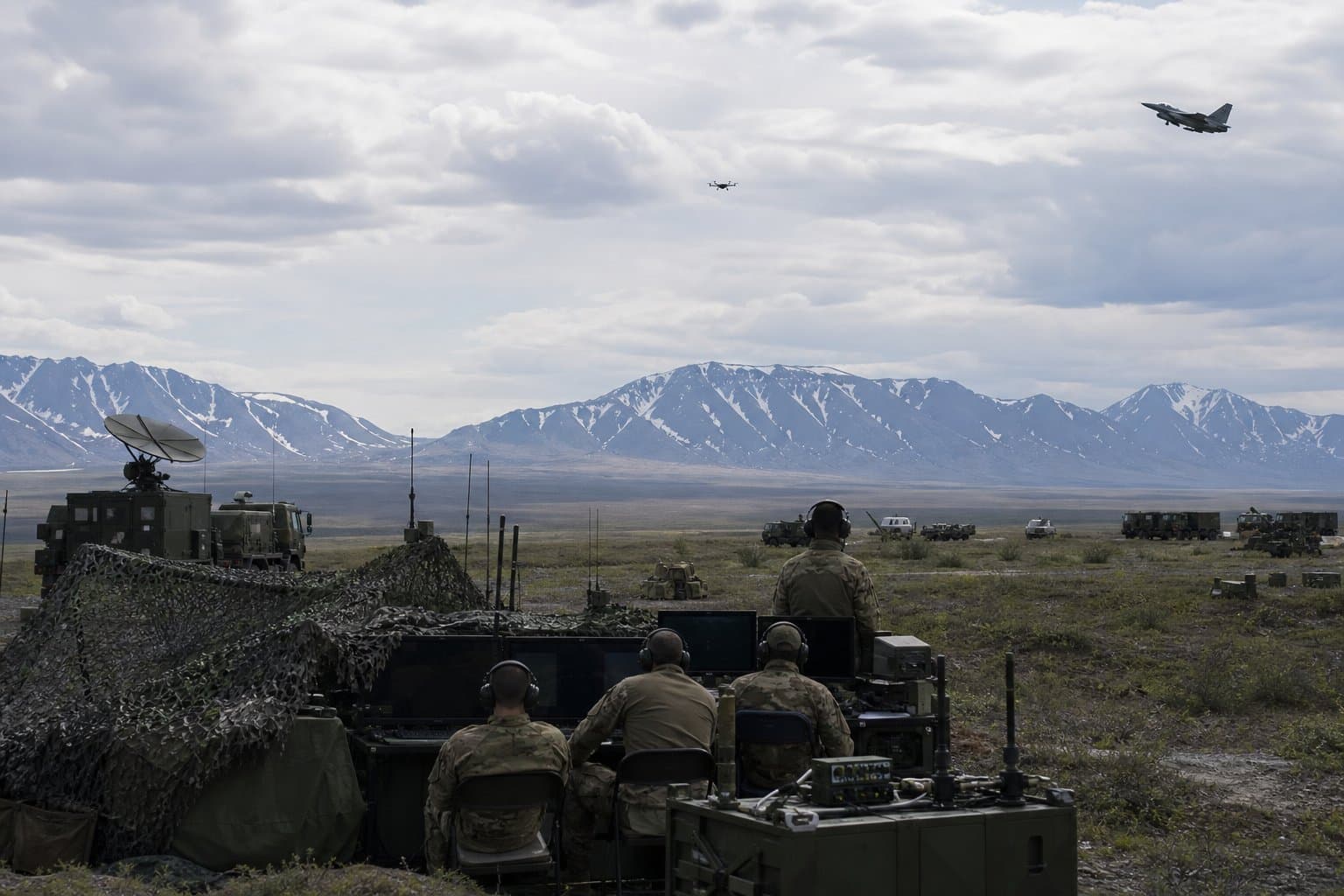
Over two weeks this spring, more than 2,100 troops and 75 aircraft from four allied nations converged on the Alaska wilderness for one of the military's largest training exercises — and a small group of Alaska-based airmen used it to rehearse what their job looks like in a future war.
Red Flag-Alaska, which ran late May into June across 120,000 square miles of interior Alaska, is a recurring war game staged out of Eielson and JBER. This year's edition drew forces from the U.S., U.K., Canada, and New Zealand, plus more than 300 paratroopers from the 11th Airborne. At the center of it were Tactical Air Control Party airmen — the specialists who direct airpower onto targets from the ground — from Alaska's own 20th Air Support Operations Squadron, testing a broader role than they've traditionally held.
The shift is about survival on a modern battlefield. Rather than simply attaching to Army units and calling in strikes, the airmen practiced acting as sensors themselves: flying small drones, running electronic warfare, and feeding real-time targeting data in conditions where communications are jammed or degraded. "
We contributed as one of the only assets capable of collecting real-time targeting data in a hostile and degraded environment," said Capt. Peter Kosierowski, describing teams that now share the load across sensing, jamming, and advanced communications.
Alaska's vast, empty ranges are what make this possible — space to fly, jam, and drop paratroopers at a scale few places allow, which is why allied militaries send observers to watch and weigh joining future rounds.
Source: U.S. Air Force.
Made by our human newsroom with AI. How humans and AI work here · Grow with our newsroom
Stay informed. Support what matters.
Free, permanent access to local news you can verify. Subscribe to support Maggie AlaskaNews and go ad-free.
Related Coverage
Six nations, 70-plus aircraft, an airspace bigger than Britain: the war over Alaska was a drill
Alaska News · 3mo ago
Alaska's 1-40 Cav made its last cavalry jump June 10 — WWII lineage returns in July
Alaska News · 3mo ago
Air Force seeks contractor for Red Flag-Alaska exercise at JPARC
Alaska News · 4mo ago
Heavy military flying returns over Anchorage as Red Flag-Alaska war games resume
Alaska News · 2mo ago
The Air Force needs its Cold War-era Arctic radar towers inspected — the ones still watching Alaska's skies
Alaska News · 1mo ago
Comments
Sign in to leave a comment.
No comments yet. Be the first to share your thoughts.