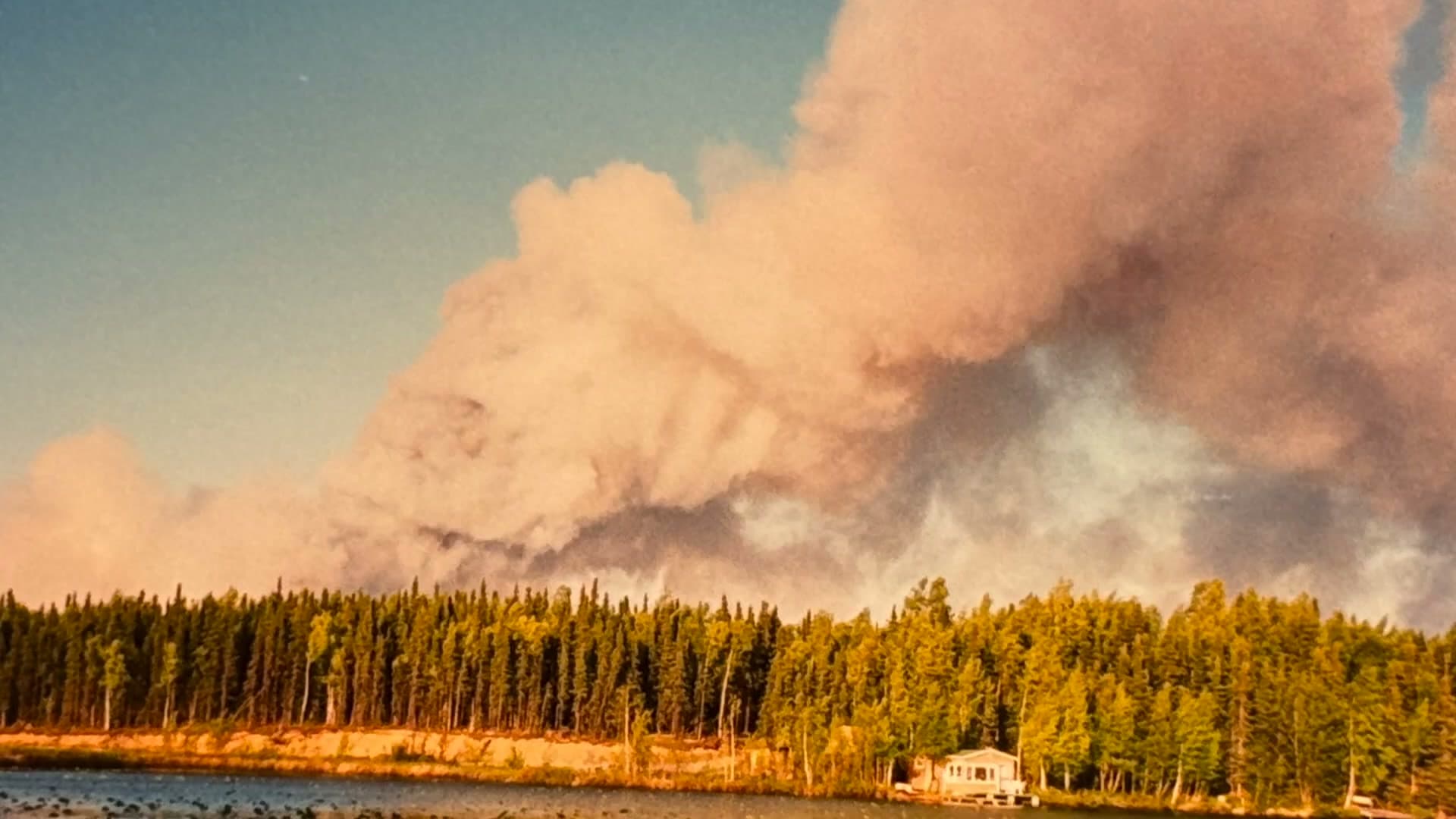
Frame from "Alaska DNR Forestry: Miller's Reach - 30 Years Later (Full Documentary)" · Photo source
Miller's Reach fire lessons shape Alaska wildfire response 30 years on
The Miller's Reach Fire that tore through Big Lake in June 1996 remains Alaska's most destructive wildfire, and the lessons from that week still shape how the state prepares for and fights fire three decades later.
The fire started June 2 near Houston and burned more than 37,000 acres, destroying at least 344 structures after 40 mph winds pushed it out of control. Thirty-seven fire departments and 1,800 personnel responded over nearly two weeks. It also exposed gaps in evacuation and interagency coordination the state is still working to close — the Senate passed legislation this year to standardize evacuation alerts and a color-code warning system statewide.
For the crews, the speed was the shock. "I went from literally just a few trees torching… to a full running fire in under 15 minutes," one first responder recalled. "We called for retardant and the helicopters dropped, but the winds made it ineffective. The retardant blew 200 feet past where they were trying to drop."
Cody Allen, who jumped in with the initial attack crew, said fuel breaks alone can't stop a wind-driven fire. "If the wind's blowing and fire is established, those fuel breaks can only do so much," he said. What helps, he added, is "hardening" homes so that when "a fire comes through, it just goes by."
Residents had no organized way to reach one another. One neighbor kept calling her own answering machine to learn whether her house was still standing. Horseshoe Lake had a single fire pump — and no one could get it started.
That community has since transformed. Cathi Kramer, who lost structures in the fire, led Horseshoe Lake to become a recognized Firewise community, with a neighbor directory, regular chipping days, and pump locations mapped. "We're ready," Kramer said. "We don't want to go through it again, but I think we could."
Agencies changed too, building interoperable communications across Mat-Su departments and standing up professional wildland crews to replace the call-when-needed workers of 1996. The stakes haven't eased: this spring the state opened 11 wildfire investigations and raised its alert level as dry grass fueled 63 early-season fires — responses that trace directly to protocols born at Miller's Reach.
This article is based on a public meeting of Alaska Division of Forestry and Fire Protection — Alaska DNR Forestry: Miller's Reach - 30 Years Later (Full Documentary) ().
Made by our human newsroom with AI. How humans and AI work here · Grow with our newsroom Transcript byLucas Brown
Watch key moments from the source meeting. Click to expand.
Stay informed. Support what matters.
Free, permanent access to local news you can verify. Subscribe to support Alaska News and go ad-free.
Related Coverage
A fuel break cleared years ago helped keep the Grandview Fire out of Sterling
Alaska News · 4mo ago
Fifty homes destroyed at Tok in Alaska's lightest burn year since 1995
Alaska News · 1mo ago
A $1.6 million grant to help Alaska burn on purpose, before wildfire does
Alaska News · 2mo ago
Alaska moves to standardize wildfire evacuation alerts statewide
Alaska News · 5mo ago
Alaska Moves to Keep One of the World's Last Fire Outposts
Alaska News · 3mo ago
Comments
Sign in to leave a comment.
No comments yet. Be the first to share your thoughts.