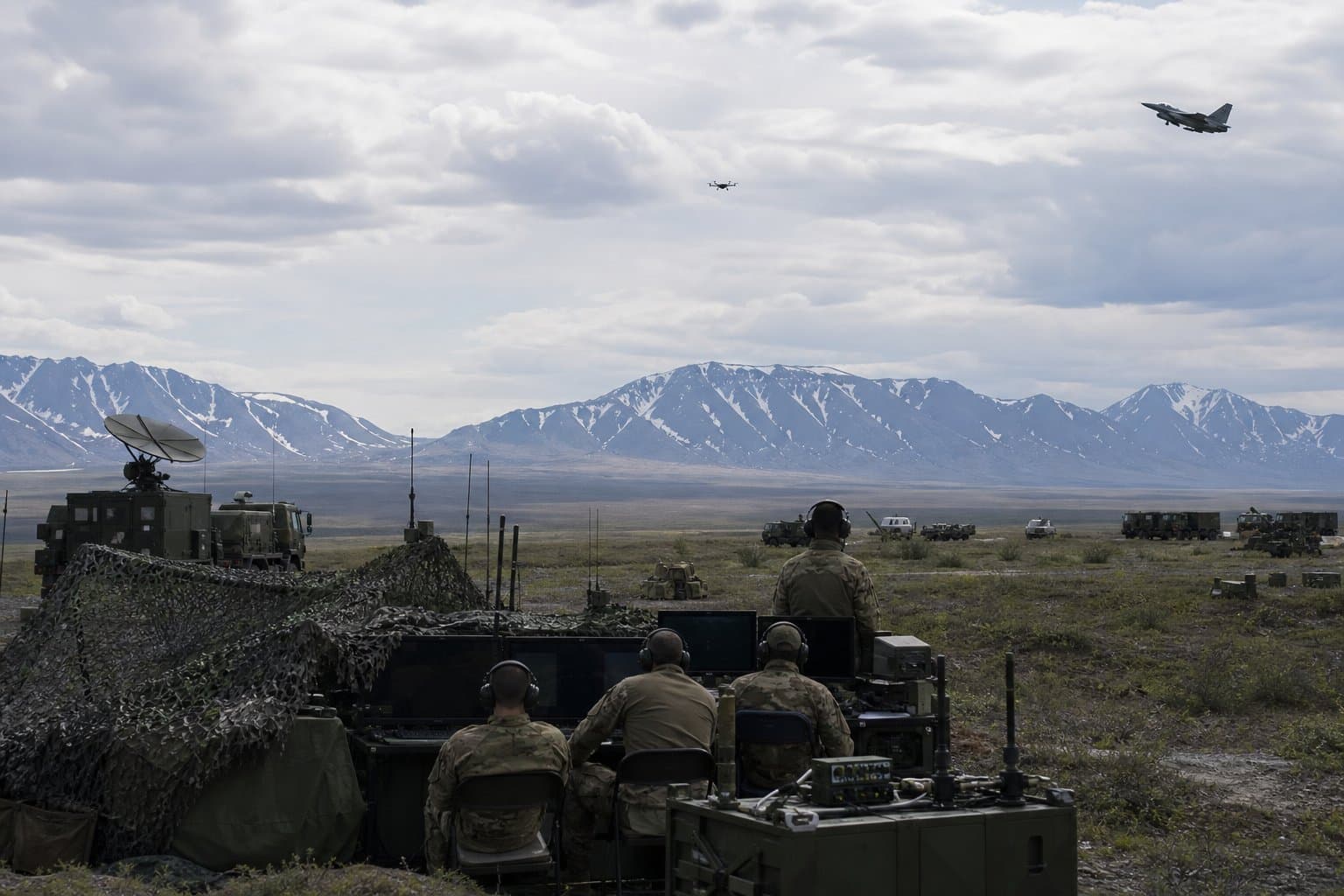
Alaska TACP Airmen debut drone, electronic warfare roles at Red Flag-Alaska 26-2
Tactical Air Control Party Airmen from the 20th Air Support Operations Squadron used Red Flag-Alaska 26-2 to test expanded battlefield roles including small drones, electronic warfare, and real-time targeting, the Air Force said Thursday. The exercise ran May 28 to June 12 across 120,000 square miles within the Joint Pacific Alaska Range Complex, operating out of Eielson Air Force Base and Joint Base Elmendorf-Richardson. Pacific Air Forces directed it; the Joint National Training Center accredited it.
"We contributed in RF-A 26-2 as one of the only assets capable of collecting real-time targeting data in a hostile and degraded environment," said Capt. Peter Kosierowski, 20th ASOS strike flight commander. He described a shift away from independent attachment to Army infantry units toward teams sharing capability burdens across sensors, electronic warfare, and advanced communications waveforms. The Air Force calls the concept the Integrated Sensing and Effects Team.
Tech. Sgt. Adam Cottrell said the Executive Observer Program showed the precision required to employ airpower in joint operations. The program allowed senior military leaders from partner and allied nations to observe air-ground integration firsthand and evaluate potential participation in future Red Flag-Alaska iterations and other multinational training events. Senior Airman Anthony Green said the exercise highlighted TACPs' expanding role as communications and data-link specialists.
The exercise drew more than 2,100 service members and roughly 75 aircraft from the United States, the United Kingdom, Canada, and New Zealand, along with more than 300 paratroopers from the 11th Airborne Division.
AI-assisted, reviewed by editors. Spot an error?
Comments
Sign in to leave a comment.
No comments yet. Be the first to share your thoughts.