Alaska Fishery Debates Reflect Broader Tensions Over Mixed-Stock Management
Alaska fishery managers confronted a challenge familiar across North America's salmon regions: how to manage commercial harvest when fish from dozens of river systems swim through the same ocean corridors.
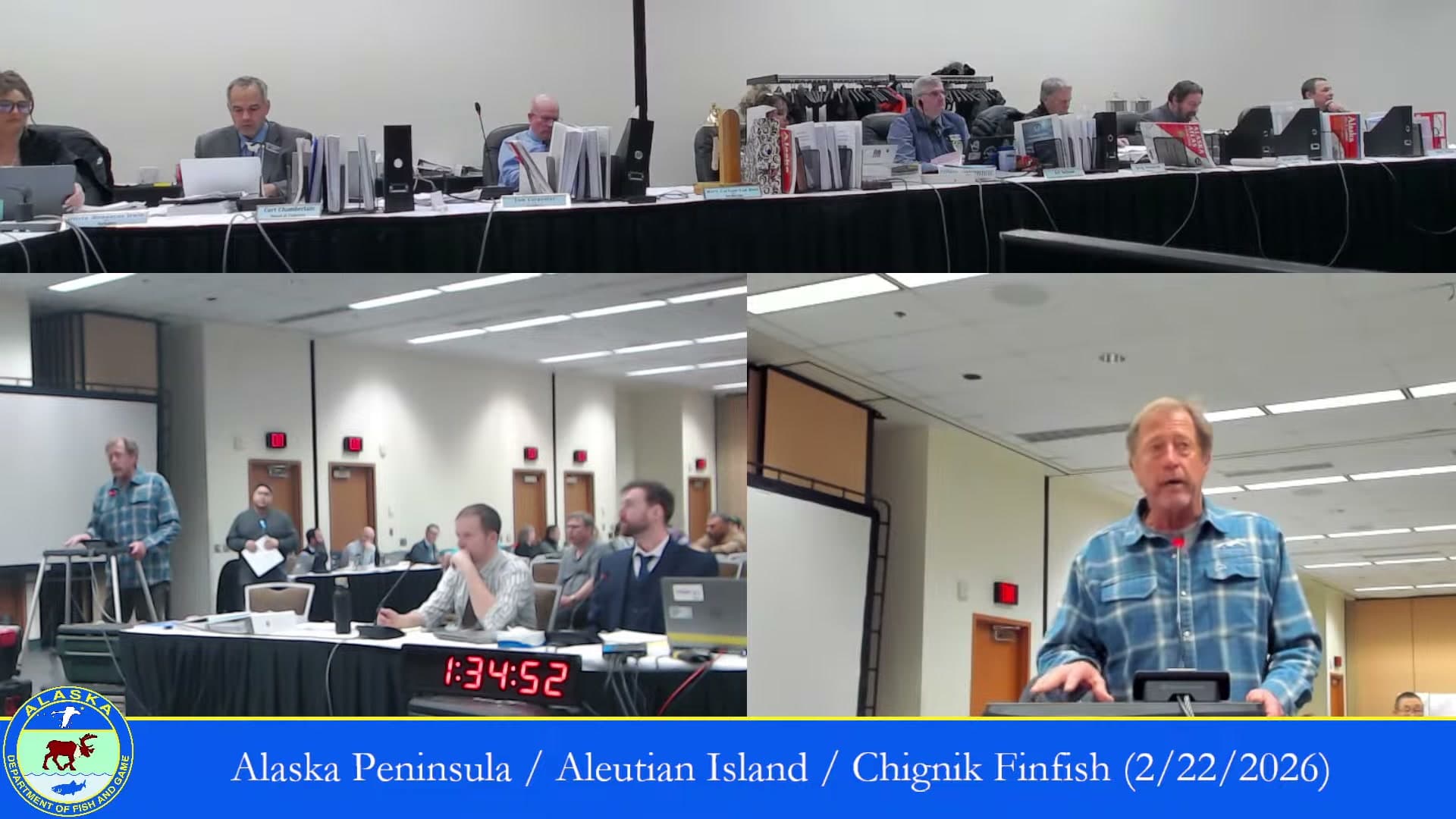
The Alaska Board of Fisheries heard testimony February 22 about proposals affecting South Alaska Peninsula fisheries, where sockeye, chum, and Chinook salmon bound for different river systems migrate together. The debate centered on whether to restrict fishing time, reduce gear size, or close areas to protect struggling upstream populations.
Similar conflicts play out wherever salmon from healthy and depleted stocks mix. Washington State has closed ocean troll fisheries to protect endangered Puget Sound Chinook. California restricted commercial salmon seasons for years to shield Sacramento River winter-run Chinook. Canada's Fraser River sockeye fisheries operate under complex rules designed to let weak stocks pass while harvesting abundant ones.
Alaska's situation differs in scale but not in kind. The Yukon River has seen full closures of subsistence fishing since 2021 due to critically low Chinook and summer chum runs. In 2025, the Yukon River summer season closed entirely for Chinook and summer chum salmon fishing across all user groups due to low abundance. Federal managers have proposed further restrictions for 2026, including season closures for chum and coho, gear limits, and harvest restricted to Federal Qualified Subsistence Users only in federal waters. Meanwhile, commercial fisheries in Area M, the South Alaska Peninsula, continue to operate under adaptive management that adjusts openings based on test fishery results, though the board recently approved changes reducing Area M fishing by approximately 30 percent during vulnerable chum periods.
Kimberly Nicholas from Kaltag, a Yukon River village, told the board her family has not fished since 2019. "My son was 6 at the time," Nicholas said. "I just want at least some hope, you know, give us something to look forward to."
Carrie Stevens, speaking about Yukon king salmon, emphasized the conservation stakes. "The department sanctioned that every king salmon matters," Stevens said. "That's why we're on a moratorium in the Yukon. We cannot catch king salmon to eat for ourselves, for food. And one female king, especially the larger ones, can have up to 14,000 eggs."
The board heard proposals to reduce seine net depth from 375 to 325 meshes, eliminate lead lines, and create new statistical areas to track harvest more precisely. Proponents argued shallower nets would allow Chinook to swim beneath while still catching sockeye near the surface. Opponents said the changes would cost $15,000 to $20,000 per net to implement and reduce fishing efficiency without clear conservation benefit.
Nationwide, fishery managers increasingly face similar trade-offs. The Pacific Fishery Management Council has reduced ocean salmon seasons along the West Coast for two decades to protect weak stocks. Alaska's approach, using test fisheries, genetic sampling, and adaptive management, represents one model. But as Eva Burke from Minto noted, even sophisticated management struggles when stocks collapse across entire regions.
Burke presented data showing Western Alaska chum salmon in Area M catches, arguing the fishery intercepts fish bound for the Yukon. "The Yukon River abundance largely drives the Western Alaska Chum Salmon Index," Burke said. She advocated for time and area closures similar to those the North Pacific Fishery Management Council implemented for the Bering Sea pollock fishery.
The tension between terminal and corridor fisheries appeared repeatedly. Chignik fishermen, who target sockeye returning to their own lagoon, argued they should not lose fishing time because of conservation concerns elsewhere. Southeast District mainland setnetters, fishing five hours from Sand Point in open ocean, said they deserve access when Chignik meets its harvest thresholds.
Axel Coppen, a Chignik fisherman, noted his fleet has no alternative fishing grounds. "If we don't get our escapement, we don't fish, period," Coppen said. "There's no guarantee of 416 hours in Chignik like they have" in other South Peninsula areas.
The debate over catch-and-release mortality illustrated another common challenge. One participant cited studies suggesting 60 to 70 percent survival for Chinook released from seine nets. University of Washington professor Daniel Schindler countered that delayed mortality, scale loss, and predation often occur days later. "There's no single number we should believe," Schindler said.
Charlotte Levy, a researcher with the Aleutians East Borough, described a 2025 pilot study that tagged three Chinook released from commercial seines. One was eaten by a salmon shark after two days. Another was recaptured after seven days. The third traveled to the Kenai River and reported 27 days later. Levy emphasized the study was preliminary and not yet peer-reviewed.
Similar debates over release mortality have shaped West Coast fisheries for decades. The Pacific Salmon Treaty uses assumed mortality rates to calculate impacts on transboundary stocks. But as Virgil Umphenauer, a former Board of Fisheries member, noted, a retired biologist once told him saltwater catch-and-release mortality exceeds 90 percent for fish far from spawning grounds.
The board also considered proposals to modify the Southeast District Mainland Salmon Management Plan, which has allocated harvest between Chignik and mainland setnetters since 1985. The plan assumes 80 percent of sockeye passing through the mainland area are bound for Chignik, based on a 1963 tagging study. Mainland fishermen argued newer genetic data shows the percentage is lower, perhaps 58 percent in some time periods.
Edgar Smith, a setnetter, said the 1963 study tagged fish in one small area and extrapolated results across hundreds of miles of coastline. "That would be like we have all of Anchorage and they tagged the fish over here on 6th Avenue," Smith said.
The allocation dispute reflects a broader challenge: how to update management plans as science improves. The 1963 study tagged 30 fish and recovered eight in Chignik. Modern genetic sampling can identify stock composition daily, but interpreting results remains contentious when livelihoods depend on the numbers.
Frank Woods, speaking about a separate herring proposal, noted the difficulty of balancing competing interests. "This proposal brought together eight villages," Woods said. "In the next round, we want to represent Togiak's traditional harvest area."
Moses Kritz, 76, from Togiak, described watching herring and bearded seals decline over four years. "I'm not sure whose shoulders I need to cry on anymore because of our resources," Kritz said. He opposed proposals to increase commercial herring harvest in Dutch Harbor, arguing it would further reduce subsistence opportunity.
The herring debate paralleled the salmon discussions: how to allocate a shared resource when some users depend on it for food security while others seek commercial opportunity. The board heard that roughly 75 percent of herring caught in the Dutch Harbor food and bait fishery originate from Togiak stocks.
Across Alaska and the broader Pacific, fishery managers confront similar questions. Do you close fisheries entirely to protect weak stocks, even when abundant stocks swim alongside them? Do you reduce gear efficiency, knowing it may not target the species of concern? Do you rely on adaptive management, accepting that by the time you see a problem, damage may be done?
The Alaska Board of Fisheries will deliberate on these proposals in coming days. Whatever decisions emerge will join a growing body of mixed-stock management experiments playing out from California to Alaska, each testing whether modern tools can solve an ancient problem: how to harvest abundance without destroying scarcity.
This article is based on a public meeting — Alaska Peninsula / Aleutian Island / Chignik Finfish (2/22/2026) ().
AI-assisted. How we use AI Transcript byLucas Brown
Stay informed. Support what matters.
Free, permanent access to local news you can verify. Subscribe to support Alaska News and go ad-free.
Related Coverage
Alaska Fishermen Report Salmon Declines Amid Bycatch, Management Concerns
Alaska News · 5mo ago
A sharp cut to West Coast salmon limits lands on fish Alaska shares
Alaska News · 1mo ago
Alaska managers open some salmon fisheries and close others as runs diverge
Alaska News · 1mo ago
From California to Southeast Alaska, salmon fisheries are closing in lockstep this week — under the same treaty
Alaska News · 1mo ago
Alaska Peninsula salmon fishing keeps opening and closing as managers work around sockeye returns
Alaska News · 1mo ago
Comments
Sign in to leave a comment.
No comments yet. Be the first to share your thoughts.