MISC-20260519-1300
Alaska News • • 127 min
Source
MISC-20260519-1300
video • Alaska News
Articles from this transcript
No audio detected at 0:00
Will the House please come back to order strictly for the purposes of standing at ease. Until we await the arrival of the other body for the purposes of a joint override session.
At ease.
No audio detected at 11:30
No audio detected at 15:30
No audio detected at 17:00
Will the House please come to order.
In accordance with the provisions of Uniform Rule 51, I turn the gavel over to the President of the Senate, the Honorable Gary Stevens. Thank you, Mr. Speaker. Will the joint session of the Alaska State Legislature please come to order. Thank you for inviting us back for the 7th or 8th time this year, and if we do 2 or 3 more before we end, we'll have one in history. So maybe tomorrow.
Madam Secretary, please call the roll of the Senate. Senator Bjorkman. Here. Senator Clayman. Here.
Senator Cronk. Here. Senator Dunbar. Senator Giesel. Here.
Senator Gray Jackson. Honored to be here. Senator Hoffman. Here. Senator Kaufman.
Here. Senator Kawasaki. Here. Senator Keel. Here.
Senator Merrick. Here. Senator Myers. Here. Senator Olson.
Here. Senator Rauscher. Here. Senator Steadman. Here.
Senator Tilton. Senator Tobin. Senator Wilkowski. Senator Yunt. President Stevens.
Here. There are 20 members present. I'm Mr. Speaker. House members may proceed to vote.
Would the, uh, Secretary please announce the roll? 40 House members present. And thank you. Would the Secretary please announce the combined total? 60 Members present in the joint session.
Thank you. With 60 members shown as present, this joint session has a quorum to conduct business. This joint session was called under Article 2, Section 16 of the Alaska Constitution for the sole purpose of considering the governor's veto of House Bill 78 relating to retirement benefits and defined benefits. Madam Majority Leader. Mr. President.
Mr. Speaker. I move that the legislature override the governor's veto of House Bill 78. Thank you, Madam Secretary. Please read the title.
An act relating to the Public Employees Retirement System and the Teachers Retirement System and providing certain employees an opportunity to choose between the defined benefit and the defined contribution plans of the Public Employees Retirement System and the Teachers Retirement System. Thank you. Under discussion. Representative Kopp.
Thank you, Mr. Speaker. Mr. Speaker, I rise in strong support of the override of the governor's veto of House Bill 78. Mr. Speaker, for 20 years this body has pursued resolution to our workforce crisis in this state. Mr. Speaker, before I say a word more about the veto, I just want to say thank you. Thank you to every member of this body, every staff person, every previous legislator who has pursued resolution to our workforce instability.
And over that 20 years, we have crafted tighter and tighter, more fiscally responsible legislation that has been vetted by our own state actuaries, by finance committees, and by many members of many different legislatures to arrive at a fiscally responsible bill that addresses our current workforce crisis. Mr. Speaker, we're talking about people, people in Alaska. It's talking about our rookie Alaska State Troopers who finish the Public Safety Academy on the state's dime at a cost of over $200,000 and leave after 18 months to another state that offers a pension. Mr. Speaker, more than 70-some percent of the police officers that leave Alaska leave to a state that offers a pension. Mr. Speaker, the second grade teacher in Kotzebue who tells her students, "I'll see you kids in the fall," and doesn't come back because Idaho offered her a pension.
That's what we're here for. 29% Turnover in the state of Alaska right now with our teachers, the highest in the nation by far. It is the village trooper post that sits vacant for years because they can't fill the position, and when a storm rolls in, the community has no trooper to provide public safety. It's every classroom with a substitute, an unqualified, uncertified teacher, but a willing adult to sit with children because that position is vacant. Every elder that waits hours for help, every parent who can't get a road plowed, all of it being paid for by families in our districts.
House Bill 78 is not a retirement bill, Mr. President. It is a workforce bill, and it's a resource development bill. We cannot build a gas line through this state unless we can retain our engineers. We cannot permit a mine when the permitting office turns over 18 months. We can't drill on the North Slope when the haul road isn't being maintained by DOT maintenance people, unfillable, and no troopers to patrol the haul road.
Every business in Alaska depends on a functioning private— on a functioning public sector underneath it, and a strong public sector is the foundation of a strong private sector. Private sector. This is not a Democrat idea or a Republican idea. It's a functioning economy in Alaska. The concerns that are raised about this bill, that it could cause new long-term costs and unfunded liabilities, those are the concerns.
But those concerns have been answered in the bill itself, Mr. President, and confirmed by many people whose job it is to know the answers to that. David Kirchner of Gallagher, our state of Alaska's actuary, who is paid to tell us the truth. And by the way, Mr. President, we now have 3 actuaries that independently confirm one another because we learned our lesson in 2002 from the actuary who led us astray. This actuary has testified to our committees that House Bill 78 is structurally sound— more than structurally sound, Mr. Speaker. They testified it would take 3 years of 0% market returns to have the funding level of this plan drop below 90%.
That was in both the House Finance and the Senate Finance Committee. They also said in the 70 years of Alaska having a pension, that event has never occurred, but that would have to occur for this plan to be cut, to drop below 90% funding. So, Mr. Speaker, the actuary also said the claims of unfunded liability coming from this plan are completely an exaggeration. It's exactly what the actuary said. And Mr. Speaker, it's an exaggeration that matters.
We need to call it out on the record with nobody to misinform or interpret what we're saying here. I'm calling it out. The actuarial projections are not a single number. They are a bell curve, a range of thousands of simulated outcomes with the most likely scenario in the middle and the extreme case at the tail. The actuary's central estimate for House Bill 78 is in the middle of that curve.
The $9 billion figure being thrown around is at the extreme tail where every market crashes at once, every assumption fails simultaneously, and every safeguard in this bill is ignored. That is not analysis, Mr. President. That is fear. That is fear. This bill is more conservative than South Dakota's bill, and the governor agrees with me on it, and that plan is 101% funded.
Mr. Speaker, here is what makes this bill different— Mr. President, I apologize. Because of the risk sharing built into this bill, the bell curve for House Bill 78 is narrower than our old legacy pension plan. The tails are shorter and the downside scenarios are much smaller. That's the entire point of the structure that we built. We did not just control the lower estimate, we compressed the range of possible outcomes so the state is protected even when the markets are not.
That is not the plan that failed in the 2000s. The old plan had no risk sharing. It was all on the state. This one is shared by retirees, by employees, and by the employers. And Mr. President, while we are talking about costs, let's talk about what's actually happening in the state right now with no pension to blame.
The cost of right now, the cost of doing nothing. Mr. President, in fiscal year 2020, the executive branch of this state spent $83.8 million on premium pay and overtime filling vacancies and short staffing. That was in FY 2020. This year we are projected to reach $225 million in overtime. That is well over a 200% increase.
We're on track over the next 14 years to spend more than $2 billion in premium pay and overtime. And this number will become very important, Mr. Speaker— Mr. President, as I go. We have a situation now where House Bill 78 is not creating this overtime cost. We have a status quo with overtime that is reaching billions of dollars over the next decade, more than a billion dollars in turnover at $76 million a year, Mr. Speaker, and hundreds of millions of dollars in errors and omissions. Our statewide auditor has told all of us here that we have errors and omissions coming out of our state agencies that are costing us hundreds of millions of dollars each year.
One grant this year where the administration staff did not require— did not request reimbursement on a Department of Military and Veterans Affairs grant was $276 million because the staff didn't know to submit the reimbursement request. Tens of millions of dollars in fines to different state agencies for failure to do financial reporting, failure to deliver public assistance. Mr. Speaker, that's an errors in admissions rate. Mr. Speaker, those costs right now are almost $300 million a year between overtime, between turnover, lost training dollars leaving in Alaska, and errors in admissions. Mr. President, the cost of this plan is $73 million a year, fully loaded.
That's a net revenue positive of almost $170 million to the state. If we could just flatten the overtime curve, if we could just reduce the training and turnover dollars, if we could just reduce our errors and emissions rate, we will be orders of magnitude ahead of the losses that we are experiencing now. Mr. President, the opponents call this a cost. This bill is an investment. It is an investment in our workforce to stop the bleeding cost that is occurring now.
And it's not just our own, our own people, our own actuary, Mr. President. It's the National Institute on Retirement Security looking at this exact question at Alaska's own data, because Alaska is a rare case where you can compare workers in the same jobs, in the same towns, with the same employers but different retirement plans. And Alaska's shift away from pensions in 2006 directly contributed to significantly higher turnover. Same teachers, same communities, different plan, different outcome. So this is not a forecast.
This is what happened to us over the last 19 years. Mr. President, the bills that change Alaska are not the bills that arrive perfect. They are the bills that arrive imperfect and they get better every step of the way. This is the 33rd attempt in 19 years that members of this body, many no longer in this chamber and some no longer with us, have stood at this microphone and made this case. They tried, they came up short, and every time the next group picked it up and continued to carry it further.
This bill, this bill is built on the shoulders of every one of those people, and it's stronger today than at any point in the 19-year history. It's stronger because those concerns produce risk sharing It's stronger because liability concerns produce funding triggers that require increased contributions to keep the plan funded at 90% or higher. Because it reacts live to the market. It's not static. It's stronger because overtime is excluded from the pension calculation and the benefit is averaged over 5 years, not 3 years.
Mr. President, it's stronger because of members who ultimately voted no, whose amendments are still in this bill. And still protecting Alaska's taxpayers, still making it more durable for the workers it will serve. And the lesson that we learned from this bill teaches us about our economy. Alaska works when the public sector and the private sector work together. The miner needs the geologist at DNR who reviews her permit, and that geologist needs the miner whose royalties fund the school where her kids go every day.
The fisherman needs the trooper who patrols the boat harbor at night, and that trooper needs the fisherman who pays his salary. These are not opposing forces. They are two hands of the same state. Mr. President, every member of this body agrees on the problem. We have a workforce crisis.
So the question before us is simple: What's the alternative? After 19 years and 32 attempts, there is no competing bill on this floor. There is no administration proposal in the hopper. No workforce package from any other outside group. There is House Bill 78, and then there's the status quo.
I respect every member of this body that has concerns about this bill. Those concerns, I believe, have been raised in good faith, and the bill is stronger because of them. But concerns are not a substitute for a proposal. If there is a better path to address Alaska's workforce crisis, I would be the first to support it. But I've been waiting 19 years for it, Mr. President.
So the question today is House— is not, is House Bill 78 perfect? No bill is. The question is whether it is better than the status quo, because the status quo is what we get if this override fails. Not a better bill next month. The status quo.
Another year of vacancies, another year of asking Alaska's public servants to wait, and Alaska communities to suffer from a critical lack of services. Mr. President, look around this room one more time, and I think we should all look at each other. Look at our colleagues who have worked side by side with us on this bill for years, the members who have disagreed in committees but kept showing up to work on it, the members who voted no the first time but made the bill better anyway. This is who we are when we're at our best. And now let's think about who is watching: the young legislative aide right here in this building with the 4-year degree working 60 hours a week some more who love this state and want to build their lives here.
They are watching. The trooper who responded to a call in Wasilla at 3 in the morning last week with 2 kids at home and an interview with the Idaho State Troopers on the calendar. The firefighting crew battling the wildfire in South Anchorage right now. Firefighters that are fighting that fire. And these are the people we're talking about, Mr. President.
Snowplow operators, the nurses at the Pioneer Home, the engineers at DOT, the clerks who keep the light on here at the Capitol, all of them are watching, waiting to see this vote today. For 19 years, Mr. President, we have asked them to wait. Today we have a bill that made it across the finish line, a bill stronger than any other version before, carrying the work of dozens of legislators in both parties across the political aisle, and have stand together in bipartisan coalition manner to build something so that we can lay a foundation that we can stand on today and tomorrow. Let's override this veto. Let's deliver for Alaska and let's make history together.
Thank you, Mr. President. Thank you, Representative Kopp. Representative Fields, under discussion. Thank you, Mr. President. I want to thank you for prioritizing this historic piece of legislation and, and to the speaker Um, your leadership and the work of legislators from every corner of the state has brought us to a moment where we got this bill across the finish line, and here we are with an opportunity to put it into law.
Mr. President, I will be voting to override for a simple reason. As Alaskans, we should stand together in support of the police. Alaska is the only state in America where our police and our teachers have no form of a secure retirement. We are the only state— 49 other states say to our first responders, yes, you will have a secure form of retirement. First responders who put their lives on the line every day, every hour, every traffic stop, every single encounter.
As a result of Alaska having the worst in the nation retirement system for our first responders, we face massive expenses. We face the expenses listed by the Majority Leader in terms of money, but I think even more dangerously We have the expense of vacancies, crimes where a call for service doesn't go responded to for an hour or more because we have, in my city of Anchorage, dozens and dozens of vacancies. We know that these vacancies from Kodiak to Fairbanks means that there are entire times of day where not a single officer can respond anywhere in the city because we have the worst in the nation retirement system for our first responders. One of the most searing stories I've ever heard from a constituent was from a retired police officer whose son still works at APD. And God bless the multi-generational families who serve, fathers and sons, mothers and daughters, for our law enforcement agencies.
And this retired officer, when I was talking, I mean, just retired recently, was describing how his son was working forced overtime, shift after shift after shift. Because of that time, Anchorage Police Department had 75 vacancies. We have orders of magnitude fewer officers than any other comparable city of our size, and that is despite the work of the local government to have police academy after police academy. We are a training ground for the lower 48. We train as hard as we can.
Our local governments are pouring money into training, and our officers leave because in every other state they have a secure retirement. I cannot imagine, as an officer who every moment can be a life-and-death encounter, to then work again forced overtime, shift after shift, and to layer on that stress. The officers don't know what kind of mental health issues they might be dealing with, who's going to come out of that car at a traffic stop. It's a harrowing job under the best of conditions, and because of the lack of a secure retirement We have made it impossible for these officers to do their job. Now, I know there are wealthy outside special interest groups who want to continue defunding the police.
They want to continue defunding police retirement. They want to continue attacking our first responders. These outside special interest groups aren't from Alaska. They made their money in the Lower 48, and they attack our police, they attack our teachers through dark money special interest groups. Who are they?
Um, permission to read, Mr. President? Without objection, so ordered. And I want to refer to an article that's entitled, uh, Do You Support Public Safety in Alaska? You Might Be Surprised Who Doesn't. This is by a recently retired Anchorage police officer, and it's about the most prominent dark money outside special interest group that has been advocating for continued defunding of our police.
And I quote, AFP, or Americans for Prosperity, has a long record of advocating for defunding the police and public safety across the country. So it's not surprising that it's happening in Alaska too. One of AF—. Again, I'm still reading— one of AFP's position papers even says police officers, police officers should be exposed to personal liability lawsuits for their work as officers. So again, these outside special interest groups aren't just trying to defund the police, they are trying to expose our officers to frivolous lawsuits from the criminals who threaten, threaten public safety in our community.
And I'm going to continue to read. Police are already treated as criminal defendants after serious use of force in the line of duty. Police are routinely civilly sued through the course of their employment. Now AFP is calling for them to face frivolous lawsuits filed by criminals. I think it's important that we understand the special interest groups that are behind attacks on our first responders, our teachers, our frontline public servants.
Today it is an honor to stand up for our police and our teachers. And again, in closing, I want to thank you and the Speaker for your work to prioritize this legislation and bring us to a historic moment. And thank you to the Majority Leader for tireless efforts on behalf of our officers. I support the police. I will be voting yes.
Thank you, Representative Shields. Senator Steadman.
Thank you, Mr. President. I got some discombobulated notes. I wasn't prepared for a joint session, so I'll be jumping around a little bit. But a couple of things that are just not accurate. We have one of the richest retirement systems in the country, not the worst.
Probably around 10th or 11th in the entire country. It's not perfect, but it's pretty darn good. And when we take a look at our retirement system, we have a constitutional guarantee against diminishment of benefits. We cannot lower benefits to our employees. And all the municipalities and the non-state employers that belong to our plan come in under that same issue.
So we don't have the flexibility that some other states do in that they lower their retiree benefits if things go south. So that's an important point to remember when we walk through some of these issues. We spent quite a bit of time over many years, this year included, looking at employee turnover. We're all concerned about that. It might come as a shock to some people on the floor, but employee turnover is very large countrywide.
In the teachers environment, in dealing with policemen, dealing with firemen, dealing with a lot of trained professionals, we are not an anomaly. We're just one of the crowd. And when we took a look at that again this year and we went back and, and Ledge Finance did some analysis and we had some other analysis done, there isn't hardly any difference between the current defined contribution and the defined benefit tiers. There is some difference when you look at a person that has worked for the state for 20 or 25 years, they may hang over— hang out for another 10 or 5 years or so. A slight change.
There is no jump in the curves on employee turnover. It is an issue that is faced are an issue that's been a trend for many generations. When I went into the work environment back in the mid-'80s, it was already underway where people were not going to work for IBM and working their entire career. They were working 7, 8, 9, 10 years and going to another employer. That has not changed.
The federal laws on retirement have been altered deal with that so you can bring your assets with you as you change employers and holding them in your individual retirement account. So that is something that we have to deal with regardless of our retirement plan. I want to touch on just some of these notes. When we look at our teachers, which is part of this retirement system.
We used to be number one back in the '60s and the '50s. And the teachers did not opt into Social Security and have not been included in Social Security. And that's on their own accord. That's not the state of Alaska. So they are not included in our supplemental retirement system to replace Social Security.
Neither. So the average teacher gets around 15% of their salary going into retirement. Everybody sitting in this room that's employed by the state, there's a few behind me that aren't, gets 25%. There's, it's impossible for a teacher to ever accumulate the retirement income and wealth of a state worker or a worker that works for a community or another entity that's in our system. It's mathematically virtually impossible.
One guy gets 15, one guy gets 25, or a lady gets 15 and a lady gets 25. So we're working on that. There is legislation in this building, and most of you are all aware of it, sitting in, uh, Senate rules to deal with that.
When we look at our salary levels for teachers, where I mentioned earlier, we were You know, many, many years ago, decades ago, we were number 1. Now we're number 11. Or excuse me, number 10 in the country. The average salary for public school teachers, $78,256, ranked number 10.
And that's Alaska. I think the number one is around 100. Washington's a little higher than us. We should, in my opinion, at least match Washington. And that is, for those that wanna reference it, Ranking of the States 2024 and Estimated School Statistics 2025 by the NEA Research.
You can Google it up. I'll argue we should be number one. Not number 10 in the country. And if we look at our overall retirement system, we're around 10 or 11, 12 in the ranking nationwide. That's competitive under any circumstances.
That's competitive. But again, to deal with the teachers system, they need a couple of things. They need to be in Social Security or SPS to take that 15% contribution back up to— or get it up to 25. And we need to increase their salaries. My opinion, we should have a salary scale competitive with the state of Washington, who's our closest neighbor.
That's just my opinion.
When we go and look at this plan that's being asked to be implemented, and I certainly don't suggest that we do that today.
It cost 2.4% roughly additional dollars, or excuse me, additional percentage of payroll over the current system. 2.4 Doesn't sound much, but it adds up a lot. And when you look at at our communities, take Anchorage, take Sitka, take any town anybody here wants to take a look at, that additional 2.4%, if you're a non-state worker, like if you work for the city of Sitka or city of Anchorage in these two examples, you would think city hall would have to pick that up for their own employees. Under this plan, they don't. They pick up about half a percent.
We pick up the rest. Doesn't sound like much, 'til you'll take a look at it. And we asked them that in finance. Well, what's it cost? The difference to the state is about $1.1 billion over the next 10 years.
On average, $1.1 billion. That's from the actuarial analysis.
If we look at what we're dealing with this year in the budget, we got roughly about $270 million going into an unfunded liability that, and I think we'd all agree on this floor, that we don't ever want to face an unfunded liability of anywhere near the magnitude that we walked into. And we've been working on it for the last 20 years, paying it down. This year's payment, like I mentioned, is over a couple hundred million. We have about $6 billion to go, some say $7, depending on, pick your year, time of year you want to measure it. We've paid about $7, we got about $7 to go.
To me, you know, when they talk about how easy and accurate and comfortable we should be with actuaries, we had actuarial analysis. There's always been actuaries working on our plan. We've had an actuary years ago that made a mistake and we ended up in court and got a legal settlement and stuff. But if that was the only issue that we had in our retirement system, we would have never changed it. We would have just got rid of that actuary, got another one, fixed it.
That wasn't the case. It's an embedded challenge. And I'm not going to go into all the multiple points that drove us here 20 years ago. But I got them if we want to entertain ourselves for a few hours. But when we look at the actuary analysis, and I don't care if it's, you know, if the, you know, one support group asks the actuary for an analysis or the other support group does, makes no darn difference.
They've got a lot of, issues and assumptions that they have to get accurate to make it come true. So they do their assumptions. Some of their biggest challenges: investment risk. They got to pick— predict investment markets for the next 20, 30 years. Good luck on that, getting that real close.
You know, there's dot-com bubble, Black Friday, COVID, wars. All kinds of things going on, you know, that makes it challenging. Long-term investment risk is one of the biggest issues they face.
The other thing is getting their contributions right. When they lock down contributions and they have them too low, that would create a liability that has to be made up, and that's difficult. Salary increases, that's another— there's a nightmare to forecast. And if you take a look at the forecast that we have for salary increases today, Good luck meeting those because we won't have any employees in a decade because our salary assumptions are a little low. And that's one of the underlying issues we constantly deal with, including in our operating budget.
And we all see that where we have agreements to get outside of the negotiated salaries to keep employees. The longevity risk, I'm not wishing anybody expire early. Maybe a couple of my reps would— wish one guy would expire early and, you know, help the pension a little bit. My friend from Sitka raised her hand. Have a heart attack now and get it over with.
But, um, I'm part of the problem. I'm going to hang around for a while, you know, and hopefully a long time. And so it's difficult for them to get that inflation. It's very hard for them to get the inflation issues accurate. So they try really hard.
There's always a disclaimer. I recognize that they mention the actuary and how golden he was, but you ought to read the little paragraphs on the end. You know, there's the disclaimer that says basically just that, a forecast, and be careful how you use it. Don't use it out of context. And I'd recommend you all take a look at the back pages of the actuarial analysis on the financial notes and read the fine print.
It's, you know, a little— well, it just makes you recognize that this is a difficult thing to gauge right. When we take a look at Some of the analysis outside of here that looked at the retirement plan, this particular one in particular, and we looked at is it better or worse than we are, it came out moderately a little short on short-term, a little less, a little less on the full career, and the total is down a little bit. So this doesn't enrich the retirement system from what I can see. And one of the things, if you just use just common sense, if you want more benefits, it costs more money. You want less benefits, pay less.
There's no free rides. Now, I've touched on the Social Security issue. So let me touch a little bit more on that. I talked about teachers and their need for salary increases and getting an SPS and Social Security. Uh, there was some police and fire used as an example earlier.
The state troopers are our employees. We don't have an issue with them. We've increased their salary. They're well taken care of. They're fine.
The, the policeman that's having problems is a policeman that works at City Hall or for City Hall, and some of them are not in Social Security and not in or SBS. They're really getting the short end of the stick and frankly work for a skinflint. And if he looked at his paycheck, it probably was signed by skinflint because everybody should be in Social Security, in my opinion, as a base for your retirement or SBS as a replacement. A lot of our municipal employees and police and fire that are not— don't work for the state are not included. And that's a local decision.
That's not our decision. We have no control over it. City Hall could— has that issue. Some communities have negotiated labor agreements to replicate that. A lot of them have not.
So when we look at that issue and they come in the office, one of the things I always ask them, are you in Social Security? Are you in SBS? One of them will say no, the other guy will say yes, and who's complaining about the retirement? The guy that's working for skinflint. He's short.
And we're talking for a— well, I'll give you an example. We had two fire chiefs, both in my district, both about the same age, in their 60s, both retiring, both fire guys their whole life. Both run fire departments. One guy had about $800 grand more than the other guy. And why?
Because he's in SPS. $800,000. They did the same bloody job, a few hundred miles away apart. So you can expect the guy that's $800 or $800,000 short to come complain.
So that is a big issue. So always remember to ask who the employer is, 'cause it makes a huge difference.
The Reason Foundation did some calculations dealing with a teacher that worked for 30 years, average salary, estimated annual salary of $79,000 over 30 years. Their guesstimate, you call it an estimate, or anything you want, is roughly $56,000 extra per year per teacher. Let me repeat that, that's $56,000 per year per teacher extra in the retirement income. It doesn't matter if you're in defined benefit, it doesn't matter if you're in defined contribution, the needle will wiggle a little bit and we can argue all day long where that needle wiggles, You put $56,000 on top of that needle at the end and it jumps right off the chart. So the magnitude is significant.
They were estimating it could increase a teacher's retirement by pushing 70%. And you can go online and Google that stuff up yourself if you'd like.
I already mentioned that teachers are number 11 in salary nationwide.
I wish they were number 1.
When we look at the non- State employers, there's quite a few of them, damn near a dozen of them, that are way behind in their payments on the defined benefit plan and the retirement. Who picks that exposure up? We do. So that's another little thing to remember. There are some of them, and one of them I remember is over 500 payrolls behind.
That's 2 payrolls a month, and we can do the math. It's significant.
I want to touch on one thing that's just— I found alarming.
There, there is some positive things in this legislation. Sharing the risk between the employer and employee, roughly 50/50, if they go under 90% funded. That's a positive.
The states that we looked at that have that cap, that where they go under 90, and then they start doing risk sharing, a lot of them can change the benefit to the retiree. As I mentioned in the very beginning, we can't do that. And I'm not advocating that we change our Constitution and strip retirement, guaranteed retirement benefits away. I think that'd be one of the worst things we can do. So I don't want anybody to misinterpret what I'm saying.
We need to just recognize that when we put a system together. Together. So pensions are easy to handle. When we look back, uh, 2 decades ago, the concentration was healthcare. Pensions sit next for being problematic.
We weren't concerned about the pension as much. We figured it would— we'd have them both fixed in probably 8 years or so. Turned out we were wildly optimistic and way off the mark. Here's 20 years later, we owe the same amount of liability roughly as we did 20 years ago. And it wasn't the healthcare, we fixed that.
And we should all be proud 'cause we all worked together to fix that. We're in surplus. The pension is a problem. So TERS, 2015, we owed $1.6 billion, $1.629, $1.62, $1.629. So we fast forward to 2025, it's the same number.
$1,629,000,000. So we spent 10 years making payments of a billion bucks and never moved the needle in aggregate. So those that argue that the pension is easy to predict, easy to manage, won't go underfunded, are a little optimistic because it is not that simple. And we brought that out in finance. We were rather shocked at that this year.
And we were grousing about the inability of lowering that unfunded liability, because when it gets out of control. We've paid so far roughly $8.7 billion, so I'll stand corrected, on TRS and PERS unfunded liability. And we have about 6 or 7 more to go. We'll see if that comes true or not.
There's been a lot of talk about actuaries like they're golden and they can predict things. If that was the case, we wouldn't have any unfunded liabilities in any pension plan in the country. Let's see here if I can just take a moment and have a drink of water, Mr. President. Without objection, Senator. I would just— I would like to thank the Senate President for not giving me notification because I would have had a really long speech.
We tried.
Yeah, let me see here. For those watching at home, we have about 149 employers and presenters outside the state. It's darn near 50/50 as far as state employees and non-state employees. So this issue of cost shifting to the state is significant. We are not responsible for the employees at the municipal level.
City Hall is. We're responsible for our state employees and we should only be paying them. And that is not what this piece of legislation does.
I think with that, Mr. President, I probably will just end it there. I could go on and probably people would wanna go to sleep take cyanide pill or something. But this legislation, 33rd, 34th time, whatever, run, it's an improvement over vast majority of them. It's just not good enough. It comes, at least it addresses the unfunded liability as an exposure, and at least addresses some risk sharing.
So it is a step forward than what was gone, what's gone on for, 20 years, and I've been here for pretty much all of it. In fact, maybe, you know, just the first, I think maybe the first year it started sliding under when they started working on it here in the Capitol. So it is a significant issue, but it's very important for those watching at home that we differentiate between our system at the state level, the system at City Hall, and we are not the skinflints in the retirement system. When somebody stands up and says we have the worst retirement system in the country, it's laughable. 'Cause when that subject comes up at finance, and every time it comes up, nobody wants to talk about it, nobody wants to shine a light on it, because we all know we have one of the top systems in the country.
We take care of our employees. And we do— none of them have ever missed a payment in their retirement. None of them ever will.
So I just want the public at home to realize that most private employers can't put out the benefits that the State of Alaska does. And none of them guarantee it with an $80 billion permanent fund backing it up. And the full taxing authority of the state. And that being the first call on the treasury.
So, with that, Mr. President, I hope that everybody in this room votes no on the override and we continue on and we make our benefit package better in the future and we deal with the salary issues. Thank you. Thank you, Senator Seppen. Further discussion? Senator Wilkowski.
Thank you, Mr. President. I actually had not— I had not planned on speaking, but I want to just talk about a couple things. And we can talk about how good our retirement system is, but the proof is in what the workers are doing. And every day for the last 20 years, the workers have been voting on this issue with their feet. There are a lot of facts to look at.
And we have a 20-year experiment. This is not some abstract thing. We have a 20-year real-life experiment of how this pension system has worked, or lack of pension system has worked. And I would dispute the notion that we have a good public employee retirement system. In fact, I'd say it's irrefutable.
We have the worst retirement system in the nation. The absolute worst. Why are we the worst? Because we're the only state in the entire country where our public employees get no Social Security and get no pension. 50 Out of 50, worst in the nation.
And vote—. And, and the workers are voting with their feet. Now, if you're okay with 13 years of outmigration, vote no. If you're okay with hundreds of vacant teacher positions all across the state, vote no. If you're okay with resource development projects being delayed because permits can't get timely processed because we can't keep enough qualified employees, vote no.
If you're okay with our roads not being plowed because we can't hire snowplow operators and heavy mechanics, heavy equipment mechanics, vote no. If you're okay with Teachers of the Year writing editorials saying, "I'm sorry, I'm leaving the state because your pension system, your lack of a pension system, is driving me and my family out of the state." If you're okay with that, vote no.
If you're okay with the state paying hundreds of millions of dollars in overtime and premium pay because we can't keep a qualified workforce, vote no. If you're okay with the state getting fined tens of millions of dollars because we don't have a qualified workforce, vote no. If you're okay with our auditor testifying the reason that these fines are occurring is because you don't have a qualified workforce, you can't keep the people that are required, vote no. If you're okay with Alaska being a training ground for troopers, police, firefighters who we spend tens of thousands of dollars, if not hundreds of thousands of dollars, each, for each employee to train, only to see them leave the state to go to any other state in the nation with a better retirement system, vote no. If you're happy with the status quo, think the state's on the right track, vote no.
But if you want to change, if you're sick and tired of the status quo, if you're tired of being the state with the worst retirement system in the nation, a system that our teachers and firefighters and police and troopers and public employees have been begging us to change for 20 years. We can change that right now. We can change that for the next generation right now with this vote. And I'd just like to close by saying and suggesting that we heed the advice of a Scranton native who came to Alaska many years ago.
He was a teacher. He earned a great salary. And on October 9th, 2009, in the Times Tribune article entitled "Scranton Native Leads for Alaska School District Board," said, quote, The system has been very good to me. I could retire with a retirement income that many people would envy as a working income.
Michael Dunleavy, when he said that, was absolutely right. He came and he stayed for the pension, and it was very good to him. And we should not be pulling up the ladder. He shouldn't be pulling up the ladder because it was good for him and it was good for a lot of people in this room who are about to vote. We shouldn't be pulling up the ladder.
We should be providing that same exact system that they and we benefited from. Thank you, Mr. President. Thank you, Senator Bullockowski. Is there further discussion? Representative Stapp?
Oh, thank you, Mr. President, and I want to thank the Senate Rules Chair. I will say those comments would be, uh, 100% true if this bill was indeed the same pension that the executive has, Mr. Speaker. The bill in front of us for the veto override, Mr. President, is kind of like the Pinto version of the old Cadillac. And I say that because there's a lot of good mechanisms in the bill Mr. President. There's risk-sharing provisions.
The way I try to articulate it, it's like a dial. Basically, in the event that the plan is underfunded at 90%, this dial starts to move, the employee contribution increases, the employer contribution increases, and what's called PRPA ratchets down. So you have these failsafe mechanisms inside this bill that ideally prevent a large unfunded liability. But they don't actually prevent the liability on the plan from increasing. So I'll be brief, Mr. President, because I think a lot of, some of this stuff's kind of arbitrary.
No audio detected at 1:15:30
Like I don't think this pension bill, if it were to become law on this override vote, would solve all the state's workforce issues. I don't think anybody actually believes that. I don't think it would hurt the state's workforce issues. Better benefits cost more money, Mr. President. And this bill is probably a better benefit than the current 401 for a lot of employees, but just know the reason it is is because it's going to cost more money.
That's kind of the fundamental problem. As the member, Senator from Sitka, had stated, the bill's got a fiscal note of $80 million, or a little bit less than that, $78 million. But it's the mechanisms inside the way the plan works that start to drive up that cost to the state in this case. The municipalities are capped at their employer contribution. That was increased slightly in their unfunded liability portion.
But in the event that you would need to make additional employer contributions to the plan, Mr. President, that money would be coming from the state. And that happens actually pretty simply. 'Cause under the bill, if it were to be overridden today, all the public employees in the state, they gotta buy into the pension. And they'd buy into the pension with this thing called the discount rate, Mr. President, okay? Discount rate is just the present cost of future benefits, all right?
So in the event that the value of the future benefit I am offering is greater than what I am paying, That creates an immediate unknown cost to the plan. So 7.25% is the discount rate. In the event that that value of the plan performance over time is only 6.9% or 7%, Mr. President, that's like hundreds of millions of dollars in additional costs. So when all the employees buy in, if you get the discount rate wrong, you now create a big cost to the plan. So the dial ratchets is That means the employee contribution goes up and the employer contribution goes up.
At some moment in the future, that's probably what the folks running the pension bill would do. They probably don't ratchet down PRPA initially because, you know, in theory, nobody's at retirement initially, right? And that would be my expectation. What does that do to the state share of the cost, though, Mr. President? It goes up.
Starts to ratchet up. How do we model is salary growth and payroll growth, Mr. President. This is another fundamental challenge, okay? If you look at the total liabilities on the state's pension plan, total funded and unfunded, altogether, total cost of the plan, what we thought that would be in 2006, right? All the funded portion and all the underfunded portion on the closed plan, it is double today in 2026 than it was in 2006.
And there hasn't been a single new participant in the plan. Mr. President, how does that happen? That happened because even though we closed the pension plan, nobody new was allowed to get it, the projections on payroll growth and mainly salary growth of the workers we have at the state increased exponentially higher than what we were expecting them to increase. Okay, so again, the cost of the benefit that we were projecting 20 years ago is double today than it was 20 years ago. And that has no fault over the return on investment on the pension.
Yeah, the returns on the investment were a little bit less if you do 20 years ago than modeling. We used to model them at 8.25% and they're around 7.5% total the last 20 years, Mr. President. But that's a combination of these factors. All right? So in the event that you start to ratchet these dials, again, you check salary growth increasing at 2.5% or maybe 3%, Mr. President, and payroll growth increasing at 2% or even 3%, Mr. President, you're gonna start to see that $80 million cost to the state go up to $120 million or $150 million or $200 million.
This type of thing will play out over a long period of time. And Mr. President, You and I won't even know what these costs are gonna be if these dials have to move to the state contribution until the first planned experience study, which is gonna be like 5 years from now. That's not really gonna tell us anything 'cause we don't have a big craft of retirees at that point, unless there's a big stock market crash. And of course, if that happens, we have a bunch of other problems and that's probably the least of our problem, right? But we won't start to see the impacts of this on the financial analysts on what the state's gonna do what the state's gonna have to end up paying or what the employee's gonna have to end up paying in additional contributions for a 15 or really a 20-year period, Mr. President.
Like that's how long it's gonna take. And how many future legislatures are gonna come in here and they're gonna say, hey, we should enhance this benefit in a one-line bill? There's problems in this pension plan. Not everyone got what they wanted. And like I said, it's not, I don't wanna say, grandfather, Mr. President, out of respect for you.
But it's not, it's not your pension plan, Mr. President. You know, it's a very different plan.
So you're just in a situation in the future where if individuals start enhancing the benefit because the state has a constitutional obligation and all these things are happening that are kind of driving up the cost of the state behind the scenes, you'll be in a very similar situation. Although this time you won't be projected an unfunded liability, Mr. Mr. President, you'll have to be trying to cut the check in real time. And as everybody knows, we're not very good about paying for things in real time. We're only good about spending for things in real time. Thank you, Mr. President.
Thank you, Representative Stapp. Uh, Representative Bynum.
Thank you, Mr. President.
Just briefly rise. I want to thank the member, majority leader, for trying to solve a complicated problem. But unfortunately, Mr. President, this, this bill that's in front of us doesn't solve that problem. This bill gives us the illusion of choice, gives us the illusion that there's equal treatment to employees, and it's just not true. Employees have a choice under this plan to be in defined contribution or be in defined benefit, and the employer doesn't treat them equally.
So I won't be supporting the bill in front of us, but it's a good start.
Mr. President, it doesn't solve the issue of teacher retirement at all. We've heard some suggestions on what we need to do to do that, and I think we should be doing that. Mr. President, this doesn't solve the issue of who pays. Municipal government, when they have employees, should be paying for their employees' retirement. Not the state.
This shifts that cost to the state.
Mr. President, I've been an employer. I've had employees that have been under the PERS program, PERS 1, uh, 2 and 3 and 4. I've had IBEW employees, and when we looked at retention issues, you've heard a lot about that here today. The number one issue about retention in my employment with my employees was a few items. Number one, it was about pay.
Wasn't about the retirement, it was about how much I'm paying that employee. It was about the work environment and the cost to live in my community. Retirement wasn't on the top of that list. It's a very important issue, but it wasn't the top on that list. Most of my employees would leave my employ because they couldn't afford to have a home in my community.
They couldn't afford to travel in my community. That was the number one issue, affordability, cost of housing. We try to solve that by raising wages. We did try to solve that through raising our IBW pension contribution. We raised it 6%.
That still didn't solve the problem of retention because people still cannot live in our communities affordable— affordably. So we got a lot of challenges ahead of us. This is a good start. I'm committed. I'm committed to making sure that we look at this issue and we continue to try to solve it, but we cannot give the illusion of choice.
We actually have to solve the problem, and we have to make sure that those that are participating in the plan pay their share, and that includes the municipal governments. If if they want the enhanced benefit. I urge a no. Thank you, Representative Bynum. Is there further discussion?
Senator Keele.
Thank you very much, Mr. President. Like the senator from Sitka, I didn't know we were going to have a joint session and I sure didn't know we were all going to be talking. So I'll ask the members' indulgence for being at least as discombobulated as the member who's sitting next to me on the joint session this afternoon. We've heard a lot of interesting discussion, Mr. President, and some interesting representations. Let me just assure all the members in this joint session, there is no bill, there is no one lever you can move, no one button you can push that solves the entirety of a complicated problem.
Let me likewise assure every member in this room that if anybody tells you this isn't going to move the dial, They don't know what they're talking about. This will make a tremendous difference if we override this veto and put back the option of a modest defined benefit pension for Alaska's public servants. How do we know? Well, we've got experience studies. The member from Fairbanks used the phrase.
What is that? It's when the actuaries look at what's actually happened with the actual people who work in our actual system here in Alaska. What's happened? What are we paying for their healthcare? How long are they living?
All those things. Well, when you've worked on this system as long as some of us has— have, you spend a lot of great time with some fascinating reference materials like the consolidated financial reports of the Public Employees Retirement System and the one for TRRS as well. They're a snooze. They're a drag. But they've got great statistical information in the back.
And one of the things we know is that we've got employee turnover information from PERS defined benefit and PERS defined contribution. And it's not even close, Mr. President. Actual experience with the actual employees with Alaska employers, real numbers, Alaska numbers, not national. And when you look apples to apples, year for year, what's a 5-year employee look like? What's a 7-year employee look like?
How about if it's a man? How about if it's a woman? How's it differentiate? It's all broken out there. It's really, really gripping stuff, especially if you're having trouble sleeping.
What do those comparisons look like? The turnover is vastly higher at almost every single point.
In the defined contribution system than the defined benefit system. Again, apples to apples. I'm not comparing a 20-year employee to a 4-year employee. Oh, by the way, I said almost every point. Below about 5 years' work, it doesn't seem to make much difference to turn people over.
That's just the way of the world, I guess. But once folks are in, it makes a huge difference. Now, I can hear the objection already from the member behind me. Well, some of those PERS employees work for Mr.— was it Skinflint, I think? And so they don't maybe have the same total net retirement.
So let's look at the teachers' retirement system. Functionally, no state employees in there and nobody with SBS, as was noted. So you've got a really clear clear comparison. How's it work with teachers? The difference is bigger, Mr. President.
It's more effective to have a defined benefit pension, something that someone can count on when they retire, at keeping those teachers in our state working, teaching our kids.
I think, um, I think about an economist A Nobel Prize-winning economist named Robert Solow, Mr. President, some years departed now, had a fascinating quote. If I may read, Mr. President, very briefly?
I've put him to sleep. Without objection. Thank you, Mr. President. What could be anything but fascinating about a Nobel Prize-winning economist who's no longer with us?
Robert Solow said, Mr. President, people really care. It's really important to them to have a feeling of safety, of security. It doesn't fit so easily, though, into standard economics textbooks.
Mr. President, it's very hard to quantify exactly what the delta is financially, in numbers, between a retirement system you can count on, a check you know you won't outlive, versus a system where you have an account, it's got your name on it, which is cool, but you have no idea how much is going to be in there when you retire. You don't know what the market's going to do on the day before you decide to buy the annuity, or whether— how long you're going to live if you decide to manage your own withdrawals. That lack of security makes defined contribution systems less attractive overall. How did Robert Solow know this? Well, he was pretty good at seeing things that didn't fit in economic textbooks.
Of his— the 4 of his students who all won Nobel Prizes, one of them developed the field of economics that rejected the previous notion that everybody always has perfect information, which when you say it, you think back on it, it's a ridiculous idea, but economists just worked with it for decades.
What we can see though And the real behavior of real human beings, of real Alaskans, is that it makes a difference. So we heard conversation about who ought to pay for that better benefit, Mr. President, that more effective benefit that makes a difference between the state and City Hall.
I appreciate the perspective of some of the previous speakers, but the simple fact is when you run through the numbers, City Hall's paying the cost of the benefits for city workers.
What's the state paying or potentially picking up? Nothing but what the state broke in the first place. Mr. President, I got a couple kids. When they were little, they'd try to get somebody else to clean up their messes and what have you. We didn't let that work.
They're very responsible adults now. So City Hall is paying the normal cost. They're paying the prefunding cost of the benefits for their employees. When we talk about the 22% rate, the distance between that 22% rate and what it actually costs to fund the benefits our employees are working, that's what the state of Alaska broke. As the member behind me noted, most of us weren't here when that happened.
That doesn't make City Hall responsible for the mismanagement of the previous system. I want to applaud the senator from Sitka for his work back in 2005 in making ours a safer system. With experienced studies, with a second actuary to check the work of the first, with an arm board that has disinterested members, with a safeguard after safeguard after safeguard, all of which remain intact and strong in House Bill 78.
So what about that unfunded liability? Why haven't we paid it off yet? We've heard people say, gee golly, these things just can't work because we haven't paid off the unfunded liability. Again, Mr. President, The answer is what the legislature broke. Back in 2014, there was a conscious choice made by our predecessors— most of our predecessors— to refinance the mortgage and extend the term.
By the way, we're in the process of changing the discount rate that the House member from Fairbanks mentioned. So effectively, we were refinancing at a worse interest rate.
14 Years in. No, excuse me. At that point, the goal was to have the unfunded liability paid off, I think, by 2029, and we added— oh, shoot, I won't get there right with my memory. Again, I didn't come prepared to talk. The point is, Mr. President, we added 9 or 10 years.
We added billions of dollars. You know where we are now? Exactly where we were predicted to be in 2014. When we refinanced it and changed the method. It's a decision that got made.
Let's not pretend that's planned design.
So, Mr. President, I'm going to cut some of these notes out because I think it's important to cut down to a couple of crucial issues. One is this notion that better benefits cost more money. They do. One of the crucial questions: where's that money come from? The defined benefit system uses trust funds managed by experts who don't panic when the market goes down or do irresponsible things when the market goes up the way individual investors have a remarkable tendency to do.
And we have looked at the actual experience of the investments in the individual accounts and compared it to the PERS and TERS system over long periods of time. And guess what? Just like every other place that's been studied, The pension trust funds earn more, with the exception of the last couple of years, 'cause you got a stock market bubble. But anybody who predicts the end of history is in for a rude awakening. Over the very long term, you get more from earnings with a pension system, with a professionally managed trust fund.
Where's the money come from? Well, a huge chunk of it comes from Wall Street, Mr. President, not from Alaskans. That's one of the geniuses of the system. That we take advantage of with House Bill 78.
So we've heard one more thing. We've heard a couple of times from a couple of speakers that the state just needs to raise the wages or put a little money into an individual account and everything will be fine. Everything will be great. Well, let's look at the real numbers, Mr. President. We heard that the Department of Public Safety, we've been raising wages for the troopers like crazy.
They're fine. 80 Vacancies in sworn positions at the Department of Public Safety. Sworn positions, badge and gun cops, Mr. President. Not 18, 80, 8-0. We're not fine.
How about some of our municipalities that have tried to make up for the absence of a pension system and the terrible turnover that they're experiencing too? Mr. Skinflint, I think they were called. I'll just look close to home. The Juneau Police Department— oh, I guess it was 6, 7 years ago, eh, 5, 6 years ago— tried to make up for this by adding a bunch of money to public safety employees, just the certificated ones, the badge and gun cops, deferred compensation plans run by the city, not a state thing, straight city dollars, local taxes. They slung a bunch of money in there.
That should solve it. We just heard that, right? So what's happened to— turnover among police officers at the Juneau Police Department since then, it's gone up. Up, not down.
So we have actual numbers that show us that if we override this veto, if we enact HB 78, turnover goes down. We have actual numbers that show us that without it, turnover is up and it's rising, and just throwing cash at it without a structural change without something that a person can depend on to change their motivations. Really matters to people, Mr. President. Just throwing cash at it as the alternate solution doesn't fix the problem. I started out by saying HB 78 isn't a magic pill.
It won't be the entire solution, but it sure will move the needle. I urge the members to vote yes and override the veto. Thank you, Senator Keehl. Representative Sadler. Thank you, Mr. President.
We have debated this issue a long time and multiple times. I know how I'm going to vote. I suspect many will know how they'll vote, and I'm not sure to what degree the discussion today is changing votes. So in light of the time of our calendar and of the year, and in light of the work we have before us, I respectfully call the question and bring this to a vote.
There's a motion to call the question.
If you are ready to vote, uh, please.
Will the joint session— will the joint session come to order? When I gavel, you should stop talking, okay?
Representative Sadler. Mr. President, in the interest of expediency, I will withdraw my call to question. Thank you, Representative Sadler. Senator Hoffman. Thank you, Mr. President.
I just had to grab a glass of water because I don't know how long I'm going to speak. Truthfully—. Please sit down, Representative Sadler. Go ahead, Senator Hoffman. Truthfully, I'm getting up here to tell the listening audience why I'm going to be voting no.
I have no illusion that I'm going to change people's minds here today because I think 99% of us already know how we're going to vote. So I'm not going to ask you to vote with me. I'm a realist. But the problem is, I think the senator from Juneau said, it's not one item that is the problem that faces our issues today. Today of hiring individuals and retaining them to stay in the state of Alaska.
And, um, as the Rules Chairman from the Senate says, they're leaving. I don't know all the reasons, but I think many of them that I've talked to, that I've heard about, they say that We're not spending enough money on education. Our schools need improvement. And I think that's a result of us not having adequate recruitment of teachers to the caliber that we used to have, excluding Edgecumbe, I think, because the senator from Gullivon has a student that's going to— has graduated from Mount Edgecumbe and is accepted to Columbia. So there's one instance that, that we should be proud of.
At least the Edgecumbe school system seems to be producing some pretty well-rounded students. But we have housing issues. People can't find adequate housing to live in. They're living in cramped quarters because of the war. We're seeing more and more rises in the cost of fuel, cost of food.
All kinds of costs are rising. You know, when you're a family of 4 living in Anchorage or Kodiak or Bethel or Nome, you go to the grocery store, you have to put food on the table and it's getting more and more costly. To buy bread, you know, it doesn't take long when you're living and having to provide for a family of 4 and you go to the store and a gallon of milk costs $10.
You know, there are so many different, different factors that are in play and I would say that the largest factor that we're facing today is that we don't have enough money to address the problems that face this state.
We don't have enough money.
As the operating chairman for this operating budget for For, I think, about a decade now, we just seem to run out of the necessary funds to address all of the needs of our state.
We're fortunate, very fortunate this year, maybe unfortunate that we're blessed with the war that has given us additional revenues to try to cope.
But truly, you know, I fought the battles to try to get more and more revenue. You know, every, each and every one of you should look in the mirror. How many revenue measures have you voted against or for or fought for tooth and nail so we can continue to provide the services that our people that live in this great state have grown accustomed to. People have talked about the educational system that we had. I was here.
We were number one, but that was when we had money. Why did we slip down to number 10? It's not because we didn't want to pay teachers more money. We didn't want to increase the BSA, or we didn't want to pay the top dollar for policemen or for firefighters. It's because we need revenues to address the services that the people of the state of Alaska have come accustomed to.
I agree that retirement And looking forward to retirement planning is crucial.
But I don't believe that to be the single most important issue that people decide to whether or not they want to stay in the state or move on, or whether, whether we can attract the, the talent that we need. It is, I believe, if we had exit interviews of the people that are leaving this state, I think we would be amazed at what that is. And I don't believe that to be Senate Bill 78. Thank you, Senator Hoffman. Is there further discussion?
Please go ahead, Representative Josephson. I want the 59 of you to get back to your other work, so I'm going to be very brief. But I, I want to talk about 1991 briefly. So I was a 27-year-old young man from Anchorage, never been to rural Alaska, had never really considered moving to rural Alaska. And I was relatively well connected in Anchorage.
My father served in this building for 14 years. I had a Master of Arts in teaching. I went to a great liberal arts college that my friend from, uh, the senator from Juneau attended, and I at that point in my life thought, oh, I'm going to be a public school teacher. Obviously I'd gotten that degree at UAA. I will tell you that I never even bothered, never considered, although I'd student taught at East High in Anchorage, applying for a job in Anchorage.
Well, why wouldn't I do that? I knew as a social studies teacher it was a hopeless exercise because I would just be on some waiting list. I'd be subbing because being a public school teacher was such a popular profession. So in April of '91, I went to the Hilton Hotel to a rural recruitment conference for Bush districts. Place was packed.
I got no bites at the apple. I may have had a couple discussions at this rural district, maybe it was Chatham, maybe it was Lower Yukon. No offers. Now it's July. I drive up to Fairbanks.
I go to the larger conference. It's packed. In fact, my wife and I have learned we were at the same conference at the same time. I never met her. It was too packed.
That was at Bartlett Hall. I would have taken a job. I wanted to teach full-time. I didn't want to sub. I would have taken a job anywhere anyone wanted to send me.
And I interviewed in the East Aleutians Borough with them, and I landed in Kuspuk in Kalskag. There I met the Hardaways from Oklahoma, Kim and Kyle. They'd been at Stony River, upriver from Kalskag. Moved to Kalskag. They spent 20 years of their life working hard for the Mid-Kuskokwim students.
I met the Moores, who had been in Old Harbor and had adopted a Christianson boy from Old Harbor. They then came to Kalskag. They ended up in Tutitlik in the Prince William Sound area. 20 Years or more of their lives working hard for kids. Uh, I met the Bachmans of Florida.
Same sort of story. Devotion to children. The Bachmanns had gone to Emonak. Then they went to Cowanskaag. These people aren't going anywhere, and partly because they care, but they want— they wanted the defined benefit.
The plan that is in House Bill 78 is not gold-plated. The majority leader has hit the sweet spot. It has triggers, multiple triggers that can— the valve can be turned at the request of the ARM Board to keep the plan solvent.
I just think that our world has changed. As, as a history major, I know we have a special relationship with the Philippine Islands. Mr. President, you know that goes back to the Spanish-American War. God bless the Philippine people, but I'm not trying to hire them. But there's 500 of them teaching in schools.
I used to have to fight to get a job application, uh, or interview in. I, I want to especially thank both majority leaders. Your bodies, Mr. President, worked tirelessly in the last term on this issue, and there's been no better advocate than my majority leader that I've ever seen on any bill.
And I'm going to support his effort. Thank you, Representative Josephson. Is there further discussion? Seeing and hearing none, Madam Majority Leader, will you please describe exactly what we will be voting on? Thank you, Mr. President.
To remind our esteemed colleagues, a yes vote is a vote in favor of overriding the veto of House Bill 78. A no vote will maintain the governor's veto. Thank you. If you are ready for the question, the question being: Shall the legislature override the governor's veto of House Bill 78? Mr. Speaker, House members may proceed to vote.
Will the clerk please lock the roll? Does any member wish to change his or her vote? Will the clerk please announce the vote? 21 Yeas, 19 nays. Thank you.
Madam Secretary, please call the roll of the Senate. Senator Keele. Yes. Senator Merrick. Yes.
Senator Myers. No. Senator Olson. Yes. Senator Rauscher.
No. Senator Steadman. No. Senator Tilton. No.
Senator Tobin. Yes. Senator Wilkowski. Yes. Senator Yunt.
No. Senator Bjorkman. Yes. Senator Clayman. Yes.
Senator Cronk. No. Senator Dunbar. Yes. Senator Giesel.
Yes. Senator Gray Jackson. Senator Hoffman. Senator Kaufman. No.
Senator Kawasaki. Yes. President Stevens. Yes. Do any senators wish to change their vote?
Madam Secretary, please tally and announce the vote of the Senate. 12 Yeas, 8 nays. Thank you, Madam Secretary. Please tally and announce the combined vote.
33 Yeas, 27 nays. And so by a vote of 33 yeas and 27 nays, the joint legislative session has failed to override the governor's veto on House Bill 78. Madam Majority Leader. Mr. President, I move that the joint session be adjourned. Thank you.
Without objection, this joint session is adjourned. The House will stand at ease.
No audio detected at 1:55:00
No audio detected at 1:55:30
No audio detected at 1:56:30
No audio detected at 1:58:00
No audio detected at 1:58:30
No audio detected at 2:00:00
No audio detected at 2:02:00
No audio detected at 2:05:00
Speakers in this transcript

Andy Josephson
Representative · Alaska State House
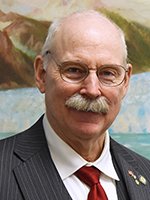
Bert Stedman
Senator · Alaska State Senate
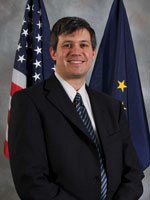
Bill Wielechowski
Senator · Alaska State Senate
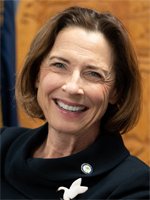
Cathy Giessel
Senator · Alaska State Senate
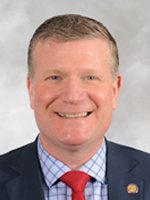
Chuck Kopp
Representative · Alaska State House

Gary Stevens
Senator · Alaska State Senate
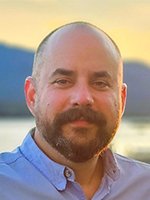
Jeremy Bynum
Representative · Alaska State House
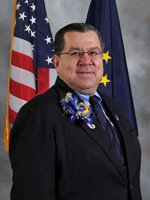
Lyman Hoffman
Senator · Alaska State Senate
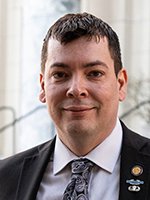
Will Stapp
Representative · Alaska State House

Zack Fields
Representative · Alaska State House