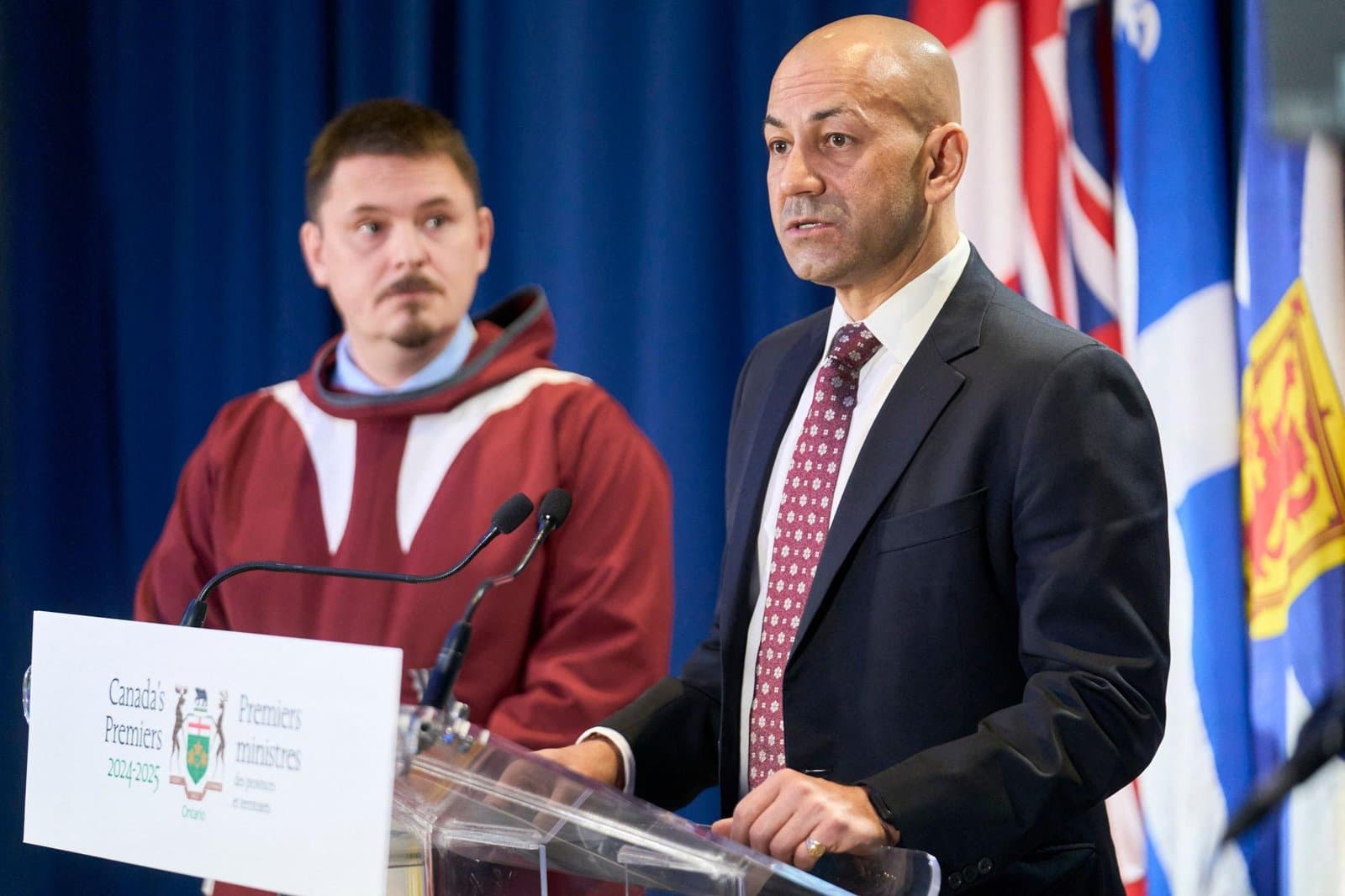
Photo by Matt
Yukon Premier Warns of Near-Blackouts, Scales Back Electric Vehicle Push
Yukon's premier warned Wednesday that the territory came dangerously close to rolling blackouts in its capital city during sustained extreme cold last winter. The crisis forced the government to scale back electrification policies and add fossil fuel generation despite environmental goals.
Speaking at the Alaska Sustainable Energy Conference in Anchorage, Premier Ranj Pillai described the December crisis as "an extremely harrowing experience" that exposed how precarious the territory's isolated 150-megawatt grid had become. One northern community recorded temperatures of minus 55.7 degrees Fahrenheit for multiple days. Nearly three weeks of minus 40 or colder weather gripped the region around the Christmas holidays.
"Within just a few weeks of my swearing-in, I had to take a close look at plans for the Yukon to enact rolling blackouts in our capital city," Pillai said. "We did not get there, we dodged that bullet, but it was an extremely harrowing experience."
Policy Reversals
The crisis forced the territory to abandon key electrification policies. The government eliminated the electric vehicle mandate and removed subsidies for electric vehicles. It also removed the policy imperative pushing electric heat. Pillai acknowledged disliking the rollbacks but called them "absolutely necessary" to slow demand growth on the strained grid.
Short-Term Solution
To address the immediate crisis, the territory is moving forward with thermal generation. "We are going to add 15 megawatts of either diesel or LNG immediately," Pillai said. Permitting is underway and construction will begin this summer. The territory then plans to build an additional 45 megawatts of thermal capacity over the next five years.
All hydrocarbons burned in Yukon are trucked up from southern Canada, making the generation costly even though it works reliably at minus 55 degrees.
Grid Constraints
Yukon's grid relies on three hydroelectric dams built in the 1950s and 1960s that provide over 90 percent of the territory's power. Energy planners project the territory will need an additional 40 megawatts of baseload capacity by 2030 to meet organic population growth.
The territory is not connected to Alaska to the west, British Columbia to the south, or Northwest Territories to the east. The Canadian government has identified connecting Yukon's isolated grid to southern Canada as a possibility, but Pillai cautioned that project could take 10 to 15 years.
Pillai framed solving the power generation problem as essential to unlocking mining sector opportunities and implementing Canada's military infrastructure investments in the North. He emphasized that while electrification remains a reasonable long-term goal, it is "simply not tenable in the near term" given current grid constraints.
This article is based on a public meeting of HPLLC_Live — 2026 Alaska Sustainable Energy Conference Wednesday part 3 ().
AI-assisted. How we use AI Transcript byLucas Brown
Stay informed. Support what matters.
Free, permanent access to local news you can verify. Subscribe to support Walter AlaskaNews and go ad-free.
Related Coverage
Utility warns of rolling blackouts in Southcentral as soon as this winter
Alaska News · 2mo ago
Alaska's Off-Grid Communities Face Rising Diesel Costs as Governor Promotes Solar Alternative
Alaska News · 4mo ago
Alaska Energy Planners Design 50-Year Systems Using 2008 Weather Data
Alaska News · 4mo ago
Fairbanks' utility is writing down when it would start turning off your power
Alaska News · 4w ago
EPA suspends Arctic clean-diesel rules amid Middle East supply crunch
Alaska News · 2mo ago
Comments
Sign in to leave a comment.
No comments yet. Be the first to share your thoughts.