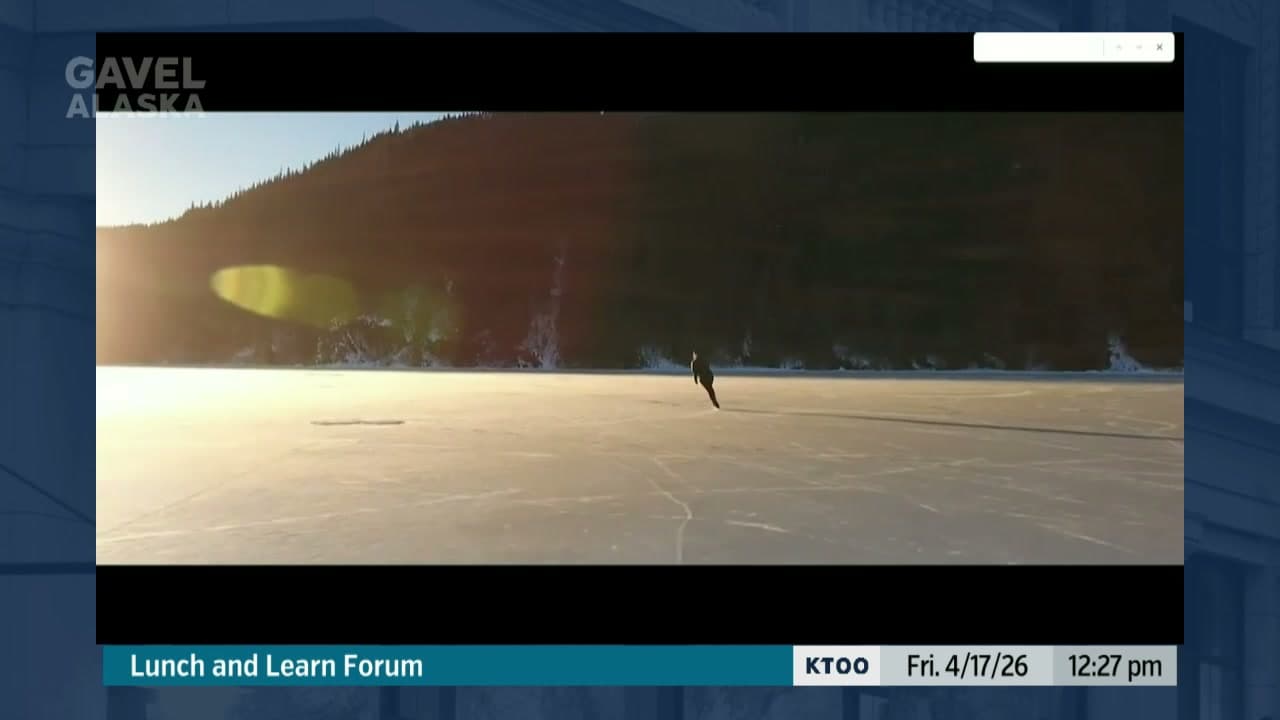
Frame from "Lunch & Learn: The Rise of Wild Ice Skating in Alaska, 4/17/26, 12pm" · Source
Wild ice skating draws global attention as Alaska outdoor recreation scene grows
Alaska lawmakers heard Thursday how wild ice skating has evolved from scattered individual outings to an organized outdoor recreation movement that is drawing global media attention and supporting local manufacturing.
The presentation at a legislative lunch-and-learn session traced the sport's progression from what one speaker called the "spark" stage of isolated experiences to the current "fire" stage, where infrastructure, commercial activity and widespread public interest have coalesced around skating on natural ice formations across the state.
Paxson Woelber, co-founder and outreach chair of the Wild Ice Skate Club of Alaska, told lawmakers the club's Facebook group has grown to nearly 12,700 members in just a few years. The club hosts regular community events that fill breweries and event spaces around Anchorage throughout the winter.
"This is an amazing thing that's happening," Woelber said. "It's just a positive thing. There's nothing wrong here. It's just something that's great that's happening in our state."
Woelber defined wild ice skating as skating on naturally formed ice without maintenance or grooming, distinguishing it from rink-based activities. The sport emphasizes covering distance and exploring varied terrain rather than confined athletic performance.
"When you're doing wild ice skating, the whole purpose is covering distance," Woelber said. "It's adventuring. It's going from point A to point B to point C."
The presentation highlighted how the activity has attracted international media coverage. A short film Woelber produced in 2017 with videographer Cale Green appeared in National Geographic and the Washington Post, won a film festival and aired on Outside TV.
"People all around the U.S. and really a lot of people around the world just saw this video and they loved it," Woelber said.
State Representative Kai Holland, who represents House District 9 covering South Anchorage to Girdwood and Whittier, framed the presentation in terms of economic development and manufacturing opportunities. Holland noted that areas including Potter Marsh, Rabbit Lake and Portage Lake have been attracting visitors from around the world.
Holland emphasized manufacturing as a priority for economic development, describing it as creating diverse job opportunities beyond production work.
"Manufacturing creates shop jobs on actually running machines, but it also creates jobs for accountants, marketing folks, engineers," Holland said.
The presentation connected wild ice skating to broader outdoor recreation tourism and the potential for attracting low-season visitors. Representative Tim, who co-sponsored the lunch-and-learn, described the activity as part of what makes Alaska a year-round destination. He noted the sport's influence on young adults deciding whether to move to or remain in Alaska, saying "there's tens of thousands of working-age young adults in Alaska now and across the country that are on the fence about coming here or staying here, and something as simple as wild ice skating can make the difference in that decision. I know it did for me."
Woelber described how Nordic skates, which use cross-country ski boots and bindings attached to long blades, have become popular for wild ice skating. The equipment allows skaters to cover distances of 20 to 50 miles in a day on large water bodies.
He demonstrated how the boots detach from the skate blades, allowing skaters to walk between ice sections when navigating wetlands or reaching remote locations.
Popular skating locations include coastal and intertidal lagoons around Anchorage, the Palmer Hay Flats, drainages at the head of Turnagain Arm and large lakes including Skilak Lake on the Kenai Peninsula. Woelber said Skilak Lake is 55,000 times the size of a hockey rink.
Safety practices include using ice poles to test ice strength, carrying rescue equipment including claws and throw ropes, and packing warm dry clothes in waterproof bags. On remote trips in cold conditions, skaters may carry stoves, foam pads and sleeping bags.
"As sports go, I would say it's on the safer side of things that people do in Alaska," Woelber said, noting that skaters have tools to warm up and dry off if they fall through ice.
Woelber moved back to Anchorage in December 2014 after living in New York, Chicago and San Francisco, citing a desire for outdoor access. He bought Nordic skates in 2016 and described immediately falling in love with the sport.
The Wild Ice Skate Club of Alaska formed as the activity transitioned from small friend groups to a broader community with shared information and safety practices. Woelber said the club helps connect newcomers with experienced skaters.
"We meet people at all of our WSCA meetings. People come and they say, I see what's happening, I see you guys skating, but I don't really know what to do, I don't know anybody doing it," Woelber said.
The presentation emphasized accessibility, noting that participants can use old hockey skates or figure skates rather than specialized Nordic equipment.
Woelber described the 2024-2025 season as particularly productive after warm January weather melted snow that then refroze, raising ice levels in wetland areas and opening extensive skating terrain in the Susitna Flats.
The Alaska Manufacturing Association received mention as an organization connecting product developers with local manufacturers capable of producing equipment for outdoor recreation and other industries.
This article is based on a public meeting — Alaska Legislature: Lunch & Learn: The Rise of Wild Ice Skating in Alaska, 4/17/26, 12pm ().
AI-assisted. How we use AI Transcript byLucas Brown
Stay informed. Support what matters.
Free, permanent access to local news you can verify. Subscribe to support Alaska News and go ad-free.
Related Coverage
Wild ice skating grows from isolated hobby to organized Alaska community
Alaska News · 5mo ago
Alaska lawmakers explore data center development as economic opportunity
Alaska News · 5mo ago
House panel hears bill to let small Alaska fishermen process, sell catch directly
Alaska News · 5mo ago
House Panel Considers Bills to Ease Alaska's Liquor Liability Insurance Crisis
Alaska News · 6mo ago
Fairbanks Seeks $3.5M in State Funding to Host 2028 Arctic Winter Games
Alaska News · 5mo ago
Comments
Sign in to leave a comment.
No comments yet. Be the first to share your thoughts.