Senate Passes Insurance Gap Fix for Gig Economy Drivers
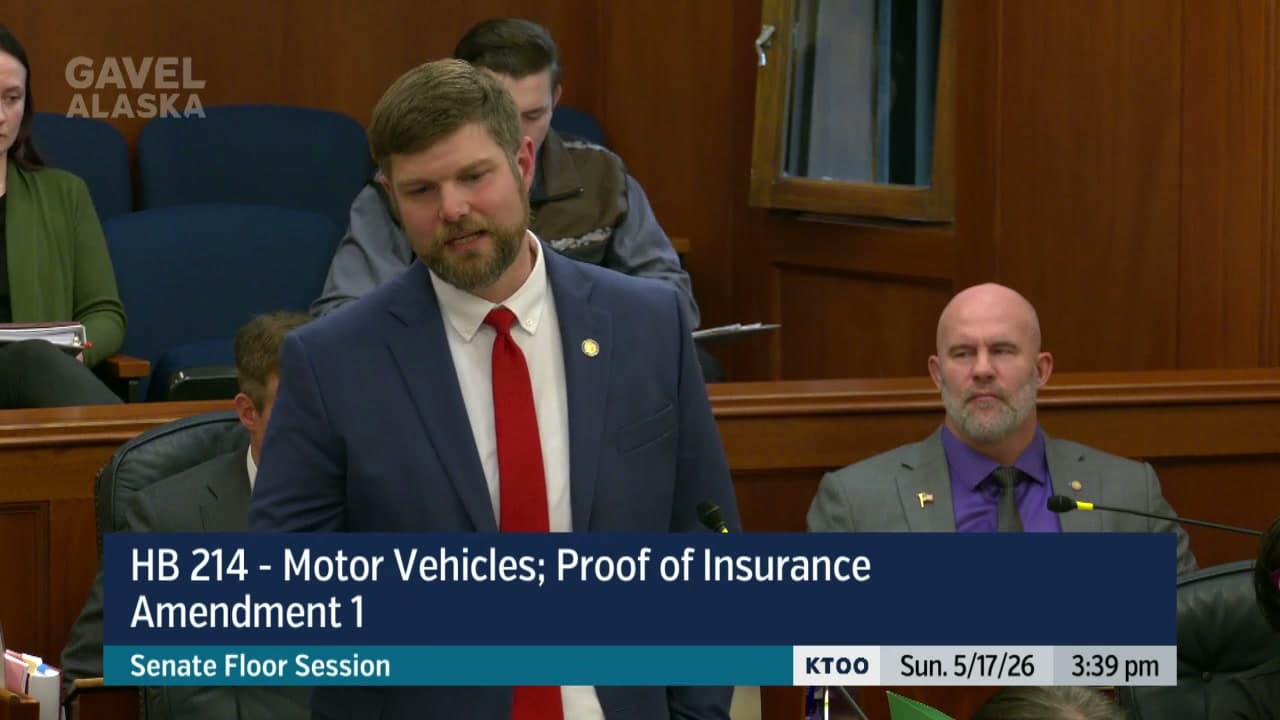
The Alaska Senate voted Sunday to require insurance coverage for delivery network company drivers who face coverage gaps during some accidents. The vote amended a motor vehicle bill to address a gap in state law affecting gig workers.
The Senate adopted the amendment 13-7 after late-session floor debate. The measure mandates insurance for drivers who work for companies like Instacart, Walmart Spark, and Uber Eats. It requires occupational accident insurance providing health coverage and wage replacement for injured gig workers. The amended bill then passed 17-3.
The underlying bill, House Bill 214, originally addressed proof of financial responsibility and SR-22 insurance certificate requirements for drivers with unsatisfied court judgments. The Senate added the delivery-driver insurance provisions as a floor amendment.
Between 2014 and 2020, nearly all U.S. states adopted statutes setting minimum insurance standards for transportation network companies and their drivers. Many states modeled their laws on a 2015 compromise framework that addressed coverage gaps when rideshare apps are active but no passenger is on board. Alaska enacted a statewide framework for transportation network companies like Uber and Lyft in 2017. That framework established baseline insurance rules for rideshare operations. Since 2017, Alaska has not enacted major statewide updates targeting insurance gaps for app-based delivery drivers.
Senator Jesse Bjorkman sponsored the amendment. He said a constituent who drove for a delivery app had zero insurance after a serious accident. The driver, a member of the American Legion Color Guard named Paul, was badly injured and his car was damaged. State law left him with no coverage, Bjorkman said.
"That's a huge gap in our law, Mr. President. It's not acceptable," Bjorkman said.
The amendment requires delivery network companies to provide primary auto insurance, occupational accident insurance, and primary liability insurance to couriers while they are providing delivery services. Statutes regarding occupational accident insurance, primary auto liability insurance, and underinsured or uninsured insurance all require $1 million in coverage for an accident, Bjorkman said. The bill also requires companies to submit certificates of insurance to the division director and to drivers or couriers stating the coverage they provide.
The measure also requires personal lines insurance to cover a driver while they are not logged on to the digital network and not engaged in a prearranged ride. It applies while a courier is not providing delivery services. It prohibits transportation network companies from waiving underinsured or uninsured motorist coverage for primary auto insurance or primary liability insurance.
Bjorkman said the bill clarifies when delivery-service coverage ends. The definition now includes insurance coverage when a courier returns to the location where they accepted the offer of the prearranged ride or arrives at the courier's personal residence or begins a personal task unrelated to the delivery. Insurance policies almost exactly like this one have passed in the vast majority of all states that have adopted delivery network company insurance standards, he said.
Senator Scott Kawasaki opposed the amendment. He said the underlying bill's sponsor in the House did not support adding the insurance provisions to her legislation. The amendment was still an active bill in the House, he said. Changing the underlying bill by adding the rider did not serve either bill or the legislative process.
"I'd ask that members please vote no against Amendment Number 1," Kawasaki said.
Senator Bill Clayman spoke in favor of the amended bill. He said he had heard stories about people injured while riding in Uber who were hit by an uninsured motorist and were not well protected. The measure puts underinsured coverage in place so that it will protect Alaska consumers who are not protected today, he said.
The amendment also establishes that transportation network drivers and delivery network couriers are independent contractors for purposes of work and not employees. This applies if the company does not propose specific work hours, does not impose restrictions on the ability of a driver to use the digital network of other companies, and does not restrict a driver from engaging in any other occupations.
After final passage, Senator Kawasaki served notice of reconsideration on his vote. The bill could be brought back for another vote at a later date.
This article is based on a public meeting — SFLR-20260517-1400 ().
AI-assisted. How we use AI Transcript byLucas Brown
Stay informed. Support what matters.
Free, permanent access to local news you can verify. Subscribe to support Walter AlaskaNews and go ad-free.
Related Coverage
Alaska House panel debates insurance gaps for gig delivery drivers
Alaska News · 4mo ago
Alaska Senate adds unemployment benefit increase to insurance bill
Alaska News · 4mo ago
Alaska Senate adds telehealth parity and disability coverage to benefits bill
Alaska News · 4mo ago
Alaska Senate panel advances autonomous vehicle restrictions despite industry opposition
Alaska News · 4mo ago
Alaska House passes disability pay increase for injured public workers
Alaska News · 4mo ago
Comments
Sign in to leave a comment.
No comments yet. Be the first to share your thoughts.