Senate panel weighs municipal concerns over Alaska LNG tax structure
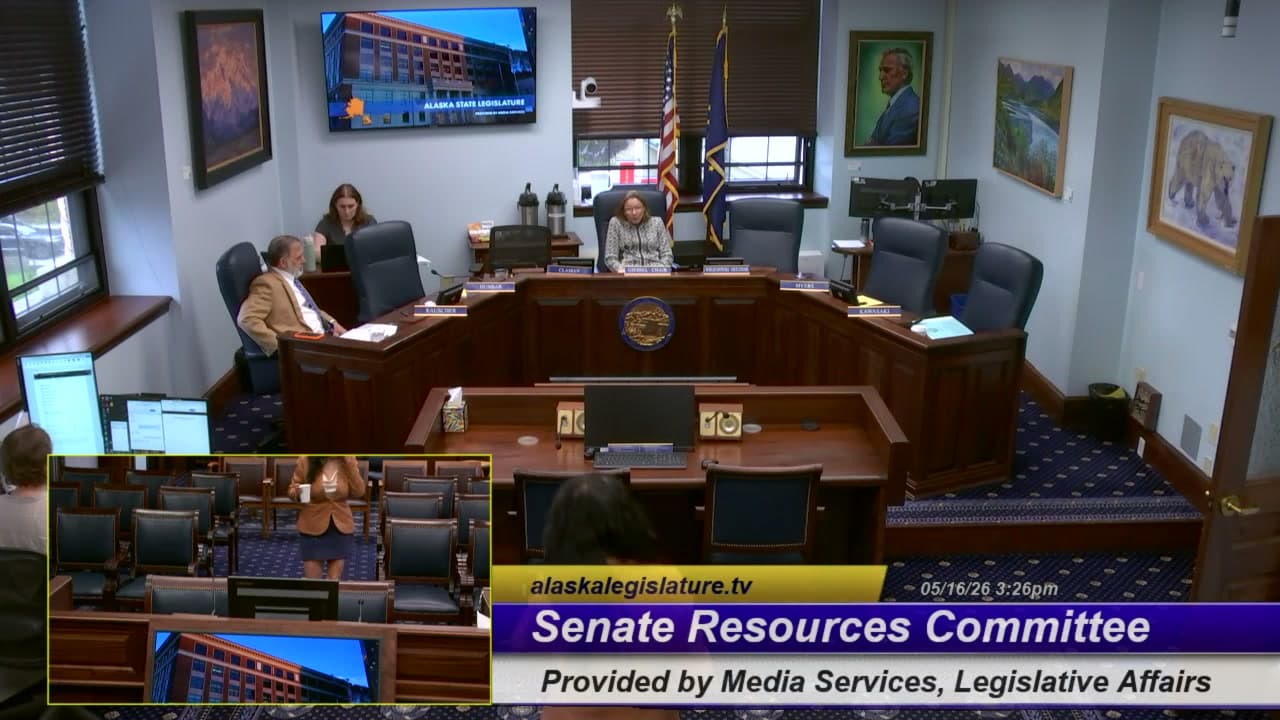
The Alaska Senate Resources Committee on Saturday addressed municipal concerns about tax breaks and revenue sharing for the Alaska LNG pipeline project, with legal counsel proposing a 10-year sunset provision to ease worries about setting precedent for future projects.
The committee version of the Alaska LNG tax bill replaced Gov. Mike Dunleavy's original proposal, a 6-cent-per-1,000-cubic-feet volumetric tax estimated to yield about $75 million per year, with an alternative volumetric tax of up to 55 cents per 1,000 cubic feet of gas processed for export and an estimated $625 million per year once the pipeline is fully operational. The committee bill would exempt the project from property taxes but impose the higher alternative volumetric tax, plus a one-time $1 million per mile construction fee estimated at roughly $800 million total. Dunleavy had urged lawmakers in early May to pass a bill with a tax rate low enough to attract investors and creditors for the estimated $46 billion project.
Senate Majority Legal Counsel Sonja Kawasaki told the committee Saturday that the Alaska Municipal League had submitted concerns about providing tax abatements for the LNG project, worried it sets a bad precedent for future projects.
"The first sort of comment that they made, that this, they're just generally speaking that providing an abatement and providing a lower tax amount, lower tax method to a project for a specific project kind of sets a bad precedent for future projects," Kawasaki said.
Kawasaki proposed a 10-year sunset provision to address municipal concerns. "I'm hoping that the 10-year sunset helps mitigate this or provide a higher level of comfort for the municipalities," she said.
The sunset provision would begin when the LNG facility comes online. After 10 years, municipal property tax law and state petroleum property tax law would revert to current structure.
The Municipal League also suggested adding lost revenue to the Department of Revenue's indirect expenditures report, a biannual report detailing foregone revenue from tax credits, exemptions, discounts, and deductions. Kawasaki said the suggestion would be taken under advisement but noted it might be difficult to implement given the alternative volumetric tax structure.
Confusion remains over how new revenue from the alternative volumetric tax would be distributed between boroughs, cities, and the state. "There's a revenue sharing provision on our alternative volumetric tax that would be 50% to the borough and 50% to the state," Kawasaki said. She acknowledged that city mayors had expressed concern about how cities within boroughs would access those funds.
The bill includes a $50 million construction impact fund for pipeline communities and a $30 million annual developer contribution for five years distributed statewide through the Community Assistance Program.
Kawasaki invited the Alaska Municipal League to help craft a clearer distribution mechanism. "I would welcome AML to help us figure out how that might be done, if it requires an actual formula or however would be best for to enable those distributions to the cities, you know, contained within a borough who would be receiving those funds," she said.
Committee Chair Cathy Giessel thanked the Alaska Municipal League for constructive input. "We did look at these and they made some very helpful comments. Not only approving of pieces of the bill but suggesting clarification," Giessel said.
Following the discussion of municipal concerns, the committee heard public testimony on the bill. Speakers expressed support for the project while differing on which version of the bill would best attract investment.
The committee scheduled its next hearing for Monday, when the Department of Revenue will present modeling on the tax structure.
This article is based on a public meeting — Senate Resources, 5/16/26, 3:30pm ().
AI-assisted. How we use AI Transcript byLucas Brown
Stay informed. Support what matters.
Free, permanent access to local news you can verify. Subscribe to support Alaska News and go ad-free.
Related Coverage
Senate panel examines regulatory questions on gas pipeline tax plan
Alaska News · 5mo ago
Senate panel debates gas pipeline tax structure in 26th hearing
Alaska News · 4mo ago
House panel hears tax proposal for Alaska LNG project
Alaska News · 4mo ago
Municipal League urges local control in Alaska LNG tax negotiations
Alaska News · 5mo ago
Senate Finance hears $18 billion revenue trade-off for Alaska LNG tax break
Alaska News · 3mo ago
Comments
Sign in to leave a comment.
No comments yet. Be the first to share your thoughts.