Senate panel advances judicial nominee who sued judges over abortion questions
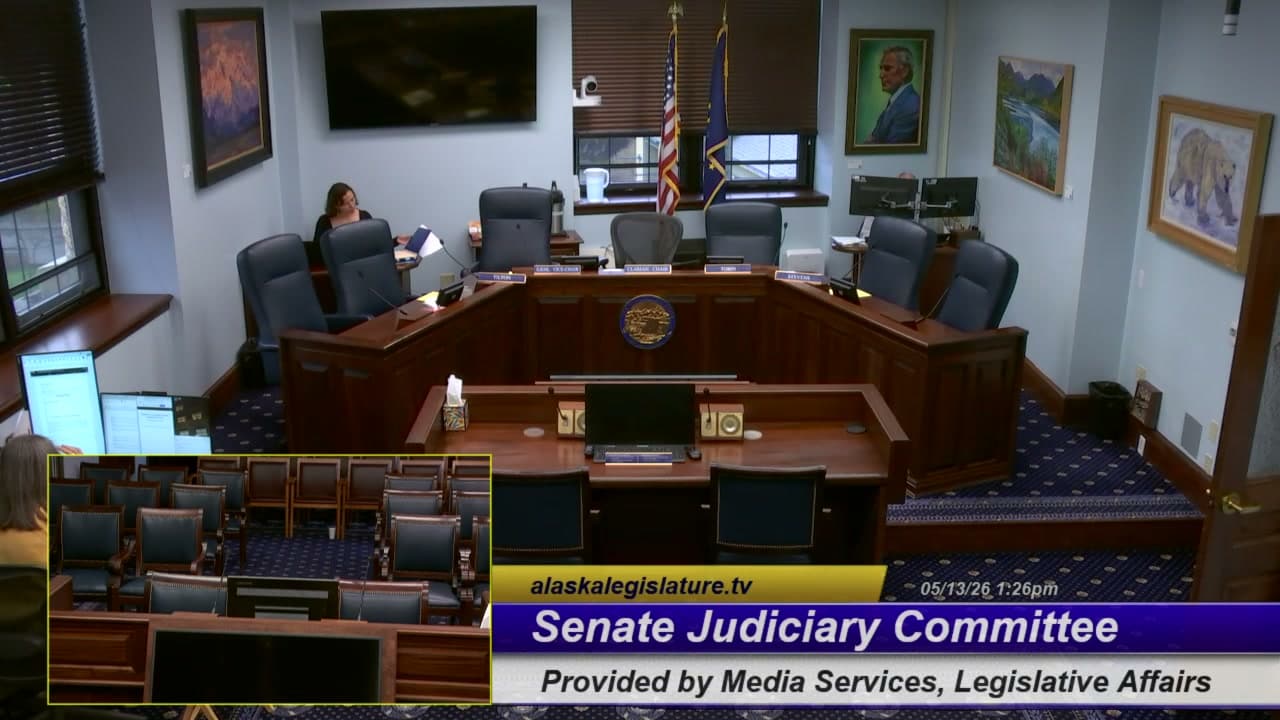
The Senate Judiciary Committee voted Wednesday to advance Mike Miller's nomination to the Alaska Judicial Council to a joint session, despite questions about a 2004 federal lawsuit in which Miller sued judges over their refusal to answer abortion-related questionnaires.
Miller, a former state representative and senator from Fairbanks, told the committee he has backed away from that position and now believes judges should decide cases based on law rather than ideology. The committee forwarded his name without a formal vote count, a procedural step that does not reflect members' intent to confirm or reject him in the full joint session.
The lawsuit, Alaska Right to Life and Mike Miller v. Jeff Feldman and several judges, sought to compel sitting judges to answer questions about their positions on abortion. Miller acknowledged his involvement but said he has since changed his view. He said the lawsuit organizers asked to use his name because he had recently run a campaign for the U.S. Senate and had high name recognition at the time.
"I do remember that, and I've since changed that position," Miller said. "As I've been out of the legislature, and sometimes I am guilty of doing the same thing that I have said I should not do, and sometimes we judge from our viewpoint in life. And as I have sat back for the last 20-some years since being out of the legislature, I've been able to reflect on a few things."
"I really want judges to judge," Miller said. "And I hope that they will do the same thing in as much as that they will judge upon what the law says. Now, if they come down with the position that I disagree with, well, that's, if they're judged upon the law, so be it. Then it's incumbent on people like myself to come to you, the legislature, to change the law, and then you might have had a different outcome. But I have backed off from that position literally 25 years ago."
Miller also emphasized his belief in keeping the Judicial Council independent. "I think we need to keep it as independent as possible because that's what makes the system work, is, in my opinion, that we try to keep politics out of it and try to be things based on the law and what the law says," he said.
Sen. Clayman, the committee chair, pressed Miller on whether he would ask judicial applicants about their abortion views if confirmed to the council. Miller said he would not.
"I don't think personally that's an appropriate question coming from me," Miller said. "I would not answer that. I would not ask that question."
One of the defendants in the 2004 lawsuit was Patricia Collins, then a superior court judge who is now retired and serves on the Judicial Council. Clayman asked whether Miller would have difficulty serving alongside Collins. Miller said he would not, comparing the situation to legislative debates where opponents on one issue become allies on the next.
"I certainly would have no problems serving with her because, you know, on one issue, you're the person that is debating against you on a certain issue," Miller said. "On the next issue, maybe your strongest ally."
Sen. Tobin asked Miller about his approach to diversity, equity and inclusion in judicial selection. Miller said he believes in considering the best candidates and noted that law schools are producing qualified candidates across all ethnic groups and backgrounds. He said his guiding factor is whether a candidate will decide issues based on what the law says rather than personal opinions.
Clayman also questioned Miller about the council's bylaws, which require members to nominate only the "most qualified" candidates to the governor, not simply "qualified" ones. Miller said he had not yet reviewed the bylaws in full but would follow them.
"I think our objective here is to have the best judiciary that we can find, and I think most qualified is probably a very defining principle there," Clayman said.
Miller committed to following the bylaws' standard even if efforts to change the language from "most qualified" to "qualified" were proposed but failed.
Clayman asked whether Miller would vote on judicial retention recommendations based on the information typically provided by the council, even if he might prefer additional details. Miller said he would rely on materials provided by the council's executive director and would be wary of information from outside sources.
Miller said he views his role as helping to send the most qualified candidates to the governor. "I view it as a, to try to, as we get the applications for the new judgeships or the judgeships that have become available, to send the most qualified people to the governor for appointment so that we can continue to keep a long and very vibrant judiciary in the state of Alaska," he said.
The committee heard no public testimony on Miller's nomination. Tobin read the formal recommendation forwarding Miller's name to a joint session, scheduled for Thursday.
The Alaska Judicial Council is a seven-member body that screens and nominates candidates for judicial appointments and evaluates sitting judges for retention. Three members are attorneys appointed by the Alaska Bar Association, and three are public members appointed by the governor and confirmed by the legislature. The chief justice of the Alaska Supreme Court chairs the council.
This article is based on a public meeting — SJUD-260513-1330 ().
AI-assisted. How we use AI Transcript byLucas Brown
Stay informed. Support what matters.
Free, permanent access to local news you can verify. Subscribe to support Alaska News and go ad-free.
Related Coverage
Senate panel advances Salazar to Human Rights Commission
Alaska News · 5mo ago
Senate Finance forwards Anchorage attorney to State Assessment Review Board
Alaska News · 4mo ago
The Senate questions Alaska's nominee for a long-empty federal judgeship
Alaska News · 1w ago
Senate panel advances Lambertson to Police Standards Council despite questions
Alaska News · 5mo ago
Senate Panel Advances Nine Board Nominees After Confirmation Hearings
Alaska News · 5mo ago
Comments
Sign in to leave a comment.
No comments yet. Be the first to share your thoughts.