Senate panel advances bill requiring humans in autonomous commercial vehicles
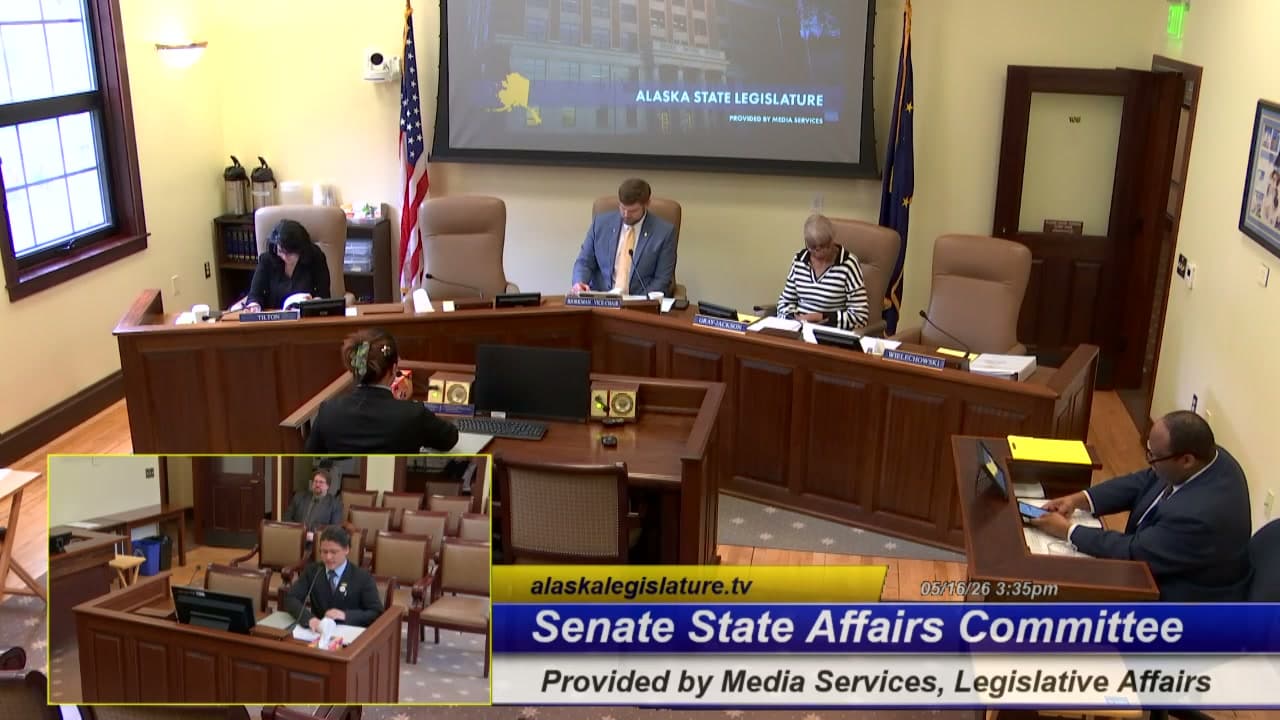
The Alaska Senate State Affairs Committee voted Wednesday to advance a bill that would require human safety operators in autonomous commercial vehicles operating in the state, despite opposition from industry representatives who warned the measure would halt testing and deployment.
House Bill 217 would mandate that a qualified human safety operator be present whenever a commercial autonomous vehicle operates in Alaska. The committee moved the bill forward without objection during its second hearing after hearing testimony from multiple autonomous vehicle companies who said the requirement would make Alaska the only state in the nation to effectively ban driverless commercial operations.
Griffin Tsukeo, staff to bill sponsor Representative Ashley Carrick, explained the bill seeks to regulate autonomous vehicles used for moving commerce, goods, and passengers. The measure does not prevent autonomous vehicles from operating in Alaska, but sets what supporters call a reasonable guardrail on commercial transport given the state's unique road and weather conditions. The bill's definitions are designed to exclude driver-assist features like collision avoidance systems, adaptive cruise control, and lane assistance. Carrick was on the floor and unable to attend the hearing.
Representatives from Kodiak AI, Gatik, and the Autonomous Vehicle Industry Association testified in opposition, arguing the bill would eliminate any incentive for companies to test or invest in Alaska. No one testified in support during the public testimony portion of the hearing.
Daniel Goff of Kodiak AI said his company has driven over 3 million autonomous miles with a backup safety driver and currently operates the world's first customer-owned driverless fleet in West Texas.
"If this bill passes, Kodiak and our colleagues in the industry will have no interest in testing in Alaska," Goff said. "Without a path to deployment, there's no point in building the experience we need to safely operate in Alaska's unique driving environment."
Rich Steiner of Gatik said his company operates over 100 autonomous trucks in states including Arizona, Arkansas, Iowa, Texas, and Ontario, Canada, where the technology has navigated harsh weather conditions for six years. He said the bill would make Alaska the only state to single out autonomous trucks and ban them.
"With no pathway to driverless deployment, this bill effectively bans all forms of testing of autonomous trucks in Alaska," Steiner said.
Renee Gibson of the Autonomous Vehicle Industry Association said autonomous vehicles have driven hundreds of millions of miles on U.S. public roads and do not drive distracted, impaired, or fatigued. She said the bill would jeopardize Alaska's ability to realize safety, economic, environmental, and workforce benefits the technology is delivering across the country.
Kurt Augustine of the Alliance for Automotive Innovation warned that several automakers currently conduct severe weather testing near Fairbanks, but that testing could be in danger if the bill passes. He cited California's experience 15 years ago, when restrictive policies pushed most autonomous vehicle testing to Arizona and Nevada.
In remarks included in the evidence pool, Carrick defended the measure as a narrow guardrail rather than a ban. "Our weather and road conditions can change at a moment's notice, and autonomous vehicles may be able to function with little to no issue in states like California, but Alaska does look different, and it's simply not the case here that these vehicles would function the same as they do in other testing conditions," Carrick said. She emphasized that by requiring a qualified human safety operator to be present, the bill keeps all road users safe and helps preserve jobs in Alaska.
After closing public testimony, the committee briefly went at ease before resuming discussion. Committee Vice Chair Jesse Bjorkman noted the committee had received a letter from the Alaska Department of Transportation pointing out possible improvements to the bill.
Senator Cathy Tilton said she appreciated the work that went into the bill but had concerns about inconsistencies in how it treats different types of autonomous vehicles.
"I do have some challenges with this bill, not just looking at the commercial aspects of the bill, but also of the personal ownership aspects of the bill," Tilton said. "But allowing business folks such as robo-taxis or what have you are exempt, but people who own personal vehicles that are autonomous vehicles are not."
Tilton also noted it was unfortunate the committee received the letter from the Alaska Department of Transportation only on the day of the hearing, after sponsors had put substantial work into the measure over the previous session.
The bill now advances with individual recommendations and a zero fiscal note.
This article is based on a public meeting — Senate State Affairs, 5/16/26, 3:30pm ().
AI-assisted. How we use AI Transcript byLucas Brown
Stay informed. Support what matters.
Free, permanent access to local news you can verify. Subscribe to support Alaska News and go ad-free.
Related Coverage
Alaska Senate panel advances autonomous vehicle restrictions despite industry opposition
Alaska News · 4mo ago
Alaska House passes bill requiring human operators in commercial autonomous vehicles
Alaska News · 4mo ago
Alaska bill would require human operators in autonomous freight trucks
Alaska News · 4mo ago
Autonomous vehicle bill advances despite state warnings on outdated standards
Alaska News · 4mo ago
Alaska considers ban on driverless commercial trucks amid safety debate
Alaska News · 5mo ago
Comments
Sign in to leave a comment.
No comments yet. Be the first to share your thoughts.