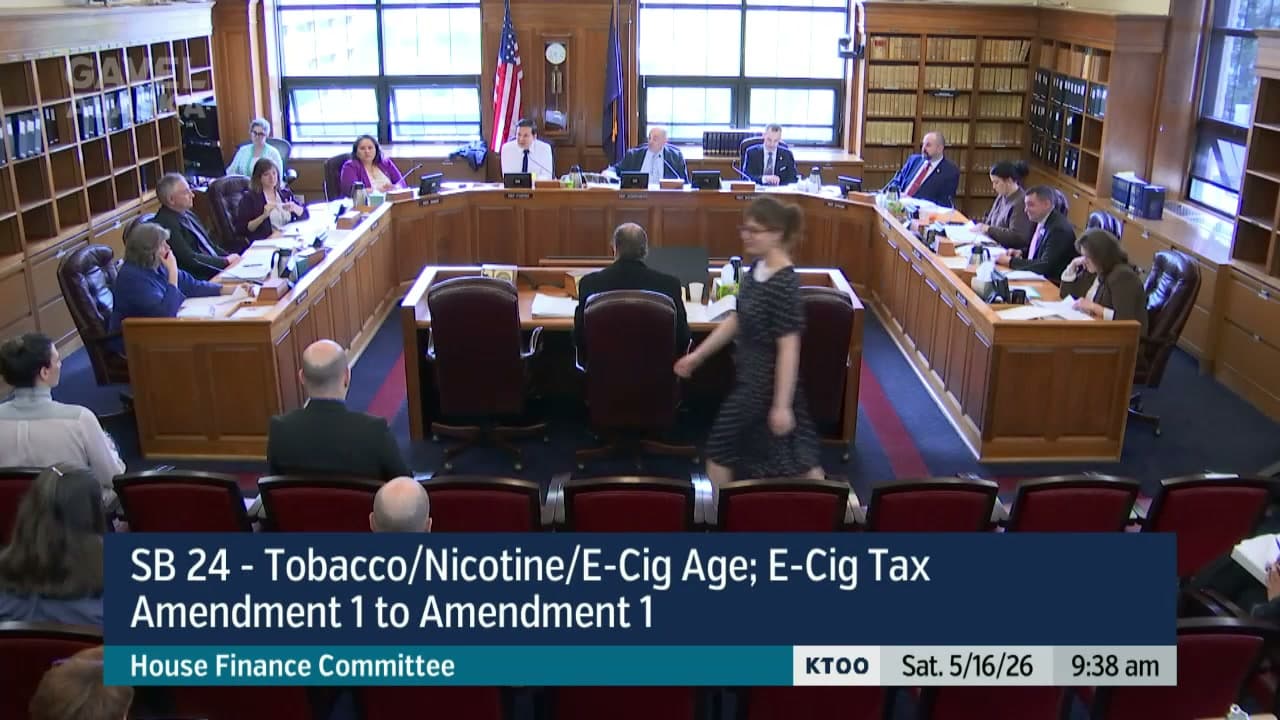
House Finance advances civics education bill after rejecting military exemption
The Alaska House Finance Committee voted Saturday to advance a civics education bill requiring Alaska high school students to complete a civics course or exam for graduation. The committee rejected an amendment that would have exempted active-duty military children entering Alaska's school system.
Senate Bill 23 requires the Alaska Department of Education and Early Development to provide free educational resources for school districts to develop civics curriculum. Students would satisfy the requirement through a semester course, a written exam, or a project-based assessment. Any new civics graduation requirement would be integrated into existing state standards and district-level graduation policies overseen by local school boards under DEED guidance.
The committee defeated the military exemption amendment 5-6 after debate over whether existing law already protects military-connected students who transfer between states.
Representative Neal Foster, House Finance co-chair, opposed the exemption. He noted the bill already allows students who transfer to Alaska after completing 10th grade elsewhere to skip the requirement. That gives most students adequate time to complete the civics work in four years of high school.
"I think exempting people because we think logistically you don't have time to achieve this credit in the 4 years of high school. I think 10th grade is adequate," Foster said. He added that if the committee felt students needed more flexibility, lowering the threshold to after completing ninth grade would be more appropriate than a blanket exemption.
Tim Lampkin, staff to the bill's sponsor Senator Stevens, told the committee that Alaska law already addresses the concern through the Interstate Compact on Educational Opportunity for Military Children. That compact, enacted in 2009, removes barriers to educational success for military families who move frequently. It standardizes policies on enrollment, placement, and graduation across member states. The compact allows school districts to waive specific course requirements when similar coursework has been completed elsewhere.
"The purpose of it is to remove barriers to educational success imposed on students by military families because of frequent moves and deployment of their parents," Lampkin said.
Lampkin questioned the logic of exempting military children from learning about the country their parents serve. "This is a civics class, and if it's in the spirit of being overseas with their families protecting our country, that then they come home and they're waived from the requirement of understanding the country that they're protecting," he said.
Representative Galvin said she would vote against the exemption because the existing compact already provides the necessary flexibility. "For that reason, because I think it's protected in the compact, I will be a no vote on this," Galvin said.
After the amendment failed, the committee voted to move Senate Bill 23 from committee with individual recommendations and attached fiscal note. The House Finance Committee authorized Legislative Legal to make any technical and conforming changes as necessary.
Lampkin noted the bill's timing as Alaska prepares to mark the 250th anniversary of the United States in 2026. "This bill would try to codify and bring greater attention to civics education in our state and maybe be timely insofar as we enter our semi-quincentennial celebration," he said.
The bill now moves to the full House for consideration.
This article is based on a public meeting — HFIN-260516-0900 ().
AI-assisted. How we use AI Transcript byLucas Brown
Stay informed. Support what matters.
Free, permanent access to local news you can verify. Subscribe to support Alaska News and go ad-free.
Related Coverage
House panel sets amendment deadline for civics education bill
Alaska News · 4mo ago
House Passes Civics Education Bill After Decade-Long Push
Alaska News · 4mo ago
House Finance Advances Education Funding Bill Despite Fiscal Concerns
Alaska News · 4mo ago
House Finance Advances Mental Health Education Guidelines for Schools
Alaska News · 5mo ago
House Finance advances tobacco age increase, e-cigarette tax on 7-4 vote
Alaska News · 4mo ago
Comments
Sign in to leave a comment.
No comments yet. Be the first to share your thoughts.