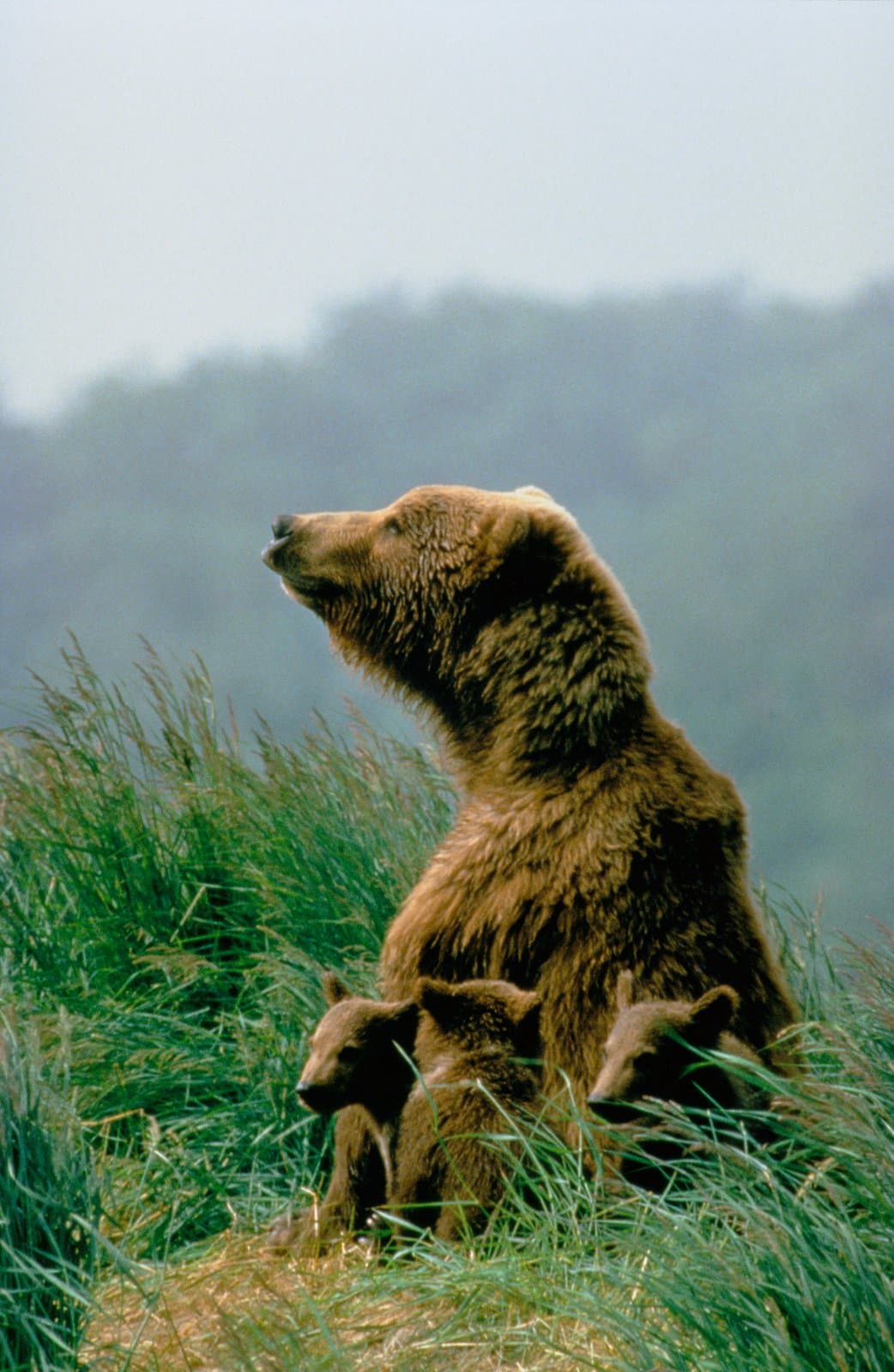
Brown bear sow with cubs, McNeil River Sanctuary, Alaska Peninsula. Photo by Larry Aumiller / U.S. Fish and Wildlife Service. Public domain. · Source
Federal Subsistence Board adopts 52 wildlife proposals for Alaska
The Federal Subsistence Board approved 52 of 78 wildlife proposals during its April 21 through 24 regulatory meeting in Anchorage, establishing new hunting rules that will govern subsistence use on federal public lands across Alaska from July 1, 2026, through June 30, 2028.
The Board opened a brown bear hunt for Kodiak Island road-system residents, rescinded moose-hunting closures around Nome, and tightened access for non-federally qualified users in parts of the Eastern Interior, Yukon-Kuskokwim Delta, and Prince of Wales Island. The Board deferred five proposals, approved the withdrawal of three, rejected 12, and took no action on 11.
The Federal Subsistence Board sets hunting, trapping, and fishing rules for rural and Alaska Native households on federal public lands, which cover more than half of Alaska. Federally qualified subsistence users hold priority access on those lands under the Alaska National Interest Lands Conservation Act of 1980. The federal subsistence priority exists because the state's own rural priority was struck down in McDowell v. Alaska in 1989 as incompatible with the equal-access provisions of the state constitution.
Kodiak Island Brown Bear Hunt
The Board recognized customary and traditional uses of brown bear in Unit 8 for all residents of the Kodiak Island road system east of a line from Crag Point south to the westernmost point of Saltery Cove, including Anton Larsen Bay. The decision excludes residents of the Kodiak Station Census Designated Place, the Coast Guard base. The Board allocated up to four federal brown bear permits for the hunt and authorized the sale of handicrafts using any nonedible bear byproduct.
This marks the first federal subsistence brown bear hunt opportunity in an area that previously had no qualifying community for brown bear under federal regulations. Brown bear hunting on Kodiak has historically run through the state's draw-permit system on the Kodiak National Wildlife Refuge and surrounding lands.
Nome and Northwest Arctic Actions
In Unit 22A, which covers the Norton Sound coast around Nome and Unalakleet, the Board rescinded all existing closures of moose hunting by non-federally qualified users on federal public lands. Unit 22A has carried various non-federally-qualified-user closures over the past two regulatory cycles in response to declining moose population estimates around the Nome road system. The Board also established a one-bull muskox hunt in Unit 22A from August 1 through March 15.
In Unit 23, which covers the Northwest Arctic Borough and Kobuk Valley, the Board extended the wolf hunting season to open August 1 and raised the harvest limit to 20 on all federal public lands in the unit. The earlier opening date and elevated limit reflect arguments from Kotzebue-area subsistence users that wolf populations in Unit 23 have suppressed Western Arctic Caribou Herd recruitment in calving habitat.
Eastern Interior and Southeast Alaska
In Unit 25D in the Eastern Interior, the Board closed moose hunting to non-federally qualified users from September 10 through 20 along river corridors. Those ten days fall in the heart of the Yukon River drainage moose season and along the corridors most accessible to nonresident and Alaska-resident hunters traveling by boat.
The Board took its most substantial Southeast Alaska action on Prince of Wales Island. The Board closed deer hunting in all of Unit 2 to non-federally qualified users from July 24 through August 15 and reduced the non-federally-qualified-user harvest limit to one buck.
The Board also restructured access for federally qualified subsistence users from outside the immediate area. It closed Unit 2 deer hunting to federally qualified subsistence users from Units 1C, 1, 4, 5, and Ketchikan from July 24 through 31 and from January 1 through 31, and reduced their harvest limit to two bucks. It closed Unit 2 to federally qualified subsistence users from Units 3, 1B, and the remainder of Unit 1A, including Metlakatla and Saxman, from January 1 through 31, and reduced their harvest limit to four bucks.
The Board adopted a separate fisheries proposal, closing the federal public waters throughout District 1 in Southeast Alaska to the harvest of eulachon except by federally qualified subsistence users in the Unuk River.
Yukon-Kuskokwim Delta and Sheep Closure
In the Yukon-Kuskokwim Delta, the Board established a may-be-announced antlerless moose hunt in Unit 18 from September 1 through October 15 and extended the closing date of the winter moose hunt to March 31 in Zone 2 of the Kuskokwim hunt area. May-be-announced hunts give in-season managers authority to open the hunt only when population conditions warrant.
The Board closed sheep hunting to all users for two years on federal public lands within Yukon-Charley Rivers National Preserve and the Glacier Mountain Controlled Use Areas in Units 20E and 25C. The closure applies to federally qualified subsistence users as well as nonresident sport hunters.
Deferred and Rejected Proposals
The Board deferred five proposals to future meetings. Three wildlife proposals will return at the Board's fisheries regulatory meeting February 1 through 5, 2027. Two further proposals will return at the next wildlife regulatory meeting in 2028.
The Board rejected two requests for reconsideration of Nonrural Determination Proposal NDP25-01 during a closed executive session on April 23, finding that they did not meet the threshold for full analysis.
The Board's official summary, posted to its public Facebook page on April 30, drew 49 reactions, 12 comments, and 29 shares within the first day. The comment thread included questions about implementation and procedural critiques of how the Board weighs its inputs.
The full list of Board actions is posted at doi.gov/subsistence/fsb_materials2_April2026. The Board's next meetings include a June 3, 2026, session on Wildlife Special Actions via Microsoft Teams, the Board's Summer Work Session in Anchorage on August 4 through 5, 2026, and the Fish and Shellfish Regulatory Meeting February 1 through 5, 2027.
Source: U.S. Department of the Interior, Federal Subsistence Board reshapes Alaska hunting rules for 2026–2028.
AI-assisted. How we use AI
Stay informed. Support what matters.
Free, permanent access to local news you can verify. Subscribe to support Melinda Communities.News and go ad-free.
Related Coverage
Federal migratory bird subsistence rules take effect across Alaska
Alaska News · 3mo ago
A federal expansion of hunting and fishing access on national wildlife refuges would land most heavily in Alaska
Alaska News · 3mo ago
Federal rule renames Alaska subsistence bird-harvest region as Ahtna Territory
Alaska News · 3mo ago
Alaska Board of Game proposes hunting, trapping rules for Ambler Road
Alaska News · 3mo ago
Supreme Court declines to review Alaska's challenge to rural subsistence priority
Alaska News · 1mo ago
Comments
Sign in to leave a comment.
No comments yet. Be the first to share your thoughts.