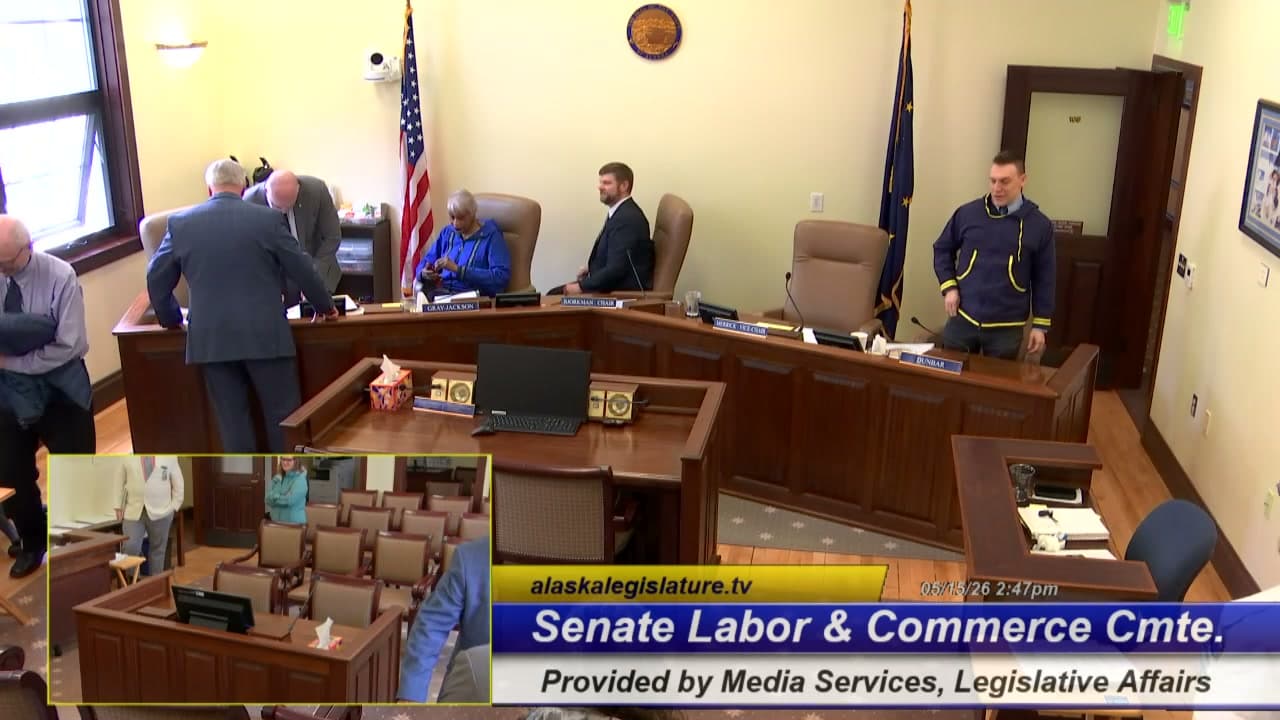
Alaska Senate committee hears nurse staffing bill amid safety concerns
The Alaska Senate Labor and Commerce Committee heard testimony Friday on legislation that would establish minimum nurse-to-patient ratios in hospitals across the state.
Senate Bill 283, sponsored by the Senate Labor and Commerce Committee, would require hospitals to maintain staffing committees responsible for preparing registered nurse staffing plans and would set minimum ratios for different hospital units. The bill includes exceptions for emergencies, unforeseen weather conditions, and rural facilities that declare temporary staffing emergencies. It would also protect nurses from retaliation when they report staffing violations or refuse unsafe assignments.
Committee Chair Jesse Bjorkman said Friday's hearing was the first on the bill.
Nurses testified that current staffing levels have become dangerous for patients and unsustainable for staff. Shannon Davenport, president of the Alaska Nurses Association and a registered nurse at Providence Alaska Medical Center, told the committee that ratios in her psychiatric unit have climbed to eight patients per nurse, up from four to one.
"What became a feasible ratio of 4 to 1 patients per nurse on any given day has now become an unsafe working condition of up to 8 patients who come directly from the streets into the hospital at their highest state of acuity," Davenport said.
According to the National Council of State Boards of Nursing and the U.S. Department of Health Resources and Services Administration workforce data, Alaska has 22,324 active registered nurses, representing 146 percent supply adequacy. The national average is significantly lower at 92 percent. The problem is not a shortage of nurses but a shortage of nurses willing to work under current conditions, Davenport said.
"Many of my colleagues have simply chosen to leave the bedside due to moral injury, emotional exhaustion, chronic understaffing, and unmanageable workloads," Davenport said.
Jolene Corliss, healthcare representative for Laborers Local 341, which represents nurses at Alaska Regional Hospital, said the level of care nurses are able to provide has diminished over the last decade. She recounted an incident in November 2024 when she was working as charge nurse while also caring for patients and a patient fell twice because the hospital could not provide a sitter.
"I let that patient down and I let her family down by not being able to provide the level of care that this patient deserved," Corliss said.
Corliss said her union has received 30 safe staffing reports from nurses since March 11, documenting missed breaks, delayed medications, near misses, assaults, and ratios too high to provide safe care.
Paige Spence, chief of staff of the Oregon Nurses Association, told the committee that Oregon's similar law passed in 2023 has improved conditions for nurses and patients. She noted that Oregon gave hospitals about a year before financial penalties took effect and that Alaska's bill would not go into effect until 2027.
"By most accounts, our bill here in Oregon has really fundamentally changed how hospital staffing oversight works, and it has been pretty phenomenal for both our clinicians and for their nurses," Spence said.
Spence said Oregon has seen a reduction in unsafe assignments and missed breaks, along with improvements in retention and recruitment. Hospitals have not reduced service lines in rural or financially strained facilities as a direct result of the staffing law, she said.
The committee took no action Friday. The bill would next move to the Senate Health and Social Services Committee if advanced.
Committee Chair Jesse Bjorkman asked testifiers about hospitals' concerns regarding whether there are enough employees available to cover mandatory staffing ratios. He said the issue is important and will likely continue into the next legislative session.
"I know that having safe staffing levels in hospitals and having work environment where folks feel supported and able to execute their job in a reasonable manner, especially when dealing with patients, is super important," Bjorkman said. "I have heard a concern about that in a couple of places here in Alaska, and I think that it is important to recognize that concern and the ability for our hospitals to have appropriate levels of employees for the amount of patients that they have so that we can make sure Alaskans are getting the care that they need when they are in our hospitals. We will likely continue this conversation as we go forward into the next legislature."
The Alaska Hospital and Healthcare Association published a letter of opposition to the bill April 23, arguing that mandated ratios do not work for Alaska and could harm hospital operations, especially in rural areas.
This article is based on a public meeting — Senate Labor & Commerce, 5/15/26, 1:30pm ().
AI-assisted. How we use AI Transcript byLucas Brown
Stay informed. Support what matters.
Free, permanent access to local news you can verify. Subscribe to support Alaska News and go ad-free.
Related Coverage
Senate Committee Hears Testimony on Nurse Licensure Compact Bill
Alaska News · 6mo ago
Home care worker pay mandate divides Alaska lawmakers over rural access
Alaska News · 4mo ago
Senate Finance considers $1M teacher loan repayment pilot program
Alaska News · 4mo ago
Alaska Senate Panel Weighs Naturopathic Doctors' Prescription Authority
Alaska News · 6mo ago
House Finance hears respiratory therapist licensing bill, Alaska's last-state gap
Alaska News · 5mo ago
Comments
Sign in to leave a comment.
No comments yet. Be the first to share your thoughts.