Alaska Senate advances sweeping public safety bill with AI child abuse provisions
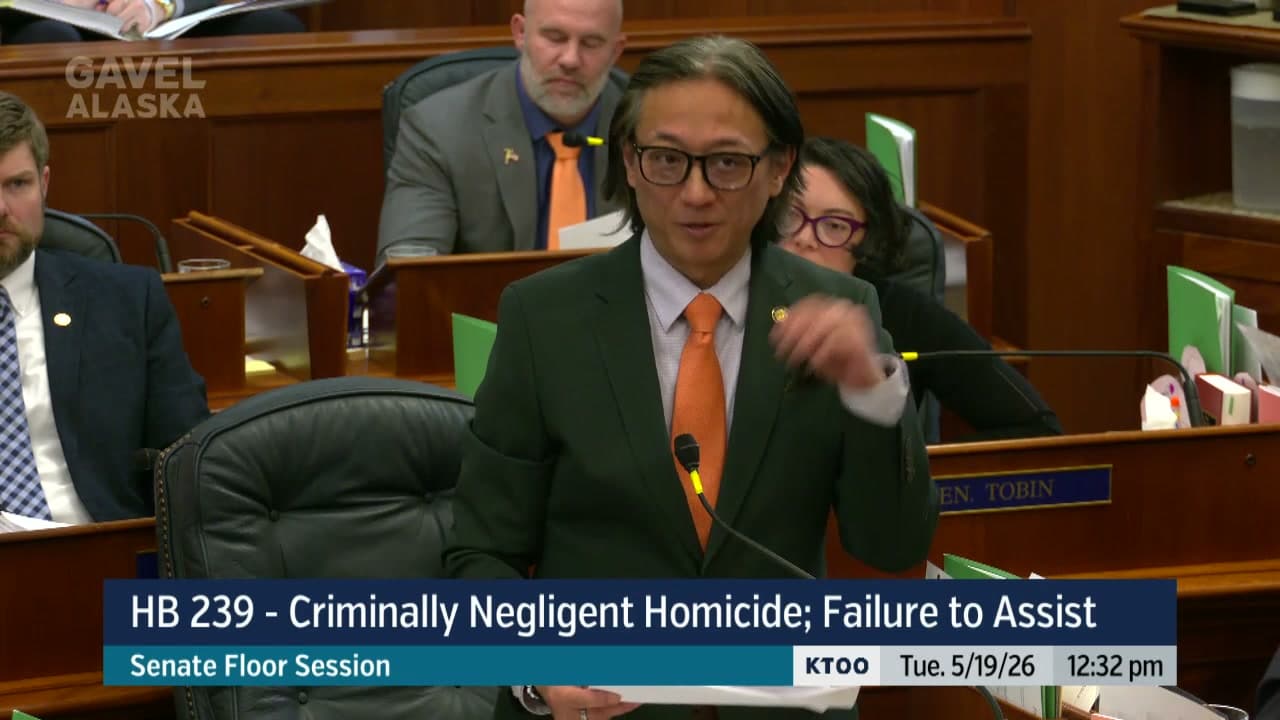
The Alaska State Senate voted 20-0 Tuesday to approve a public safety bill that consolidates more than a dozen crime-related measures. The bill now returns to the House for consideration of Senate amendments before it can advance to the governor.
House Bill 239 grew from four pages to 80 pages through committee amendments. The bill originated as legislation addressing criminally negligent homicide and failure to stop and render aid before expanding into a broader public safety package.
Next steps in the legislative process
The bill passed the Senate unanimously but must clear one more hurdle. The House must approve the Senate's amendments before the legislation can move forward. If the House concurs with the changes, the bill will advance to the governor for signature or veto.
AI child abuse material and age of consent
The bill criminalizes the distribution and possession of AI-generated child sexual abuse material. The language originated in Senate Bill 247, which was introduced in February 2026 and advanced through committee before being incorporated into the omnibus bill. Fiscal notes from multiple departments assessed the standalone bill's impact as zero.
The legislation raises the age threshold for consent from 16 to 18 for over 24 criminal offense provisions in state statute.
Traffic safety provisions
The bill creates a Class B felony for failure to stop and render assistance when a crash involves injury. It elevates the offense to a Class A felony when an accident causes death and the person fails to stop and render aid. It requires offenders convicted of criminally negligent homicide to serve consecutive terms of imprisonment for each additional crime of failure to stop and render aid.
Parole board expansion
The legislation expands the Alaska Board of Parole from five members to seven. Board composition must include one licensed physician, psychologist, or psychiatrist. It must include one crime victim, family member of a victim, or member of a victim's advocacy group. It must include one member with personal or professional experience with drug or alcohol addiction and one member of a federally recognized tribe. Board members serve staggered five-year terms and are limited to two terms of service.
Senator Lyman Hoffman, co-chair of the Finance Committee, explained the parole board changes during floor debate. "Additionally, there must be one licensed physician, psychologist, or psychiatrist, one member with experience in the field of criminal justice, one member with personal or professional experience with drug or alcohol addiction, one member of a federally recognized tribe," Hoffman said.
Additional crime provisions
The bill establishes mail theft as third-degree theft and creates a new crime of airbag fraud. It strengthens sexual assault laws for healthcare workers, making it a crime for healthcare providers to engage in sexual penetration or sexual contact with patients during professional treatment regardless of the victim's awareness.
The legislation creates an Address Confidentiality Program within the Department of Administration to protect victims of domestic violence and stalking. The program will designate post office boxes for enrollees and forward mail to residential addresses, schools, workplaces, or other specified locations.
A tribal liaison position will be created in the Department of Corrections Commissioner's Office to facilitate collaboration on cultural programs and processes with tribes and communities statewide.
Fiscal impact
The bill carries substantial fiscal costs. The tribal liaison position requires $168,900 in unrestricted general funds. Parole board expansion costs $121,100. The Address Confidentiality Program startup requires $123,400.
Senator Scott Kawasaki noted the bill's rapid expansion during floor debate. "This is not unlike former omnibus bills we've had at every 2-year cycle," Kawasaki said. "It came from a 4-page bill to an 80 or so page bill overnight."
Other provisions
The bill establishes definitive timelines for gathering and submitting sexual assault examination kits to laboratories. It restricts the release of criminal justice information regarding old marijuana convictions when offenders were convicted of possessing one ounce or less, were 21 years or older at the time of the offense, and have not been convicted of any other crime since.
The legislation moves the Controlled Substance Advisory Committee from the Department of Law to the Department of Commerce, Community, and Economic Development. It allows individuals in medical release or receiving significant medical treatment to serve sentences under electronic monitoring while remaining under constant Department of Corrections supervision.
The bill prohibits anyone convicted of sexual exploitation of a minor or sexual abuse of a minor from being eligible for medical release. It adjusts prostitution laws so sellers under 18 cannot be prosecuted for the crime.
Senate President Gary Stevens announced the final vote. "20 Yeas, 0 nays," Stevens said. "And so by a vote of 20 yeas to 0 nays, Senate CS for CS for House Bill 239 Finance has passed the Senate."
This article is based on a public meeting — SFLR-20260519-1100 ().
AI-assisted. How we use AI Transcript byLucas Brown
Stay informed. Support what matters.
Free, permanent access to local news you can verify. Subscribe to support Walter AlaskaNews and go ad-free.
Related Coverage
Alaska Passes Age of Consent Bill After Weeks-Long Senate Delay
Alaska News · 4mo ago
Senate Finance hears omnibus crime bill targeting AI child porn, raising age of consent
Alaska News · 4mo ago
Senate Judiciary hears testimony on crime omnibus combining five bills
Alaska News · 5mo ago
Senate Committee Advances Bill to Raise Alaska's Age of Consent Amid Sexual Violence Crisis
Alaska News · 6mo ago
Senate Finance advances public safety bill with parole board overhaul
Alaska News · 4mo ago
Comments
Sign in to leave a comment.
No comments yet. Be the first to share your thoughts.