Alaska House panel debates insurance gaps for gig delivery drivers
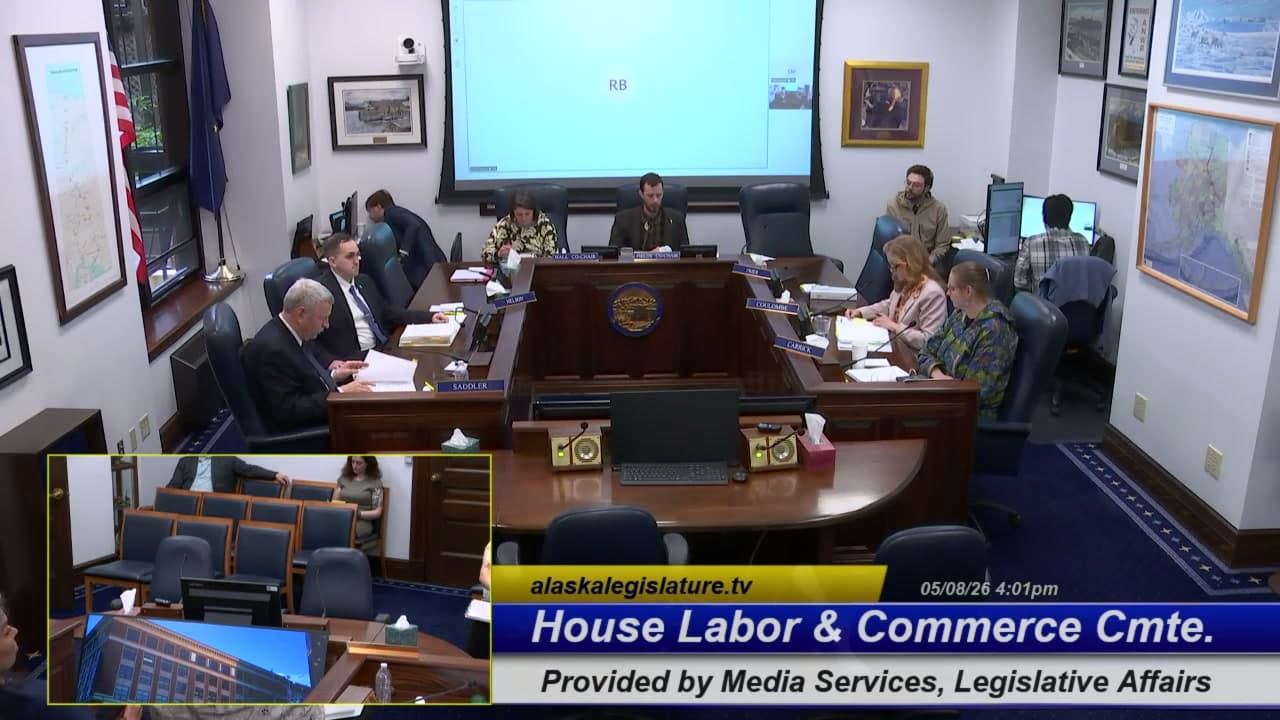
The Alaska House Labor and Commerce Committee heard testimony on Senate Bill 35, which would establish when delivery network companies like DoorDash and Uber Eats must provide insurance coverage for drivers. Supporters said the bill addresses insurance gaps that have left some Alaska gig workers uninsured after accidents.
The bill requires $1 million in liability coverage when drivers are actively delivering. Under current practice, personal insurance companies often deny claims when drivers have delivery apps open, even when no delivery has been accepted. However, testimony indicated that personal insurance could cover that period if the policy does not exclude it, likely through an endorsement.
Senator Jesse Bjorkman, who introduced the bill, explained the problem to the committee. "What is happening is the Property and Casualty Insurance Trade Group and kind of their national standard is that when a courier is driving around and they have their app open, that they essentially are working and using their car for commercial purposes," Bjorkman said. "At that point in time, then people's personal insurance, they do not cover the driver."
Bjorkman said he has had constituents who have been in significant accidents, wrecked their cars, and been hurt with no insurance because their personal auto insurance canceled their policy.
The committee substitute would require delivery network companies to provide coverage when a courier accepts an offer. Coverage continues while the courier transports the requested item and ends when the courier completes the delivery or the delivery is canceled. The bill also includes language in Sections 11 and 12 that would cover a courier immediately following delivery while available to receive another offer but not providing delivery services. Committee members discussed that the phrase "immediately following" is open to interpretation.
Committee members raised concerns that the ambiguous language could incentivize drivers to leave the app open indefinitely to maintain company coverage.
Heather Carpenter, director of the Division of Insurance, told the committee that personal lines insurance could cover the period when the app is open before a driver picks up a delivery, but drivers would need to ensure their coverage does not exclude that period, likely through an endorsement. "Our statutes do not say they can, that the insurer can preclude that time. It does not say they cannot. So it is silent on that part," Carpenter said.
Committee Chair Zack Fields said the change to track when the app is open came at the request of one of the delivery network companies because they thought it was easier to administer than trying to judge when a delivery run starts and ends.
The bill creates different insurance requirements for transportation network companies like Uber and Lyft versus delivery network companies. For transportation network companies, coverage begins as soon as the driver logs onto the app, with state minimum liability limits. Once they accept a ride, coverage increases to $1 million in liability and $500,000 in uninsured and underinsured motorist coverage, which transportation network companies cannot waive. For delivery network companies, the higher coverage only applies when actively providing delivery services, and uninsured and underinsured motorist coverage is not required.
The bill requires $1 million in group occupational accident coverage when a courier is providing delivery services and requires companies to file certificates of insurance with the Division of Insurance.
Several committee members questioned why the two types of companies have different coverage structures, especially since many drivers work for both types of platforms. Bjorkman explained that the committee substitute treats delivery network companies differently than transportation network companies "to reduce cost to the delivery network company."
Fields defended the distinction, saying the bill is trying to put in protections for passengers in transportation network vehicles, while for delivery network companies "the only passenger is the burrito."
Fields also explained the connection between defining workers as independent contractors and requiring insurance coverage. "If they are foregoing workers' comp and they are getting injured and they are not covered by anything, then they are passing those costs on to everyone else and driving up everyone else's insurance costs," Fields said. "So we are essentially creating an alternate structure to ensure that there is some coverage for these workers who we are calling independent contractors."
Bjorkman noted that Alaska adopted a Transportation Network Company Act in 2017 or 2018 but never followed up with a Delivery Network Company Act, which is why the state is now addressing these questions.
The committee set an amendment deadline of Tuesday at 5 p.m. for Senate Bill 35. The Alaska Senate passed the bill 17-3 on May 4.
This article is based on a public meeting — House Labor & Commerce, 5/8/26, 3:15pm ().
AI-assisted. How we use AI Transcript byLucas Brown
Stay informed. Support what matters.
Free, permanent access to local news you can verify. Subscribe to support Alaska News and go ad-free.
Related Coverage
Senate Passes Insurance Gap Fix for Gig Economy Drivers
Alaska News · 4mo ago
House Panel Considers Bills to Ease Alaska's Liquor Liability Insurance Crisis
Alaska News · 6mo ago
Senate panel hears autonomous vehicle bill requiring human operators
Alaska News · 5mo ago
Alaska Senate panel hears bill requiring human operators in commercial autonomous vehicles
Alaska News · 5mo ago
Alaska Senate Panel Weighs Tougher Hit-and-Run Penalties
Alaska News · 5mo ago
Comments
Sign in to leave a comment.
No comments yet. Be the first to share your thoughts.