Alaska Energy Conference 2026-05-19 - part 1
Alaska News • • 113 min
Source
Alaska Energy Conference 2026-05-19 - part 1
media_upload • Alaska News
Articles from this transcript
No audio detected at 0:00
Hey, check it, check, check, check. 1, 2, Hey.
Good morning.
Good morning and welcome to the 5th Annual Alaska Sustainable Energy Conference. Our program will begin in the main ballroom in 5 minutes. Please grab your breakfast and find your seat. Again, our program will begin in 5 minutes.
Until I get back to the console because you will be live. Yep, cool. Thank you. Yep, yep, you're good. Okay, okay.
Oh, okay. Thank you both. Take that off. Thank you. Uh, you can speak up on this side.
Uh, there's chairs that go up on that side. Thank you. Yeah, thank you. I'll hold it hostage. Yeah, thank you.
This will be fun. Yeah, we're good together.
Good morning, everyone.
If we could all take our seats, and if some of you still need to grab coffee, please do that.
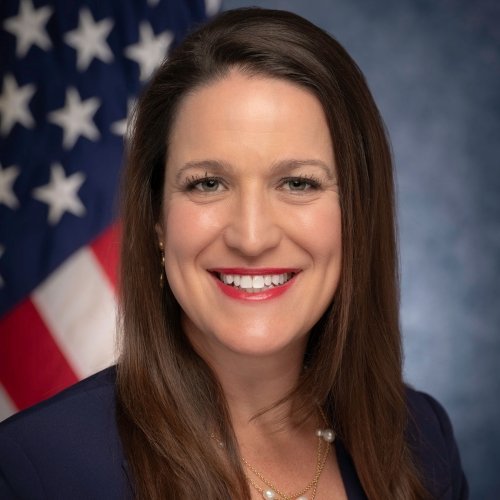
What a great good-looking crowd. I'm so glad that I everybody's here today on this beautiful day in Alaska. My name is Nancy Dahlstrom. I am the Lieutenant Governor of this beautiful state of Alaska, and I'm honored to be your emcee today as we officially kick off the 5th Annual Alaska Sustainable Energy Conference here at the beautiful Dena'ina Center.
I hope that if you haven't already enjoyed a delicious breakfast, that you do. And I'd like to thank the sponsor for breakfast, the National Laboratory of the Rockies. Let's give them a round of applause also.
So for this conference, we are thrilled to welcome 1,000 attendees from across Alaska, from more than 35 states and 10 countries that are all gathered here to connect to connect, collaborate, and to lead the charge toward a sustainable energy future in our state. And for the 5th year in a row, the Alaska Sustainable Energy Conference is using 100% renewable energy. The lights, the sound system, the screens, the escalators— everything required to accommodate over 500 attendees is powered by electricity that's been generated from the wind turbines at Fire Island Wind Project, which is located just 3 miles off the coast of Anchorage. Fire Island Wind generates about 50,000 megawatt hours of electricity annually, and last year it provided nearly 3% of Anchorage's electricity. The Alaska Sustainable Energy Conference purchased renewable energy certificates, which as you know are also called RECs, RECs, to cover 100% of the electricity used by this conference.
These RECs are issued when each megawatt hour of electricity is produced from certified renewable sources like Fire Island. The RECs serve as proof that the electricity has been generated from certifiable renewable resources like wind, hydro, and solar. As you explore the conference this week, week, we ask you to keep in mind the sustainability, the use of recycling bins, visit our energy-focused exhibitors, and minimize paper use whenever we can. To support that, we're going paperless. And so if you haven't already, please download the conference app by scanning the QR code on your table or searching for Alaska Sustainable Energy Conference in the guidebook.
You will find the Speaker BIOS, the session info, the room assignments, and you can also complete session surveys. And we would love to have your feedback. Before you continue, we also want to highlight a few of the great swag items that are available as part of this year's event. One featured item is the Dual System Item Finder, a compact tracking device that works like both Apple Find My and Android Find Hub, allowing you to easily keep track of things like your keys, your bags, your luggage, and travel gear without needing an additional app. You'll also find the bendable magnetic car phone holder.
This is designed to make your travel easier and commuting a little easier also. With the flexible adjustable arm and strong magnetic hold, it keeps your phone secure and accessible for navigation, calls, and music while you are driving safely on the road. Be sure to check your swag bags and visit the sponsor booths. And of course, a big thank you to all of our sponsors and partners for helping to make this experience possible. And I can't help but put a plug in: if you are interested in doing work with the state of Alaska, I want you to know we are open for business.
And we would love to have you. You can request a meeting with any of our commissioners or executive directors from all of the state corporations, and you will do this right on the conference app or on the conference website homepage. Easy to do, and I guarantee you, you will get a meeting. Just fill out the meeting request form, and of course you must be registered registered for this conference to be eligible. If you're on social media, join the conversation using #ASEC2026 and follow the official conference page on Facebook for updates throughout the entire week.
Don't forget to RSVP at the registration desk, please, for the networking event that will be happening tonight at the Alaska Railroad. It's going to be some of the most beautiful few hours you spend seeing Alaska scenery. We're putting the morning's agenda up on the screen now, so please check your app for live updates and room details.
I would like to at this point introduce one of the sponsors of our conference, Brandon Duvall, if he could come to the stage, please.
Thank you, Lieutenant Governor, and welcome to the Alaska Sustainable Energy Conference. This is my second time talking to you. Last year I felt like a guest. Here I feel like I'm part of the family. I know it takes a little longer to be a true Alaskan than one year, but we're truly honored to be the lead sponsor sponsor of this event.
It represents the amazing opportunity here in Alaska, the approach that the governor has taken and the whole energy community here of all of the above. In the growth of energy needs around the world, we need every type of energy. In particular, we need more of what Alaska has, which is gas— reliable, predictable gas. We need more gas down here in the Cook Inlet area. And we need to get LNG, liquefied natural gas, around the world.
Glenfarm now has been the lead developer of Alaska LNG for at least a year now, and I'll be sitting with the governor on Thursday to give you more updates. But in the meantime, over the last year, we have let out the bulk of the construction, the equipment supply, the pipe. We've signed 13 million tonnes of LNG reservations. We have got ready to sign local offtake agreements to put the project into final investment decision. We've run a private financing process, process that's ready to go through the last stages now.
And so the Alaska LNG Project in particular, Phase 1 pipeline, is in a fantastic position to start delivering gas in 2029. And I can confidently say with a little bit of push here from everyone, and maybe a little bit of help in Juneau, we're going to get this over the line very soon. I just want to say thank you to a lot of the guests that have come. We had a mini sponsor stakeholder event yesterday, and we had people in that are part of our project who are investors putting in their time, effort, money from Germany, Italy, Greece. We had people from Taiwan, Japan, Korea, and many states in the lower 48, and including a lot of our local partners here who are contractors, service providers as well.
And I was thoroughly impressed at how much they enjoyed going down to the Kenai Peninsula. Mayor Machickie hosted us there. They went around the site. We came back here, had a dinner, had a roundtable with Secretary Bergum, and it reinforced to them how supportive this state is of a project of this scale. Remember, this is the largest energy infrastructure project ever undertaken in the Americas, which means it's the largest financing.
And to stand in front of you and tell you confidently that we're going to get this done— a year ago, I guess it might have been some hope. Now we're moving into a fact. So this is not an if, it's a when we can close out some of the finishing touches of the pipeline. And I want to put a special thank you to Governor Dunleavy, who has fought harder than anybody you could imagine in this room on behalf of the project, on behalf of you in Alaska, and his support for the pipeline with us has been unwielding. I just want to give him a clap for that.
Thank you, sir.
And then more broadly, the overall administration in D.C., the members of cabinet all the way up to President Trump. A project like this needs alignment. From the municipalities, from the boroughs, to the state, to the feds, the cabinet level, and this project has that. And that's one reason I took the project on on behalf of Glenfarm to deliver it, is for that. So we're going to get gas in 2029.
I'll let the Lieutenant Governor finish off introducing the Governor, and thank you very much. Enjoy the conference.
Thank you, Brandon. I am like everybody here, especially all the Alaskans, so grateful for the work that you've done on behalf of our state. You know, we all know that when we have the energy that we need, not only is Alaska a safer, better place, but the country, the United States of America, is a safer and better place. We also know that when we have the energy that we need, we can have healthier families. And we're talking physical, mental, social, emotional, spiritual, everything that it takes.
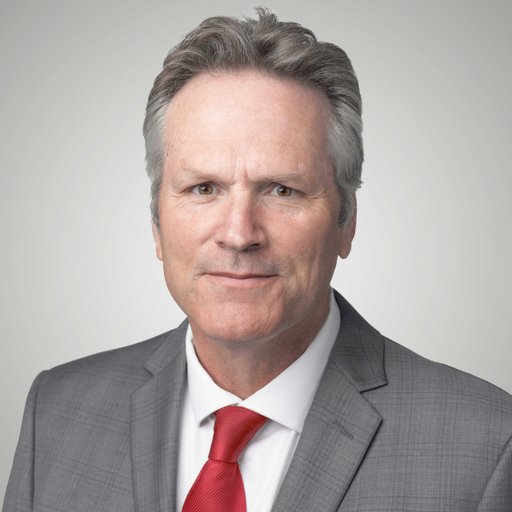
And when we have healthy people, our whole economy and everything is better and more prosperous. Someone who has put— invested the last 8 years of his life serving Alaskans and working towards having a better, healthier, more prosperous Alaska is our governor. Working alongside him and seeing how he has worked and his dedication has been an incredible privilege, which I am grateful for. I've learned a lot watching him work. And there's nobody in this state that is more dedicated, that has worked so many hours, lost so much sleep, missed so many hunting and fishing trips, events with his family, than Governor Dunleavy.
And it is a pleasure for me to introduce him to you today. Governor, if you could come up, please.
Thanks, Nancy.
I had to go all around the stage. Usually I just hop up on the stage, but it was a little high this time. Anyway, I want to welcome you all here today in Alaska. It's been 5 years since we started the first conference, and the world is continually changing. When we first started this conference, we had the, the Russian invasion of Ukraine, which threw energy security, energy concepts, uh, decades-old systems up in the air.
And, uh, the ensuing 5 years has added to that chaos. And so like the rest of you, um, we in Alaska are trying to figure out what the future is going to look like. We do know it's going to be energy. We do know it's going to be reliable energy. We were hoping, and we still hope, it's going to be cheap energy.
But I think what's also bubbling to the top is energy security. What does that mean? It's really energy assurity. Are we going to get the energy that we contracted for? Are we going to get the energy that we expect that we were going to get?
And as we've seen now with the events in the Persian Gulf and across the world, that's called into question. So the conversations I'm sure a lot of you are having is, what is the next day going to look like? What is next week going to look like? What's next month going to look like? And that's a bit unsettling.
If you're a sovereign, if you're a business, if you're an entity that relies on energy, which most do, you're wondering where your next tanker of oil is going to come from, where your next shipment of gas is going to come from. Do we return to coal, which quite frankly is not a bad idea? What do we do with nuclear? Nuclear, you know, has had a revival as well as other energy sources. So really the issues before us are We have an energy mix that works in many locales.
The question is, are we going to have a surety of that energy? Are we going to be able to once again contract and expect a tanker or a shipment to arrive where it should arrive on the time it should arrive in the place it should arrive? That's changed right now. I think it was a week, a week and a half ago. I think the last tanker, oil tanker from the Straits made it into Long Beach, California.
And when you think of that's the last, what's between then and February— what's between May— I think it was first week of May, second week of May— and February 20— I think it was 26th or something when the war started. So that's what Alaska is all about. And that's why I hope a lot of you have come here to understand Alaska. We have a lot of local Alaskans here too that are going to participate in a number of sectionals. Which I think is fantastic, because Alaska isn't just oil, even though we're having a tremendous oil renaissance.
I think some of you have seen the Financial Times article that came out a couple days ago with a subheading that Alaska is the hottest place on the planet to invest. I think we are, and I think we should be for a whole host of reasons. The support from the federal government, the Trump administration, is huge. As I always say, it's one thing I love about this president, and his Secretaries and his Cabinet is when they say they're going to do something, they do it. And when it comes to Alaska, they're absolutely doing it.
I spent a couple days with Secretary Bergum up on a— where there's going to be a new road to a mining district, a 200-mile road. At the same time, we were transferred— got transferred to us, the state of Alaska, 1.4 million acres from the federal government that was owed to us since statehood in 1959. And so when the Trump administration says they're going to do something, they do it. And when the state of Alaska says it's going to do something, we absolutely want to do it. And so we want to thank all of you that have come up and have been part of this oil renaissance.
I was speaking to my Department of Natural Resources commissioner not too long ago, and I said, what does it look like? We're at 495 barrels roughly today. He said if everything works out and there's no problems, we will probably be looking at over 900,000 barrels here in the next 10 to 12 years. That's phenomenal for a sovereign, a region such as Alaska. We were the giant for North America.
We were at 2 million barrels at one time back in the early '90s and late '80s. And people thought Alaska was done for a whole host of reasons. We never did. We knew we had the resource. And that's, I guess, the takeaway for a lot of us policymakers.
It's not about oftentimes the resource. It's more about the policy to access the resource, to deliver the resource, to contract the resource. And that too is in Alaska's favor right now, again, thanks to the federal government, uh, thanks to what we're doing here in the state of Alaska, but also thanks to the risk-taking of a number of you that have come to Alaska to take a look at Alaska. Yes, Alaska's at the top of the world. Yes, Alaska's far away from a lot of markets.
Yes, it's a small population, but when you look at Alaska today especially, in which we can ship gas and oil to our friends in Asia, for example, Tokyo, 8 to 9 days away by shipping, straight shot, no contested waters, no straits to go through, no foreign actors to intervene. And then we've done this before. We pioneered LNG export in the world in the late 1960s, '69. We were the first to deliver reliable cargoes of LNG to Japan for almost 50 years. We were the ones that pioneered LNG export.
We were the ones that built the Trans-Alaska Oil Pipeline that people thought never could be built. You'd never be able to get it over those mountains, under those rivers, by those glaciers. Well, we did it, and we did it in almost a little over 2 years, I believe. And that oil pipeline has been transporting billions and billions and billions of barrels of oil that people thought would long be over the that the pipeline would be, uh, retired. Pipeline's gonna see a new life probably for another 50 years because of folks that take risks here in Alaska.
Brendan came up and talked about our gas project. Last year we talked about the concept. This year we're talking about the execution steps in that gas project. That project will be the largest on the face of the earth, probably the largest in terms of investment ever. It'll certainly be the largest project in the Arctic ever, the largest probably in the Pacific.
And that project will deliver gas to our Asian allies, again, 50, 60, 70 years. With the ancillary gas that's being discovered on the slope along with oil, the life expectancy, the lifespan, the timeline for that pipeline is even further. It's going out even further. And so gas and oil, huge in Alaska. What about renewables?
What about wind? What about solar? 100%, Absolutely. BOEM has a study in which they show that Alaska can potentially produce about 3.6— I say 3.6, I've been corrected sometimes by some of my folks that say 3.8— but 3.6 gigawatts, 3,600 gigawatts of renewable power. 3,000.
600 Gigawatts of renewable power, whether it's tidal, whether it's geothermal, whether it's onshore wind, offshore wind, whether it's solar. We have solar above the Arctic Circle, and people probably laugh at that. I'm probably the only governor in the United States that has solar panels on his property, 50 solar panels. And in the month of December, I'm producing electricity. In the month of February and March, I have some of the best months of the year here in Alaska.
So what we have to offer, along with our carbon storage, our carbon offsets, you name it, here in Alaska is tremendous. And so if you're an investor, then you're looking at Alaska, you got to look at this as a greenfield operation to some extent. But the upside, I believe, is tremendous with the, with the anticipation and the projects that we have coming online. And so a lot of you may want to get in on the ground floor, as they say, because I think Alaska is going to be the hottest place for a whole host of investing. I could go on and on and on.
You're going to have a number of fantastic sectionals and panels over the next couple days. I hope you take away— you know, as a former teacher, I always say to my staff at the end of the day, "What'd you learn? What'd you get out of this day? What'd you get out of this meeting?" And I think it's important that you take away things that's going to help you in your decision-making, you and your business, you and your entity's activities when you come to these conferences. And so we're going to try and make sure that this conference was worth your trip up here, worth your while.
Worth your time. But I would say this about Alaska. I always love our motto, right? I mean, um, our motto is North to the Future. I mean, that's an inspirational, aspirational model from my perspective, because you're always reaching for the future.
You're always looking at the future and not necessarily the past. But again, Alaska's positioned in the center of the globe Anybody here from Texas? I always do this to my Texas friends. Yeah, their hands went up real slow. They could see it coming.
They could see it coming, right? I just want to say to my friends from the little state of Texas that when you guys make those maps again for the school children and you put it down by Mexico and you make Hawaii look almost as big as Alaska, it's kind of a ripoff, all right? People get a distorted view of what's going on there. But I understand that you've always wanted to be the biggest and want to remain the biggest. But I'll say this.
Alaska's real position on the globe is the center of the world. 8.5 Hours by plane to any industrialized place in the Northern Hemisphere. Not so for Texas. And don't get me wrong, I love Texas. I have family members there.
I got friends there. Texas, we admire Texas as we do a lot of other states. But Alaska's unique. Our cargo airport, for example, was just named the busiest in the United States. It's now number 1 in the United States in terms of cargo handling.
It's around 2nd or 3rd in the world, I should say, 3rd in the world in terms of cargo here in Alaska. The list goes on and on about the possibilities here, but I'm going to wrap this up because we got some great guests that have come to Alaska once again from our friends in the Trump administration. And so I'm going to transition. I'm going to start to introduce these folks here. We're going to get up on the stage for a little while and we're going to talk about their perspectives on a whole host of things, which I think will be important for all of us.
But before I do that, I just want to say thank you for being here. Thank you for coming to Alaska. This is the 5th. This is my last. I term out.
I term out in December. You'll have a new governor, and hopefully that governor will carry on the tradition of putting Alaska front and center, but also putting the needs of the folks that come and visit, the conferees, the investors, those that run organizations, because I think Coming together like this and sharing what you know and what we know and bringing that together, I think, is going to make a more energized world, as they would say. And so we're going to get started now by bringing up two leaders helping shape the future of American energy innovation, infrastructure, technology, including right here in Alaska.
Audrey Robertson serves as Assistant Secretary of Energy, leading the Office of Critical Minerals and Energy Innovation and overseeing one of the nation's largest energy R&D portfolios. Before joining the Department of Energy, she built a career in energy investment, infrastructure, and innovation, including co-founding Franklin Mountain Energy and advancing projects in battery storage, geothermal, nuclear, and utility-scale solar development. Joining her today is Judd Verdin, director of the National Laboratory of the Rockies, whose career is focused on accelerating applied energy research, grid modernization, energy storage, and strategic partnerships between government, industry, and the national laboratory system. Together, they bring perspectives from both public leadership and scientific innovation at a pivotal moment, and it is a pivotal moment, for the future of energy development. So please join me in welcoming these two great people to the stage for a nice conversation.
No audio detected at 1:40:00
Thank you so much, Governor. Wonderful to see you again. And just anywhere you want to sit, guys. Thanks for coming up. Just going to flick those on.
I feel like our— like anywhere else in any other time, so much to talk about and not enough time to do it, right? So we'll do the best we can. But anyway, Thanks for coming to Alaska. Thanks for what you're doing for the country and for all of us. And, you know, just a couple things we want to talk about, and you can give us your thoughts on.
So, first time to Alaska? Nope. First time to Alaska? No way. See that?
These are regulars. And as Brenda said, if you come up a couple more times, we'll give you a citizenship, Alaska citizenship. We used to sell those in the in the tourist stores years ago and a passport too. Anyway, so thanks for coming. So, Assistant Secretary Robertson, what is the— what is the Department of Energy's Office of Critical Minerals and Energy Innovation doing that will be benefits to Alaskans that you are most excited about?
Well, first of all, thank you so much for inviting us. Thank you for including me personally and our office to come up here and participate in the sustainability conference, because to us sustainability means enduring. And there are so many important components of energy that provide enduring communities, enduring businesses. And as you and I have discussed many times before, the very, uh, the very success of any community is based on its energy security. And its predictability.
And Alaska has such a wide range of electricity prices as well as communities. So my office is a new office. If you haven't heard of it before, it's because it didn't exist until probably 6 months ago. And we incorporated all of the renewable— is this weird sounding to you guys? No.
Okay. All right. It's echoing to me. We incorporated what was formerly the Office of Renewable Energy. So we oversee the nation's portfolio of solar, wind, hydrogen, hydrokinetics, hydropower, transportation.
But we also incorporated a couple different components that were in different areas of the department. Specifically, we looked at the entire mining, the entire mining supply chain, which after the Bureau of Mines was closed about 30 years ago in March, there were different parts of the Bureau of Mines that got spread around. We decided that to take and execute on the president's bold mission of bringing back the supply chain to America, of bringing back, uh, the ability to be resource independent in a nation that is blessed blessed with resources in a state that is doubly blessed in resources here in Alaska, we had to, we had to put it in one office. And so everything from mining and mining innovation to refining, processing metals, magnets, and batteries also fall within our office. Now, when you take renewables and you take mining and metals, the last component of our office, it's really the application of those innovations for everyday Americans.
So we work very closely across the state of Alaska with a variety of different communities in different ways to support weatherization assistance, to help Alaskan rural communities put in— especially, it makes a lot of economic sense to put in solar and batteries in different parts of Alaska, especially when the— The other option would be flying in diesel, for example. That doesn't make sense. So we are trying to use numbers and science to help communities around Alaska live their best lives, to have this energy sustainability and security that most communities in the lower 48 enjoy all the time, that Alaskans deserve and should be— should be enjoying, especially your hydropower network is outstanding. So it's a privilege for me to lead this office. That crosses into so many different areas of Alaska, and happy to be here and talk about any of those.
Well, we're glad you're here. And you know, you reminded me of what Secretary Burgum and Secretary Wright said last year, in which there was discussions about, you know, renewable transformation, transitions, all of this. And they basically said it really comes down to the cost of kilowatt. For the resident, for the business, what produces the least in terms of cost per kilowatt and can deliver reliability. I think that's the goal, and I'm really very excited about what you guys are doing in that program now.
And I think if we adhere to that, we don't find ourselves in a situation like we did maybe the last couple years, and that is choosing one source over another, not necessarily because of cost, but just because of politics. So you're 100% right. On ADAC, it's $1.74, and on Kodiak, it's $0.14. Right. It's like there's a huge discrepancy around how Alaskans both consume and pay for and derive energy.
But also, it's a limiting factor to growth, right? To process critical minerals, to have industries that consume energy and power, You have to have affordable, reliable, and secure energy and power. Director Verdin, what does NLR bring to the state as a DOE national lab from your perspective? Yeah. Can you hear me?
It's good? Yeah, I am— first of all, thank you for letting me be on stage with you two. This is quite an honor. You know, I've spent my entire career career in the national lab system because I just fundamentally believe that R&D, and especially applied R&D, is the missing key to really driving towards what the Assistant Secretary said and you said, affordable energy. It has to compete in the marketplace.
And if you're not familiar with the national labs, there are 17 national labs. They're often called the crown jewels. They are a differentiator for us. And I also believe any state that has a national lab in them is blessed, and we have the obligation to help the state and the region, you know, in all of its energy challenges. And so I do want to say one thing.
The National Lab of the Rockies is, you know, formerly the National Renewable Energy Lab, and before that it was the Solar Energy Research Institute. So we went through a name change with the Department of Energy. I and the leadership team was 100% I'm 100% supportive of that name change. If you look at what we did in solar over the last 50 years, we transformed the world in terms of performance and cost of solar energy. The National Renewable Energy Lab did that.
The Solar Research Institute did that. We transformed all renewable energies. But when you look at where the lab is at today, it is broader than that. We are looking at critical minerals, we're looking at data centers, we're looking at energy security. Every other national lab has a name that is location or regionally based.
So the National Lab of the Rockies, thank you, it's the Department of Energy's lab. We were very happy to make that change and I want to believe the Rockies go all the way up into Alaska. I'm not sure about that, but I'm going to—. They do. I'm going to say— thank you.
I'm going to say that. We're 3,000 people strong, you know, in Golden, Colorado. We look at everything from data center efficiency, we do large-scale device testing of batteries and new data centers. We are very strong in critical minerals work from the materials all the way through to the processing. And in Alaska, we have about 35 people up in Fairbanks.
We were up there yesterday. Fantastic group of people, Alaskans. Alaska has an innovative spirit that you don't find anyplace else. Lots of ideas. We grew out of the cold climate housing research Center.
They've been here about 20 years working on Alaska-specific activities. We ran the numbers, we have 177 distinct interactions across 83 communities in Alaska, out in remote villages. We have a map on the wall that shows where we have gone and made a difference, whether it's housing or analyzing the electric grid or looking at, you know, microgrids across, you know, everything from remote communities to maybe even critical minerals. So a long history. But my hope is, you know, as a national lab for the Department of Energy— Assistant Secretary Robertson is our steward of the National Lab of the Rockies— is that we deliver impact here.
I would love to see more strategy. There's a lot of projects. I would love to see us all work together to address what you said. What are the innovations that are needed to be accelerated, um, to— would make a difference with a cost that makes, you know, makes a real impact. And I'll say one last thing.
In all our interactions, whether it's critical minerals or mining or utilities, the answer is the same. We need to innovate faster, needs to get through that valley of death faster. And we need a place like National Labs and partnerships with the University of Alaska at Fairbanks to test and validate independently, to de-risk technologies. It's the de-risking that will help the investors decide what's the best option, how to put it into system, and how to have it make a difference for the people in Alaska and the U.S. Well, and I'm glad you're here on the ground because a lot of times in trying to describe Alaska to people who've never been here, it's very difficult to do that, to get their arms around the vastness of the state, the fact that we have about 228 communities that are off the road system.
We're the only state in the country that has that. And the contradictions, real quick, the contradictions that are part of Alaska, that is massive amounts of oil, massive amounts of gas, massive amounts of hydro, massive amounts of renewable, but small populations, oftentimes isolated. And so, for example, what's happening now, which is unfortunate for especially our smaller communities, is they, they contract for diesel and fuel in the spring. Every year to meet the barge, the barges that will come in so they can deliver in the fall for the remainder of that fall, winter, and spring. Well, we know what's happening now with the cost of energy.
So they're unfortunately in some cases going to be contracting at a very high price. This is why in Alaska, when we talk about renewables, it's not necessarily— it's not a political thing. It's really how do you put into place infrastructure in which you don't have to fly fuel in or you have to barge fuel in at an ever, ever higher cost. So a community that I lived in, Kotzebue, which is north of the Arctic Circle, they were pioneers in wind. Those windmills work in the wintertime.
They were pioneers in wind. They're now adding solar panels. But the point I'm trying to make is the work that you do is going to be able to help us understand what is the best mix for our communities so again we can achieve that lowest cost for everybody and that reliability for everybody. So this will be a question for both of you guys. What are the thorniest issues you are tackling around shoring up domestic critical mineral supply chains, and how can business and state governments be most helpful working with you on critical minerals?
There's a lot of thorny issues as it relates to critical minerals because effectively the last 30 years we have not been doing it. We have been closing down mines. We've been putting up barriers to processing and material science. And so working with state governments, working with permitting authorities to expedite permits. Alaska knows this story well.
I think the average time.