2026 Alaska Sustainable Energy Conference Wednesday
Alaska News • • 80 min
Source
2026 Alaska Sustainable Energy Conference Wednesday
livestream • Alaska News
Articles from this transcript
Primary places that the DeWitts believed advanced nuclear technology could make a meaningful difference to rural areas. At the time, they worked with Launch Alaska in the early years of OCLO to explore how to bring advanced nuclear to rural Alaska. Then, about 7 years ago, when the Department of Defense opened opportunities to deploy advanced nuclear reactors on military bases with a strong focus on Arctic and Alaska environments, Oklaw competed for and won the opportunity to build a first-of-its-kind reactor at the Eielson Air Force Base outside Fairbanks. As you can see from the design on the slide, our reactor looks very different from the traditional image many people have of nuclear power. Our flagship reactor is called the Aurora Powerhouse, named after the Aurora Borealis seen right here in Alaska.
Alaska is core to who we are as a company. Alaska is not new to Oklaw, and I'm incredibly proud to be here today talking about how we're moving toward deployment of Alaska's first small modular reactor at Eielson.
A little bit more about the company. There are a few things that make Oklo fundamentally different from how nuclear has traditionally been done in the United States. First, we are a design, build, own, and operate nuclear company. Historically, nuclear companies designed reactors and sold them to utilities. OCLO is different.
We design the reactor, we build it, we own it, and we operate it ourselves. That means we're selling electricity and energy services directly to customers like utilities, data centers, industrial users, and military installations. We provide customers with long-term clean energy under stable commercial arrangements. Our business is organized around 3 integrated areas: power, fuel, and isotopes. We are a publicly traded company.
This last year alone, we've been able to raise over $2 billion on the private market. We use private financing like many other energy assets and get them up and running without burdening the neighbors or taxpayers, and the market will prove that this model is possible. We are headquartered in Santa Clara, California. We currently have about 300 employees, mostly— most of them like myself working remote. We're also growing rapidly.
I actually have the privilege to be the first Alaska-based member of the OCLO team, so it's all the more exciting to be here speaking with you today.
OCLO's Aurora Powerhouse is based on fast reactor technology and is designed to be compact, efficient, and inherently safe. Now I'm going to share a short video explaining the fast reactor technology.
At OCLO, we're building a new kind of nuclear power plant. One that's safe, clean, and affordable. Our design is based on proven U.S. fast reactor technology. This isn't theory. It builds on the legacy of the EBR-2 reactor, which operated successfully for 30 years and showed the promise of reactors that are inherently safe, efficient, and able to self-regulate without mechanical cooling or constant operator oversight.
And it's not just one example. Globally, fast reactors have logged more than 400 cumulative reactor years of operating experience. That track record gives us confidence. What makes Oklo different is how we're modernizing nuclear from the ground up. Instead of relying on complex external mechanical backups, our design uses natural forces like airflow, convection, and thermal expansion to regulate itself.
That means fewer moving parts, fewer bespoke nuclear-grade components in a system that's inherently safe by design. Even if outside power is lost, the reactor's physics keep it safe. It also means we can tap into well-established supply chains using proven components from companies like Siemens Energy that are already deployed across the energy reactor that keeps costs down, speeds up deployment, and makes real scaling possible. And our reactors do more than just generate power. By recycling used nuclear fuel, we turn nuclear waste into a valuable energy resource.
That's a breakthrough for energy security and sustainability.
This approach avoids the cost traps that have stalled nuclear for decades. And makes fast, capital-efficient deployment possible. We're not waiting for unproven breakthroughs. We're building on a demonstrated technology base and pairing it with a new playbook for deployment. Fast reactors are a U.S. innovation.
We know how they work, and we've seen what they can do. Now we're showing what's possible when you combine that legacy with modern engineering and real execution discipline. The future of advanced nuclear isn't hypothetical. It's ready to be built. And OGLO is ready to build it.
I think that's pretty cool, and I hope that you do too. Our business is organized around 3 integrated areas: power, fuel, and isotopes. We're creating power through our powerhouses, like what we're building at the Idaho National Lab and at Eielson. We've also got a plan to build 16 powerhouses in Ohio through our deal with Meta. We are generating nuclear fuel through recycling and fabrication.
We are currently building a recycled spent nuclear fuel facility in Tennessee. America once led the world in mining, enriching, and converting nuclear fuel, producing more uranium than the rest of the world combined. Today we do very little of that domestically, and OCLO is working to help rebuild those capabilities here in the United States. We are also reshoring the production of critical isotopes. These are in cancer treatments.
They're core to all of the aerospace and industrial industries. They power the Mars Rover and are used in a lot of batteries in space, and we don't make them in the US like we used to. We're building an isotope reactor in Texas, and we're targeting initial criticality on July 4th of this year, which is just around the corner.
As a third-generation Alaskan, sustainable energy development in Alaska is deeply personal to me. I grew up in the interior and experienced firsthand the realities that many Alaskans face today. Some of the highest energy costs in the country, aging infrastructure, and the challenges that come with remote and isolated energy systems. The Interior faced one of the coldest winters on record, and family members of mine from Cordova to Fairbanks to my own house in Anchorage had some of the highest heating bills they had ever seen— we had ever seen. Before joining Oklo, I spent 13 years working in Alaska's oil and gas industry with BP and Santos.
I believe each part of the energy industry has a role to play when it comes to advancing energy development in Alaska. When I learned about Oklo and the Eielson Project, I was inspired not only by the technology itself, but by the company's commitment to lowering energy costs and improving reliability in Alaska. That's why I'm invested in this work. There are so many use cases for nuclear power in Alaska. I genuinely believe advanced nuclear can become a part of the state's energy future.
At OCLO, our flagship product is the Aurora Powerhouse, and we have one currently under construction in Idaho. The Idaho Aurora Powerhouse is a sodium-cooled reactor designed as a 75-megawatt electric system, but the platform is intentionally flexible and can be tailored for smaller power applications including military and remote installations. For Alaska and Eielson specifically, the reactor is roughly one quarter of the output of the Idaho reactor, which I'll explain a little bit more shortly, and is designed as a dual-purpose energy source providing both electricity and steam.
The Aurora Powerhouse is designed to provide reliable, around-the-clock clean energy with a very small physical and environmental footprint. Unlike traditional nuclear plants, the Aurora Powerhouse does not require massive cooling towers or large bodies of water. Its small and simple design allows for compact footprint, lower material use, and strong inherent safety characteristics through operation at atmospheric pressure with a very high boiling point coolant. The design is also intended to reduce long-term operating costs costs by using proven technology and commercially available industrial components wherever possible.
This slide shows the breadth of Oklo's deployment strategy across the United States. Today, Oklo has active projects across 5 states spanning our 3 core business areas. In Idaho, we are developing our first commercial Aurora powerhouse at Idaho National Laboratory, where construction is currently underway. In Tennessee, we're building the Advanced Fuel Center focused on recycling and fuel processing. In Texas, like I mentioned earlier, we're developing an isotope production infrastructure and a pool-type reactor.
And then in Ohio, we are advancing the clean energy campus concept. And importantly, Alaska is one of our key deployment states.
So this is the model of the Aurora Eielson Powerhouse. The first small modular reactor that OCLO plans to deploy in Alaska and one of the first commercial advanced reactors in the entire United States. The reactor at Eielson will be smaller, derived— a smaller derivative of OCLO's flagship Aurora powerhouse currently under development at INL. While the Idaho project is a 75-megawatt electric commercial powerhouse, the Eielson reactor is a 60-megawatt thermal dual-purpose system roughly equivalent to about 15 megawatts electric, depending on how the energy is utilized. Under the current structure for Eielson, up to 5 megawatts of electricity will be supplied directly to the base, while the remaining thermal capacity will supply approximately 50,000 to 100,000 pounds per hour for steam and heating needs.
Importantly, the Eielson Powerhouse benefits directly from the engineering, licensing, operational lessons and supply chain development associated with the Idaho deployment.
We've evaluated a number of potential sites at the Eielson Air Force Base and have narrowed the project down to two finalist locations, with our first— with our preferred site currently being the Spruce Lake area on the base, which you can see there on the slide. One of the reasons this location stands out is that portions of the site have already undergone prior clearing activity. Which helps minimize additional environmental and habitat impact. It is also well positioned from a construction and logistics standpoint, which is important given Alaska's unique building environment and schedule constraints. To give a sense of scale, the box shown here is roughly 20 acres, and the actual reactor footprint will require significantly less land than that.
One of the major advantages of advanced nuclear is the ability to generate large amounts of reliable energy with a very small physical footprint.
Now for the timeline. This slide shows the current projected timeline for the Eielson Project and the major milestones required to bring Alaska's first advanced reactor into operation. We are already actively underway. Site visits and early siting activities began in 2025. Next month, in June, we begin major regulatory and environmental work including NEPA activities with the Air Force and NRC licensing submissions alongside geotechnical characterization and site investigation work to be performed by our local partner Haskell.
From there, the project transitions into construction and fuel readiness activities. We are targeting initial site work in 2027, major building construction in '28, and fuel fabrication activities beginning in parallel. Our current target is commercial operation in 2030. It's an aggressive schedule, but one we are actively driving toward with the Air Force regulators, engineering partners, and local stakeholders. We expect the project to create over 300 jobs during construction and 70 to 80 permanent roles once the reactor is operational.
Before I wrap up, I want to emphasize that our vision for Alaska extends far beyond a single project at the Eielson Air Force Base. Eielson is our first deployment here, but it's also proof of concept that advanced nuclear can work in Alaska and support future deployments across the state. That's why partnering with experienced Alaska-based companies has been so important to us. We want local collaboration and local participation as we move forward. And as this project advances, we want Alaskan businesses involved from construction to engineering, logistics, manufacturing, and material suppliers.
We encourage companies interested in working with OCLO to connect with us either online through our business development portal or after the conference. Thank you so much for your time.
Thank you, Rebecca. That is— I'll be honest, that's pretty damn cool. State of Alaska cutting edge of what, frankly, so many isolated communities have been struggling with for decades, and that is safe, reliable, affordable energy that's consistently available. Uh, whoops. Oops, wrong page.
Our next discussion shifts from energy innovation to economic opportunity, and especially how Alaska can position itself to capitalize on emerging federal investment tools and long-term development strategies. Opportunity Zones 2.0: How Can Alaska Take Advantage? Will explore how the latest iteration of Opportunity Zones passed last year in the One Big Beautiful Bill will drive investment into Alaska communities, infrastructure, housing, broadband, energy, and economic development projects across the state. Joining me on the stage for this conversation is Julie Sandi, Commissioner of the Alaska Department of Commerce, Community, and Economic Development. A lifelong Alaskan, Commissioner Sandi oversees a broad portfolio of agencies and initiatives supporting economic growth, investment, and community development across the state.
And she also has ADA in her portfolio, so she's very fortunate. Also, in addition, Shay Hawkins, senior analyst in the U.S. Department of Treasury's Office of Community Development Policy. Shay previously served as tax counsel for Senator Tim Scott and played a key role in the development and implementation of the original Opportunity Zone program. And joining them is Niccolo Pinoli, a partner at Novogradac and Company LLP, specializing in affordable housing and community development finance, including Opportunity Zones, low-income housing tax credits, and New Market Tax Credits. Based in Portland, Oregon, he advises on transaction structuring, underwriting, compliance, and investment strategy, and is a frequent speaker and author on community development and tax incentive programs.
Please help me in welcoming our panel, Opportunity Zones 2.0: How can Alaska take advantage?
Thanks. Qualified. Good afternoon, everyone. I really appreciate being here, and on behalf of the governor, thank you all. It's been every one of these conferences that I've been at, I am always so impressed by the content and how much I learn and also just how many of you are willing to travel from so far to be with us.
We really appreciate it. But before we get started, I really do want to acknowledge Andrew Jensen in the room. I think the governor's team has been amazing in putting this together. And Andrew, thank you so much. So if we can give Andrew a round of applause, please.
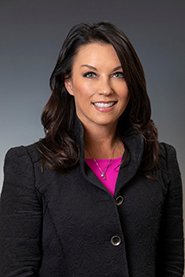
So, yeah, I'm Julie Sandie. I'm the Commissioner of Commerce, Community Economic Development for the state, and like Dave said, it's many, many, many things, but I'm very proud to be here and proud to be a part of the team, and I didn't know a lot about Opportunity Zones before I took this role, but it's been interesting to sort of talk about 1.0 and now all the things that have changed with 2.0. And I love the idea that we are introducing the concept and talking with folks about it. Some folks in the room may know a lot about it. Some may not.
But I'm honored and very grateful to have our panelists with us today to talk about it. I'm not sure— we may not have Shea on yet. So We might pivot a little bit. Oh, he is. There he is.
Great. But I also was excited just to be able to work with the governor. The governor is very excited about Opportunity Zone 2.0 and how Alaska can take advantage of this program in ways that we haven't before. And I want to make sure that Anna Latham, our Deputy Commissioner, stands up just so everybody can see who she is and also She's really been running point on this for the department. So now that you all see her face, but also just thank you so much for all of the work that you've been doing.
As each state has been moving through the planning phases of Opportunity Zones, we just wrapped up public comment for the OZs. And you'll see on the map the 32 areas that qualify. And then the governor is just really going to pare it down to 25. Qualified zones, and then those are the zones that we'll be using as opportunity zones in Alaska for the next 10 years. But today I'm joined, thankfully, by some experts who are really gonna help flesh it out, give us some practical steps.
What I hate about conversations like this is often it feels so theoretical, and I just am so grateful for their expertise on on the subject. So Shay Hawkins is our senior advisor at the U.S. Department of Treasury. He's joining us remotely, and then on stage we have Nicolo Pinoli, CPA and partner at Nova Gradage. Some of you might be thinking about what are Opportunity Zones, and our guests today are not only going to introduce themselves but also give you some context, and again, I hope that when we're done with this conversation, we'll see it more— how it's more than just a tax policy. As I've learned about it, I really realize it's part of that infrastructure for strategic economic development.
But I'll start with Shea. And Shea, welcome to Alaska, even though it's remote. I know it's later back in D.C., but we sure appreciate you joining us. And can you just take a minute to introduce yourself and then share your connection to Opportunity Zones and explain what the program was really designed to do?
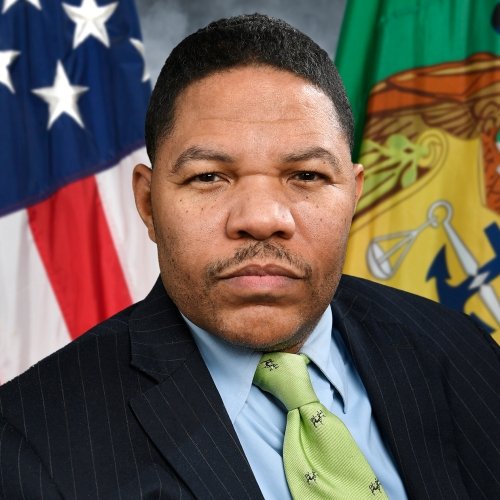
So, as Commissioner Sandy noted, my name is Shane Hawkins. I came to Capitol Hill after a career in investment banking, so I'm a former investment banker, came to Capitol Hill Initiated work for my home state, kind of spent, and ended up working for Senator Tim Scott in South Carolina. Hey, Shay, I'm going to interrupt for just one second. We're having some hard time with audio. I feel like every third word I'm getting a little bit clearer, so I don't know if it's possible, if it's on your end or ours.
Let me, I'm going to try to—. Oh, that's so So much better. Thank you.
How's this? Yay, so much better. Thank you. Great, great, great. So I came to Capitol Hill initially to work for my home state congressman and helped him to develop a tax plan that put me on the radar of Senator Tim Scott.
South Carolina, who was working with a bipartisan group of senators and House members to develop a policy that could drive private capital into distressed communities for those communities' benefit. And so that resulted in a bill called the Investing in Opportunity Act. Which was the basis of what I used to draft the Opportunity Zones provision into the Tax Cuts and Jobs Act. And, you know, the goal of the policy, again, was to get the trillions of dollars in capital gains off of the sidelines and into these distressed communities for these communities' benefit. And so, if you'll allow me, I just wanted to level set by describing the policy and the mechanics using the changes that we made in Opportunity Zones 2.0 and the Working Families Tax Cut just in July.
So imagine that— You're a person who owns $1 million worth of Tesla stock. That $1 million grows to $2 million and you sell it. So now you have a $1 million capital gain. What this policy says is that if you take that $1 million capital gain and invest it, you know, in a distressed community, You know, let's say along the Yukon River, then you get 3 potential benefits as an investor. The first benefit is instead of owing your capital gains taxes, which will be about $200,000, about 20% of the capital gain you'd owe in taxes, So instead of paying $200 today, you pay $200,000 5 years from now.
So you defer that capital gain. And because of the time value of money, it's always better to pay later than to pay now. Um, and so the second benefit is you get what's called— if you hold the investment for 5 years, you get what's called a step-up in basis. Which is just to say you get money off of that tax bill. So you owed, you know, $200,000 in capital gains.
First you get to defer it for 5 years, and at the end of 5 years, if you're in a non-rural opportunity zone, then you get a 10% step-up in basis, or look at it as 10% off your tax bill. So now I only owe $180,000 if I'm investing in a non-rural opportunity zone. And if I'm in a rural opportunity zone, then now I get 30% off my tax bill. So now I only owe $120, um, I'm sorry, $140. Um, and so that's the second big benefit.
And all of those benefits are associated with that Tesla stock that I sold and what I did with the capital gain. The third benefit associated with Opportunity Zones for investors deals with the new investment I made. You know, let's say, you know, I, you know, I built a nuclear power generator, you you know, along the Yukon River. And it was called Hawkins, you know, Hawkins Energy LLC, right? So the last benefit deals with that new investment, what I did with the million dollars, right?
So what the policy says is if I hold that investment in, you know, in that Opportunity Zone investment in Hawkins Nuclear LLC for 10+ years, 10 years and a day, 11 years, 30 years, whatever, then when I sell that investment, when I sell my investment in Hawkins Nuclear LLC, I pay no capital gains, or you get a 100% step-up in basis. So if you start the next, you know, You know, call it, you know, whatever next big energy project or company, even if you were to take it public, you would do so without capital gains if you hold that investment for 10+ years. And that's where the real juice and potential in the policy exists. And that's why $100 billion with a B in equity has been invested in Opportunity Zones across the country, and for debt— for real estate deals, that's levered up 2 or 3 times. So you're talking about hundreds of billions of dollars, and we just have to make sure that in Opportunity Zones 2.0 that Alaska gets its share, because any Opportunity Zone investor in any part of the country, any individual or corporation with US capital gains tax liability can invest in an opportunity zone.
And so very excited and, you know, looking to learn more from Nicolau and be at you all's service. Thank you so much, Shea. I really appreciate that. And I think, you know, that hundreds with a B is probably, I'm guessing, what got my boss's attention. And even though, you know, it makes sense that Alaska, by the numbers, didn't take advantage of 1.0 in the way that we perhaps could have, and in part for practical reasons, right, which we know about.
But I think that the opportunity for us to be able to capitalize on that is really what helped get the governor's attention and why our team is helping the administration and really wanting to focus on that. And Nicolo, thank you so much for being here. We really appreciate you as well. And can you introduce yourself and then just explain Nova Gratic's work with Opportunity Zones and then walk us through some steps of Opportunity Zone investments? Okay.
So my name is Nicolo. I'm with Nova Gratic and Company. I'm in our Portland, Oregon office. My first trip up to Alaska. Just got here yesterday afternoon.
Having a great time so far. We are a boutique CPA firm, and we focus on tax incentives for development. So things like affordable housing, new markets tax credits, as well as the Opportunity Zone incentive. And as CPAs, we're in project finance. So we help our clients to make sure their deals qualify and obviously on a post-closing basis make sure that their deals continue to meet all the Opportunity Zone requirements so that they continue to benefit from the incentive, benefit from all the great tax incentives that Shea just outlined a moment ago.
You had a last question, which I've already forgotten. And what was that? What are the next steps somebody can take? I'd say find a deal, make sure it's located in an O.Z. Now, if you're looking for a deal today, you're going to want to make sure it's in O.Z.
2.0. The governor will be designating the O.Z. 2.0 Zones here in a few months. And those zones will be active 1/1/27. So the great news is you can start raising equity for those new zones starting January 1st of next year.
So the first thing you want to do is make sure you're in the zone. And I guess maybe even before that, talk to the governor to make sure that your location ends up as one of those zones. Yeah, absolutely. Thank you, Nico. Shay, I wanted to come back to you.
You know, in our planning conversations, Again, you know, you mentioned hundreds of billions of dollars, but that $100 billion investment, can you describe this as one of the strongest incentive tools available? And can you expand on that, especially what made the first round significant? And, you know, you haven't been able to be here as part of the conversations, but with all of the resource development and energy projects many of which we're talking about now, why should Alaska and investors be paying such close attention to Opportunity Zone 2.0? Yes, and, you know, I think one key is that when you look at that $100 billion, that happened over 8 years. The next closest— the next closest community development policy is the New Markets Tax Credit, and And you've seen arguably about $70 billion over 25 years, right?
And so, objectively speaking, Opportunity Zones is the most impactful community development policy in American history. And the President really emphasizes this at every opportunity he gets. And that's very important because a top priority of this administration is cooperation across different agencies around optimizing Opportunity Zones and using Opportunity Zones to optimize other government incentives. So when you look at the Department of Energy, for instance, and their priorities around advancing American energy dominance, you know, to the extent that they see Opportunity Zone capital as part of that capital stack, that's going to incentivize them to kind of put everything with that Opportunity Zones tie at the top of the pile, because you have multiple presidential priorities working together to accomplish this administration's goal. So one example of this in the last administration, they formed— the White House formed the Opportunity and Revitalization Council.
And that council was designed to bend all of the economic development resources of the federal government to favor Opportunity Zones. And so one example would be EPA, the Environmental Protection Agency. They designate certain industrial areas as brownfields, and then they give money out to help remediate those brownfields so you can build something new on what was kind of damaged, damaged land, if you will. And so The EPA gave out, I want to say, about $100 million spread out across, you know, across, I want to say, about 150 brownfields. And 120 of the 150 brownfields were also opportunity zones.
Opportunity zones. So see how the opportunity zone locale pushed those sites to the top of the pile so that, you know, so that you can get the reinforcing benefits of opportunity zones. And when we look at, you know, as Governor Dunleavy goes to select those zones and pare that list down, you know, the Treasury Secretary has provided, um, 3 non-binding criteria for governors in selecting zones. One, areas where there's significant economic distress, which every other area that's eligible fits that criteria. Second, he asked for governors to look for areas where they were, uh, where there's a lot of opportunity, where there's a chance to turn a dollar into $10.
Um, so I don't want to speak for Commissioner Sandy and the governor's team here, but it would be compelling, I would imagine, if you have a potential project, you know, or stream of projects in one of these Opportunity Zones to present that and really make that effort to get yourself put on the map because it will make it'll make that selection process easier if they already know, hey, look, you know, there's going to be activity that's going to happen there. And third, we asked for governors to look for areas where they are mutually reinforcing state, local, and federal policies. And so, you know, the things that are going to be going on with the Small Business Administration and, you know, and SBA, things that are particularly targeted towards Alaska based on the potential up there, you know, makes this whole thing really exciting in this Opportunity Zones 2.0. Thank you so much. And really, you know, I've never seen an administration that has worked so closely, a federal administration working so closely with our state.
And frankly, it's just been a tremendous relief. But I appreciate that. You can't see in the crowd today, but we've got folks and representatives from Energy and Interior. Secretary Burgum has been here, and last year Zeldin and Wright. But we absolutely appreciate, and I can attest to how closely we are working with our federal partners.
So I just wanted to say thank you while I could. But Nicola, let's just talk about the market side, if I could. What types of projects tend to be a good fit for Opportunity Zone investment? And as part of that, can you explain especially the timing considerations investors and project sponsors will need to really understand when they're considering this tool? All right.
So just about any project in a zone that isn't going to move outside of the zone. So obviously all of your energy projects, they don't move. And that means they're great options for doing an Opportunity Zone transaction. In our slides, we do have some lists of projects that don't qualify. Banks are going to be a bad idea.
There's restrictions on financial property. There's also restrictions on SIN businesses as well as businesses that have a lot of intangibles. They're trying to prevent things like patent trolls from running around and buying up patents. And then there's also— you have to have an active business, so it couldn't be a triple-net-leased piece of real estate. State.
When we get into the sin businesses, guess what? None of the sin businesses include any energy assets. So good news there, no sinning going on with energy. All the sinning really comes with things like liquor stores, gambling facilities, and country clubs, which I think are the most sinful of all. So outside of those businesses, just about anything else works.
Put in a nuclear power plant, put in a solar facility, put in a gas-fired power plant, and Build affordable housing, build a high-tech business, build a— I think we've even been talking about data centers. Put a data center in OZ. All of those work great and qualify for all the great benefits that Shea mentioned at the outset.
I love that. And being that this is the energy conference, thank you for stressing that those projects qualify. I really appreciate that. And So, Shay, with that in mind, how should Alaska be thinking about Opportunity Zones, especially as you consider we are mostly a rural state, which is part of why we weren't able to take full advantage of 1.0?
So, Congress made very— and really following the lead you know, of the President, we got— we heard concerns from both sides of the aisle about the uptake of Opportunity Zones in rural communities. So in Opportunity Zones 1.0, a lot of folks took the low-hanging fruit and invested in predictable projects, a lot of times real estate. In larger cities. And so Congress specifically did two things to drive investment into rural areas. One, as we mentioned, that step-up in basis, or the money off that initial tax bill, is 30%, you know, 3 times as much as it is in in an urban census tract.
And the second benefit has to do with how buying an existing business using Opportunity Zones or buying an existing property, real estate property, works. So if an investor buys an existing business, then you are required to make a 100% substantial improvement to that business, because we don't want people to just buy assets and, you know, sit on them. We want them to be making them better and creating jobs. So if there's, you know, an existing energy company in an Opportunity Zone and I spend I spent $1 million buying it, I have to put an additional $1 million into making it better. Well, what the Opportunity Zones 2.0 says is that if that business is located in a rural opportunity zone, then I only have to spend 50% of what I paid for it in order to meet that substantial improvement threshold.
So if I buy a business for $1 million, I only have to spend $500,000 making it better. And so all of that will drive a lot of investment into rural census tracts. And when you look at the map for Alaska, you know, 90% of the available tracts are, you know, considered rural. The definition of rural that was used, you know, it was very broad. And it really— it was the Department of Agriculture's definition, and so we got as much in there as possible.
And as you guys can see, you know, basically the entire western and eastern part of the state are not only Opportunity Zone— potential Opportunity Zones, but they're also rural. And so that extra benefit is just going to drive a ton of investment. And make Opportunity Zones 2.0 much better for Alaska. Thank you so much. I know we're getting close on time, so Nicolo, what is one practical step Alaska communities, project investors, and developers should take away from this conference?
So Opportunity Zones are a great way to raise equity, and that's the whole idea, is to incentivize investors to invest in these zones. Zones. And so if you have a project that's located in a zone, then you should be out marketing your project to potential investors as an Opportunity Zone deal to make it that much easier to raise that equity. And not only is it— should it be easier to raise equity, but you should be able to get more equity for your deal as a result of the Opportunity Zone. I think as a practical matter, let's say an investor is only willing to invest for, say, a 15% yield.
With the Opportunity Zone, often they're willing to resize their investment to just invest for a 12% yield because the Opportunity Zone gives them a few extra hundred basis points of boost on top of their yield due to those exciting tax benefits. So, I think for all of you that are out there with deals that are potentially in an Opportunity Zone, it's a great opportunity to be able to get your deals financed, to be able to get them done, and certainly to be marketing your deal and to realize that not only for your investors, but also for you, if you're investing alongside your third-party investors, to also be able to capture these benefits. Thank you so much. I appreciate that. And I know there's a reception just after this, a networking event coming up, and hopefully you'll be able to join us for that.
And I know that there's probably lots of folks in the audience that will be seeking you out. And Shay, if in closing, if the audience just remembers one thing about Opportunity Zones 2.0, what do you think it should be?
Well, I think what's key is whether you're investing in, you know, an individual project, or whether you're raising, you know, a big fund to invest in, you know, from multiple investors investing in multiple projects, you have to remember that Opportunity Zones is a great policy, but it's not a panacea. So it doesn't have to be the entire capital stack. You can use traditional after-tax dollars, you can use debt, but what it is, is it will bring dollars in for deals that would not have worked without Opportunity Zones. So Opportunity Zones can't make a bad deal. Good.
Opportunity Zones can make a good deal great. And so there's one thing I just— to take away, I just say that would be it. And I would have loved to be up there with you guys. I hope to be up there with you guys soon. Please keep me in mind.
I was in Alaska, in Anchorage, as recently as 2019, and so hope to come up again soon, and in the meantime, the Commissioner has all of my contact information here at the Treasury Department. Please consider me at your service in terms of maximizing the potential for Opportunity Zones in Alaska. Thank you so much. As we move forward, the state obviously is— and the Governor is very focused on how this program can support investment energy development, infrastructure, long-term economic opportunity for Alaskans. I think that's something the governor from day one, hour one has, has said after I took this role.
That's his focus. He wants to be open for business. He wants to make sure we're taking advantage of this program in all the ways that we can. We can help coordinate with our federal partners. But for anyone that wants to learn more, and please connect with our team.
And then we also have a QR code on on the screen. Get in touch with us and we'll help work with you. And I just wanted to say a final time, thank you so much to Shea and Nicola. We appreciate you being partners with us, giving us information. And Nicola will be at the reception, so you'll have an opportunity to network with him.
Thank you very much.
Nikolo, on behalf of many people in the crowd, we take exception at what the definition of SIN businesses are and would like to have that be reviewed, please. Please join me in thanking our panelists for that important discussion on investment, economic development, and the opportunities ahead for Alaska communities.
Our next session, and the final one of the day, is perhaps the most consequential energy infrastructure conversation that we are having statewide. This conversation will explore the strategic importance of Alaska's natural gas resources, the role of LNG in global energy markets, and how project partners are working together to advance a long-term energy and infrastructure development opportunity for Alaska and the broader Indo-Pacific region. Moderated by Adam Prestidge, president of Glenfarn Alaska, LNG. Adam oversees Glenfarn's Alaska activities, including the Alaska LNG project and the Alaska Natural Gas Pipeline, while also serving as the Executive Vice President of Business Affairs for Glenfarn Energy Transitions LNG business portfolio. His background spans LNG development, infrastructure transactions, corporate strategy, and energy law.
Joining him up on the stage is, is, uh, Kwon Young Kim, a senior vice president with over 30 years of experience in steel. He specializes in energy industry usage steel business and has become the head of energy infrastructure steel department this year. Susan Swink, government affairs director, government affairs and public policy at Baker Hughes. And John Sims, president of Enstar Natural Gas and Cook Inlet Natural Gas Storage, Alaska, and the first Alaskan to lead the company in its more than 60-year history. Over his 21-year career with Enstar, he has held leadership roles across business development, customer service, and human resources.
John is a lifelong Alaskan who also serves on the boards of Alaska Communications and First National Bank Alaska. And finally joining us is Greg Campbell, a lifelong Alaskan with over 49 years in the Alaska oil industry. 50-Year a 5-year member of the Local 375 Plumbers and Pipefitters, Vice President of the North Slope Contractors Association, President of the Trans-Alaska Pipeline System Maintenance Contractors Association, and currently sits on 4 union trusts. Please help me in welcoming our panel.
Thank you very much for that introduction. It's a real pleasure to be here speaking in front of you all this year. It makes me reflect, it was only a year ago that Glenfarm participated in this conference for the first time. We did that following the recent acquisition we had just closed of our role on the Alaska LNG project. What stood out to me at that conference last year was the broad participation from so many people that had an interest in being a part of the project.
We had off-takers, we had prospective customers from numerous countries in Asia, we had potential partners and investors, we had potential potential contracting partners. And what is most gratifying to me as we sit here on the stage and as we participate in various parts of this conference is that many of those prospective partners have now become firm team members with committed roles in the project. And so first and foremost, thank you to those of you that have become— joined with Glenfarm in becoming a part of this project, in particular particularly those on the stage with me. As a last comment before I ask our panelists to introduce themselves and their role in the project, I want to note that what is exceptional about Alaska is the opportunity. One of the prevailing themes so many times in these conference sessions is the potential that Alaska has for growth, for development, for economic— improvement for the citizens and for customers and buyers abroad.
That opportunity is seized through the hard work, through the culture, through the unique attributes of Alaskans and the Alaskan population, but also through partnership with many others who come to Alaska seeking to help develop the opportunities here. And so again, I think the panel today is a good example of what we at Glenfarm are trying to do, to bring a partnership together to accomplish something truly, truly unique and historic. So with that, I'll go down the panel and I'll ask each of you to just give a quick introduction and talk a little bit about the role that your company plays in the project right now. Let's start with you, John. Thanks, Adam.
John Sims, president of Enstar Natural Gas Company here in Anchorage, Alaska. We serve customers from Houston all the way down to Homer. We have benefited since 1961 with plentiful amounts of gas in Cook Inlet. As I think most folks know, times are changing, and so NStar, through a lengthy process, has been evaluating what our next long-term solution is going to be for our customers. And that has led us to Glenfarn and the amazing AKLNG project.
So we're very excited to be participants in this, in this project. And obviously champions for a long-term, viable, reliable solution for Alaskans.
I come from POSCO International. POSCO International is Korean company handling business area is general trading and resources investment. Our company has around 4 gigawatts of energy power plant and we have some ENP investment. Regarding Alaska Energy Project, we are as a strategic partner and steel supplier. And as an offtaker, we are participating broadly.
We hope to Alaska LNG finally make the Alaska LNG project successful. Thank you.
Hi, thanks, Adam. One, for having us. I also want to thank our audience. For their intrepid nature. Uh, we know that we are the 5 people standing between you and your free drink tickets.
Uh, so thanks for hanging in there with us. Suzanne Swink, I lead the government affairs team for the Western Hemisphere for Baker Hughes. Baker Hughes is an energy technology supplier and solutions company. Uh, there are a lot of customers here in this room that we work with in Alaska, so thank you for your partnership. Uh, we also, back in November, announced strategic alliance with Glenfarn on Alaska LNG.
That was in Washington, D.C., with Secretary Burgum and Secretary Wright, as well as our CEO signing off on that. We are going to be providing the main refrigerant compressors for the LNG terminal, as well as the power gen for the gas treatment plant on the slope.
Campbell. Greg Campbell. I'm the president of Houston Contracting. We're an ASRC Energy Services subsidiary of ASRC. We're heavy mechanical, electrical, and pipeline installers in the state of Alaska, and we're looking forward to working with Glenfarm.
We're currently shortlisted on the Point Thompson section of the pipeline. That's the above-ground section from Point Thompson to Prudhoe Bay, and we're looking forward to the project moving forward.
Thank you. Thank you each very much. As my first question, as we really dive in, the Alaska LNG project has been alive as a concept for literally decades. The most compelling anecdote to me is that some of the workers upon the completion of the Trans-Alaska Oil Pipeline in the 1970s were told to keep their tools nearby because they'd be called back in the next 6 months to start work on the gas pipeline. So the objective, the goal, the dream has been there for many, many years, but it's a challenge.
Something clearly has changed. The project is moving forward in a new way, and so I'd like to ask from your perspectives whether it is domestic energy policy, U.S. energy policy, Asian demand, technology, what are— what have you seen that makes you believe that this— the project is in a different phase now and is moving forward? Maybe I'll start with you, Greg. We'll go the other direction.
I think it's probably all of those things. The geopolitical climate we're in right now with the Ukraine conflict going on and the Straits of Hormuz and just the need for Alaska Alaska gas for the interior and the Anchorage area. And, you know, we all know Cook Inlet is starting to get a little bit, a little bit on the south side. And we need, we need this gas in the state. I think it's all of those things.
And, and, you know, just a combination of all that and the administration's willingness to partner with industry and, you know, move these projects forward. Just, I think it wraps up kind of all of those things.
Yeah, Adam, I think my focus would be on really the convergence of energy policy and geopolitics at this moment in time, and not just because I'm a political animal and that's the world that I live in, but I think what we're— what we have been seeing is this intertwining of these issues, right? Whereas In the past, perhaps projects were looked at, you know, just in terms of, you know, commodities and cost curves, etc. Energy is now being not just seen but also deployed as a strategic asset, right? As opposed to just that commodity side. And I think that the Russian invasion of Ukraine only accelerated that, right?
And we've seen it since. For this project in particular, I think that the geography is right, the geopolitics are right, the time for financing is right, the technology innovations are right. And then to underscore all of that, where we're seeing in D.C. as well as here in Alaska is policy really coming forward that supports this kind of project, not just the transformative nature of energy structure, energy infrastructure is strategic infrastructure, but seeing it as a strategic tool in the toolkit, uh, policy-wise, right? When the administration talks about energy dominance, they talk about energy dominance not just for the United States, but for the world, for our allies, for this hemisphere, for other hemispheres, right? So I think that all of that just makes, uh, this current time period even more crucial for us to move this forward.
And frankly, as someone who has lobbied off and on for the last 15 years with different companies for Alaska LNG, it's really exciting to be a part of this moment.
For me, I see two big changes. First is energy security. The bio— in Asia are focusing— the first focused on securing supply to meet demand. Now they are concentrating on not only securing supply but safely, and they are also concentrating on diversifying supply source.
You know, it's the Russian invasion and recent Iranian tension make speed up this change of concept of energy security.
For, you know, last year, Around 85 million metric tons of— and from Middle East— from 85 million metric tons LNG moved from Middle East to Asia market. So I mean Asia are heavily reliant on LNG from Middle East. That's why recent— the closure of Hormuz Strait, especially Southeast and South Asian countries suffer a massive gas shortage. And the second thing is demand, is the growing demand in— especially in Asia, is still growing faster.
They want— also, they wanted to reduce coal use to— and increase LNG for power generation. I mean, it's still as a transition fuel. That trend is creating huge demand in the region. And these two big changes offers a great opportunity for Alaska LNG project to become reality.
Yeah, I think from Enstar's perspective, when we think about what's changed the most in the last 3 years, is really the cost of alternative options. So when you think back a couple years ago, you know, we were buying gas in Cook Inlet for around $8. This March we paid $16. And for long-term contracts, we've got our last firm contract that expires in the first quarter of 2033. Everything else that we've purchased is $12.30.
$13.50, And like I mentioned, $16. So you look at what the other alternatives are for long-term solutions. You think about LNG infrastructure, you know, the price to build the receiving terminals for LNG, the fluctuations, the volatility that you see in the world market for LNG infrastructure, and then you think about the possibility of having a 30-year independent, reliable, a supply of gas coming from your home state, that's pretty attractive, you know, assuming we can get to a cost that's in line with some of those other alternatives. And that's where we're at today. So from my perspective, it's really the cost of the other options and the other alternatives that's really steering us towards an in-state solution.
Thanks, John. One of the things at Glenfarm that we talk about with the Alaska LNG Project, and particularly as we are presenting it to potential partners, is that the vision already exists. And so as we're describing a project that we want to build, the vision for this, for Alaska LNG, what we can do is we can point to what Alaskans have already done and pioneered on similar projects. So the Trans-Alaska Oil Pipeline sets the precedent for the Alaska Gas Line. Pipeline.
We're following a very similar, a similar route. The Kenai LNG facility built in 1969 is just down the road from the Alaska LNG export site. So there's a vision of what this project can be. But I want to ask, when, if we were to fast forward 15 years from now and look at the Alaska LNG project operating successfully, what does that vision of success look like in your minds and What might people misunderstand or not fully appreciate about what this project can potentially become? Maybe, John, if you would please.
Sure. Selfishly, it means I'm not checking the weather every day in the wintertime, wondering if we're going to have enough gas for our customers. But I think really, you know, from an economic perspective, there have been multiple instances where we've had large commercial loads, large businesses businesses that have, you know, reached out to Enstar asking about the possibility of starting business in our service territory. And we're excited by that. We want that kind of growth in the state of Alaska.
So we set up a meeting with them and we asked, well, what kind of volumes do you need? And they tell us, and it's not even within a realm of possibility in today's state. So when I think about the possibility of a pipeline coming down from the North Slope, It means more business in the state, being able to connect to our system, being able to help reduce infrastructure costs for our residential customers, and really living independently. You know, we— our largest customer is Joint Base Elmendorf-Richardson. And a couple years ago, I had to reach out to the governor and ask him to communicate to the base to turn thermostats down because we weren't sure what the temperatures were going to bring.
That's not a position a utility ever wants to be in. It's definitely not a position that the military wants to be in. So there are a lot of things that are going to come from a utility perspective in 10 years that we're very excited about.
Alaska LNG project, they are saying, is impossible or will be very expensive.
Yeah, okay. They mention about pipeline. It's an 800-mile pipeline. Building this will require a lot of high cost I think it is true, but you know, LNG project consists of 3 main parts: feed gas pipeline and the liquefaction plant. From the viewpoint of end user, we look at total cost.
Okay, pipeline cost will be expensive, but I understand this, feed gas will be very cheap and transportation will be very cheap. So I think the Alaska Range Project will be very competitive.
So I'm going to take it in a slightly different direction with my answer. We are We are all in the energy industry here, but I also like to think that we are in the people industry, right? If you think about Maslow's hierarchy of needs, energy is crucial to that. And having safe, secure, reliable supplies both domestically and internationally is important for those of us who want to make sure we keep our families safe and warm. Or cool in the summer, depending on your perspective.
We want to make sure that we have the gas needed to do that and to cook our food. We want to make sure that we have the fertilizer that we need in order to have the farmers grow the food that we need, right? There's all of these community impacts, again, clearly domestically with, you know, job impacts and, you know, all of the ways that corporations and support the community. But this happens globally as well. And I think that an infrastructure project like Alaska LNG has the ability to have that kind of widespread community impact.
I think we don't even need to look out 10 or 15 years. I think, I think we'll see tremendous benefits from this within 5 years. Of its operation starting. I grew up in Fairbanks prior to the pipeline being started on TAPS. And I got a lot of benefit out of that pipeline.
I'm still getting benefit out of that. I work on the TAPS contract now. We do the maintenance for the pipeline. And so that kind of project is evolutional for Alaska. And can bring a lot of social and economic value to everybody in the state.
We've got to stop losing our kids out of Alaska, and the way to do that is to have opportunities here for them and to have a stable economic base that they can afford to live here. And, you know, this pipeline has the potential to open up mining industries, data centers, just, just a myriad of things that are just waiting in the wings for the energy that they need to get started. There are 2 or 3 mines just waiting for the power that they need to start milling. I mean, it's just the potential for Alaska with this gas line moving forward is just tremendous. And it's not going to take 10 or 15 years for us to realize that.
It's going to be very quick. So, you know, I can't support this enough and talk to folks enough about it and how important it is for this state because we're bleeding out right now. And we need a good stable energy source so our kids will stay here and have the opportunities that I had. Thank you, Greg. Suzanne, a question for you in your role, government affairs in Washington.
Obviously the project has had a big boost from the Trump administration. From day one, he was very vocal about his support, the executive order on his first day in office unleashing Alaska's energy resources. What's the kind of policy that you would look for? And Baker Hughes made it a Baker Hughes made a big decision to come into and support the project. What's the kind of policy that you look for that is durable and can be supportive of the project, not just for the next 3 to 4 years, but for the next 10, 15, 20 years?
Yeah, just like any other business, we're looking for certainty, right? And in Washington, we've unfortunately become jaded and kind of used to the pendulum swinging one way or the other, right? Whether it's every 2 years, 4 years, 6 years, et cetera. But that's not how our companies work. Our companies aren't making investments based on election cycles or which party's in charge.
We're making investments based on the certainty that is required for a decades-long project or more, right? I would be remiss if I didn't mention permitting reform is one of the things that we have been working on, not just as Baker Hughes, but, you know, as industry. Broadly, we think that now is a crucial time for that to happen. And that support is across all aspects of the energy industry, whether it's, you know, your traditional oil and gas side, all the way to renewables, to batteries, et cetera. Folks are looking for the certainty in permits in the future, right?
So that's one part of it. But I think that for the shorter and medium term, looking at where the funding from different administration goes is really crucial and how they deploy that, right? I think there are some lessons that have been learned in previous administrations about funding that was available but perhaps didn't get deployed fast enough to make the difference that they wanted it to. And what I see in this administration, and not just because it's all about the art of the deal, right, but there certainly is, right? This is is a, you know, action-oriented, deal-making kind of an administration.
And in that way, they are very much wanting to move things forward. And I think that that can only help projects like Alaska LNG, both the scale in terms of scope, financing, infrastructure investment. I think it's all crucial. And having that kind of policy backstop that tells you that things aren't going to change in 2 years or 4 years or 6 years based on the wins is really important. Thank you.
Thank you, Suzanne. John, a question for you. A project like this brings a lot of things together and requires a lot of alignment among all kinds of different parties. What's the kind of alignment that you think needs to be seen in the state of Alaska among different parties for such a project like this to go forward? Yeah, I, you know, I think the biggest thing is just really communicating.
There's so many challenges with this project. You know, I think about what's going on down in Juneau, you know, what's going on with the utilities. And ultimately what I see is just more communication needs to happen among all the parties. One, to make sure they, they understand, truly understand the need. There is a massive need.
In the state of Alaska for energy. And this is one of the projects that's been talked about for a long time. One of the maps I've been showing people, and I encourage people to go look, for those Alaskans in the room that remember the time when we gave $500 million to TransCanada to build a project from the North Slope down to Chicago. Well, there's only one section of that pipeline that didn't get built, and that's the section in Alaska. There's, you know, over a 1,000-mile pipeline from Alberta all the way to Chicago that happened.
So what is it about Alaskan projects that causes them not to go forward? And I think a lot of times it's just that communication, making sure folks are truly understanding the need.
Quite honestly, the utilities, we got a little bit complacent. We had a similar challenge in 2009. We were going through the same review of importing LNG. Hillcorp came in, they did such a good job we forgot about the fact that, hey, we are eventually going to run out of gas in the Cook Inlet. And what Hillcorp did is essentially kick the can down the road a few years.
They did a phenomenal job, but as utilities, we still have to have a long-term plan in place. So really, I think it just comes down to communication, obviously collaboration, uh, and, and let's get it done this time. Thanks, Shawn. Similar question for you, Greg. So communication, collaboration, you're in a role that represents a number of important stakeholders.
So you work for a pipeline contracting firm that is owned by Alaska Native Corporation and does a lot of work with labor unions. What are the things that your stakeholders need to see, need to have communicated to them to be fully bought into the project? I, I think it's right back to that communication piece. It's, it's, it's getting, getting information out to folks so they understand the project, what it means for the state, what it means for the individuals that live in Alaska, and, you know, how we can all work together to bring this project to fruition. And, and I, I think it's, you know, you, you got to bring, you got to bring the union folks together, you got to bring the contractors together, you You've got to get all the ANCs involved and get all those partners in the same room along with the legislators.
We've got to get those guys on board. They've got to understand how critical this project is to the state. It's not just about energy for Anchorage. It's about energy for the rail belt. It's about opening this state up for business, and that's what this project will do, and folks need to understand that and get behind it.
Thanks. Mr. Wong, question for you. As an LNG buyer, it's been a pretty dramatic last few months with everything happening in the Middle East. So I would love to hear kind of the impact of the events in Iran on your business buying and importing LNG for power plants in Korea. What has that uncertainty meant for POSCO and for POSCO International, and why do you look at Alaska LNG to help potentially address some of those concerns?
Uh, uh, POSCO, POSCO Group has a long-term contract from Gulf Coast, US Gulf Coast. But actually, when we start to, I mean, to make a road contract, we are supposed to bring cargo via, I mean, pass through Panama Canal. But now is the contract, the contract will be— will start from end of this year. It is harder to, you know, pass through Panama Canal. It take— I mean, around trip take over 70 days.
For also big challenge, But Alaska LNG, I mean, it's the plant for oil, is located in perfect place. There is no geopolitical risk and there is no logistic barrier. So that's why we have we made HOA with you, now we start— we negotiate SPA. Thank you.
Thank you very much. Well, as we close, I want to express my gratitude to our panelists and I want to leave you with this thought: challenging generational projects don't get done by companies, they are done by hardworking, bold people. And so, on behalf of myself and my fine colleagues at Glenfarn, I want to thank each of you panelists for being among those people working hard with us to deliver this project. And thank you very much for these comments, and thank you all for listening.
Well, as the guy who's going to talk over everybody standing up to walk out to the bar, please don't stop on my account. Obligatory announcements: tomorrow the governor will give closing remarks. The keynote speaker is author Meg Whitwade, who will be signing the first 100 copies of Heart of a Cheetah. You don't want to miss that. What else do we have as people file to the the bar and get in line ahead of me, Dave.
Well, Dave, you're also going to want to be around if you haven't had a chance to meet with some of Alaska's commissioners yet. They will be milling about smartly for the final hours. Breakfast is at 8:00 AM. And have a great evening. Good night, everybody.
Søren Brønd, but I needed a word of truth, but that's how it's gotta be. Coming out of nothing more than half a dream.
Speakers in this transcript
Dave Whitfield
Petitioner Representative · R&M Consultants

Greg Campbell
President, AES (ASRC) Houston Contracting Co.
Julie Sande
Commissioner · Alaska Department of Commerce, Community & Economic Development

Nicolo Pinoli
Partner, Novogradac & Company LLP
Rebecca Balmes
PendingAppointee, Board of Pharmacy · Board of Pharmacy
Shay Hawkins
Senior Advisor, U.S. Department of Treasury
Suzanne Swink
PendingGovernment Affairs Director, Government and Public Policy · Baker Hughes Co