Urban Design Commission splits on apartment buffer variance
The Anchorage Urban Design Commission approved a landscaping variance for one side of a proposed apartment expansion Wednesday but rejected the same relief for another boundary where neighbors testified they had spent thousands addressing drainage problems.
The commission voted 6-0 to approve reduced landscaping along the west property line of 3640 West Dimond Boulevard, where the developer plans to add 36 units to an existing 44-unit complex. But a motion to approve a similar variance for the south boundary, which abuts single-family homes on Mere Circle, failed 6-0.
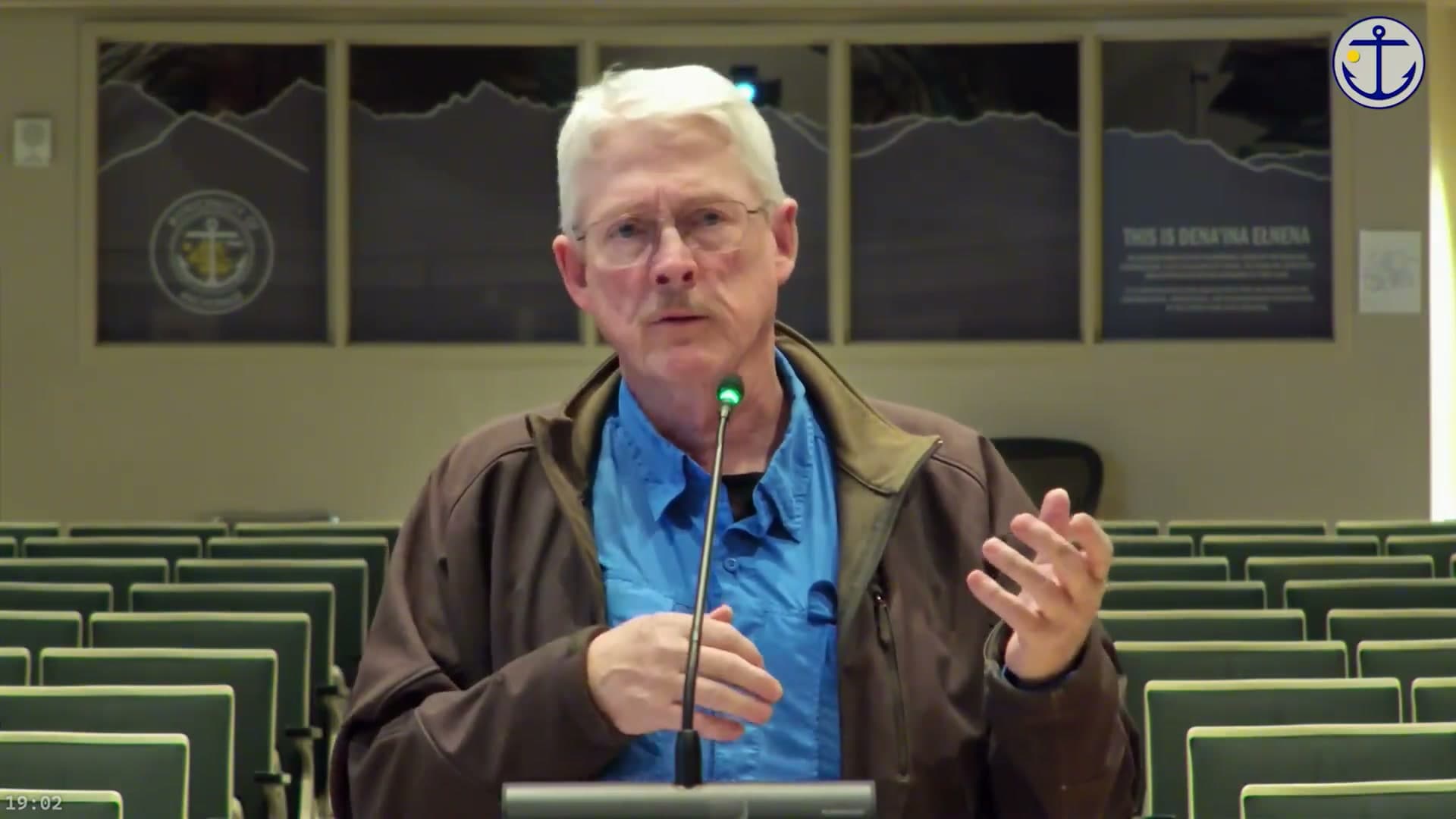
The split decision came after homeowners testified that the property has created persistent drainage and snow storage problems. Paul Kirschak, who lives directly behind the site at 3601 Mere Circle, said he has spent $17,000 on a French drain around his property, not counting landscaping, trees, a retaining wall and six loads of material to create a berm between the two properties.
"The velocity of water runoff has damaged our yard and driveway and even seepage into our foundation walls," Kirschak said. "We have spent time and money repairing, preventing more water damage."
Kyle Peterson, a licensed civil engineer who lives at 3600 Mere Circle adjacent to a property that borders the site, testified that homes on Mere Circle have either flooding issues or have had to install French drains at significant expense. He said the current practice of pushing snow against the fence creates runoff that flows onto neighboring properties.
The Sand Lake Community Council passed a resolution Monday opposing the present proposal and supporting homeowners adjacent to the development. Elizabeth Vasquez, the council president, said the developer pushes snow against the fence rather than removing it, and the property slopes downhill into the R-1 residential neighborhood.
"Homeowners have to bear the brunt of this decision," Vasquez said. "This variance will simply aggravate an existing malfunction."
Anchorage code requires a 10-foot landscaping buffer between higher-density and lower-density residential zones, but the developer requested relief to accommodate parking and fire access. The site currently has 44 units and is zoned R-3, which could accommodate up to 98 units by right. Planning staff noted that if the developer were not seeking the variance, the 36 additional units could be built without additional entitlement.
Kate Sauve, representing the developer, said the property was purchased by a new owner about four months ago. She said the new owner plans to remove snow off-site and will address drainage through the building permit process. She said the full number of required trees and shrubs would still be planted despite the reduced buffer width.
Planning staff recommended denying both variances, saying the reduced buffer along the south property line does not achieve the intent of separating incompatible land uses. Staff found the west boundary variance acceptable because the adjacent commercial property already has a 30-foot screening easement.
Commissioners separated the two variances into distinct votes. They approved the west boundary variance, finding that the adjacent commercial use is more intensive than the proposed apartments and that the existing screening easement provides adequate separation.
But commissioners rejected the south boundary variance after a motion to approve it failed with six commissioners voting against and none in favor, citing the need to protect lower-density residential areas. "Particularly there's an adjacent property owner that has spent over $20,000 to remedy drainage from this site entering their property," commission chair Edith McKee said. "And the schematic that's before us will have significantly less infiltration when you remove all of that vegetation, thereby increasing the runoff."
Commissioner Trevor Straight said the reduced buffer diminishes the level of separation and visual screening intended to protect single-family homes. "I think it's really important to keep this buffer in between the R-3 and the R-1, particularly given the historical issues that the southern property owner has experienced here," Straight said.
Wes Skinner, principal business officer for Diamond Boulevard Baptist Church on the adjacent property to the east, testified about drainage patterns in the area. He said the church has maintained extensive vegetation and a berm along its southern boundary for more than three decades to prevent runoff from reaching homes on Mere Circle. He noted that drainage flows south from Diamond Boulevard across the area, and that concentrations of water along the R-1 property line can damage homes.
The developer can proceed with the project using the approved west boundary variance but must meet the full 10-foot landscaping requirement along the south property line. Planning staff noted that the developer will also need to address stormwater retention during the building permit process, which may require removing parking spaces to accommodate a detention pond.
Commissioners urged the new owner to meet with the Sand Lake Community Council and adjacent neighbors before finalizing site plans.
The decision came during the Urban Design Commission's final meeting before the body sunsets May 31.
This article is based on a public meeting — Urban Design Commission - May 13, 2026 - 2026-05-13 18:30:00 ().
AI-assisted. How we use AI Transcript byLucas Brown
Stay informed. Support what matters.
Free, permanent access to local news you can verify. Subscribe to support Alaska News and go ad-free.
Related Coverage
Anchorage zoning board approves deck variance despite staff concerns
Alaska News · 4mo ago
Anchorage planning commission approves Chugach substation rebuild over neighbor's objection
Alaska News · 1mo ago
Planning commission recommends removing density requirement from Eagle River greenhouse property
Alaska News · 3mo ago
Zoning Board Approves Two Variances, Denies Girdwood Deck Request
Alaska News · 5mo ago
A fourplex would install no landscaping under this Anchorage ordinance
Alaska News · 3w ago
Comments
Sign in to leave a comment.
No comments yet. Be the first to share your thoughts.